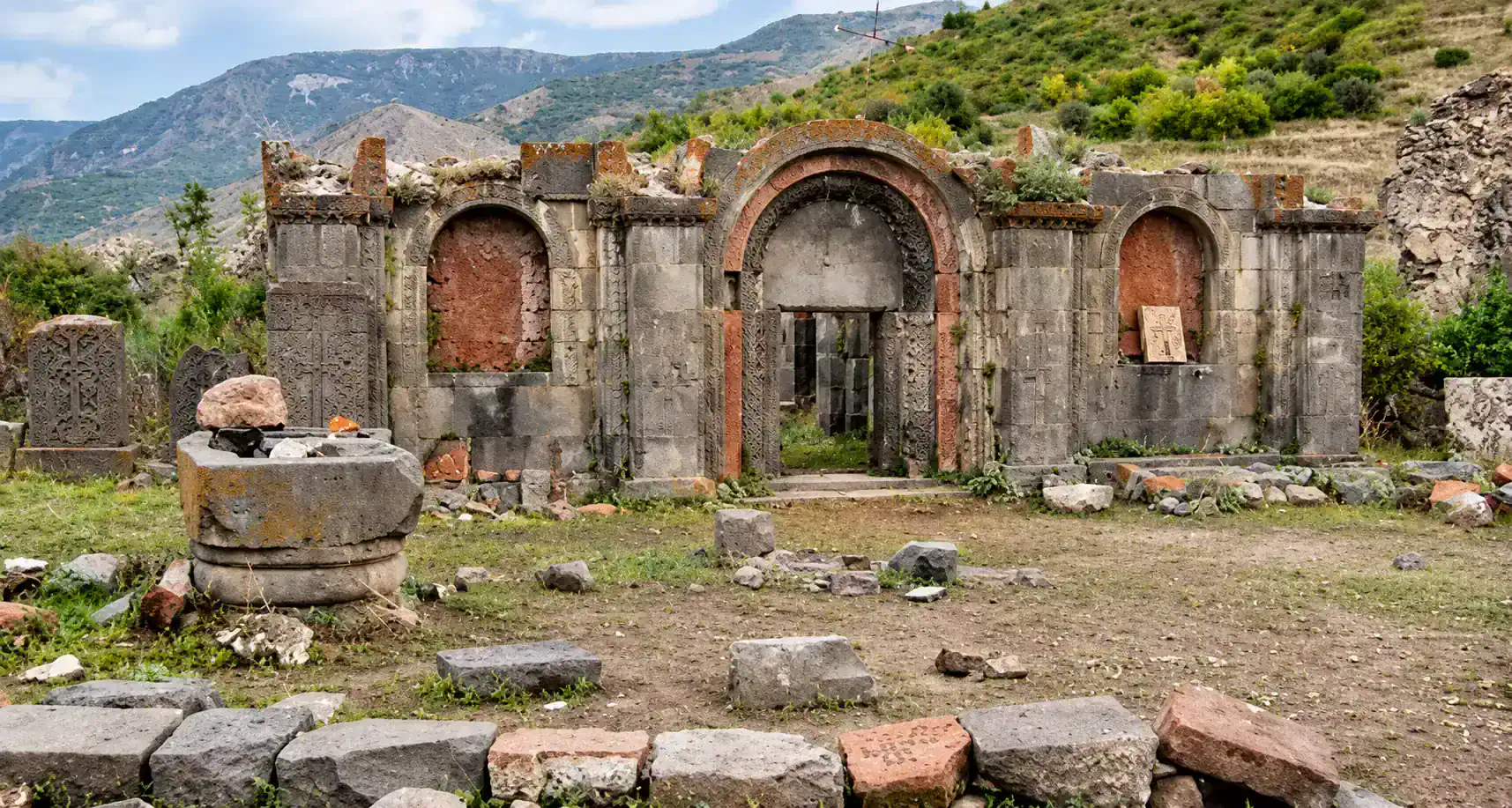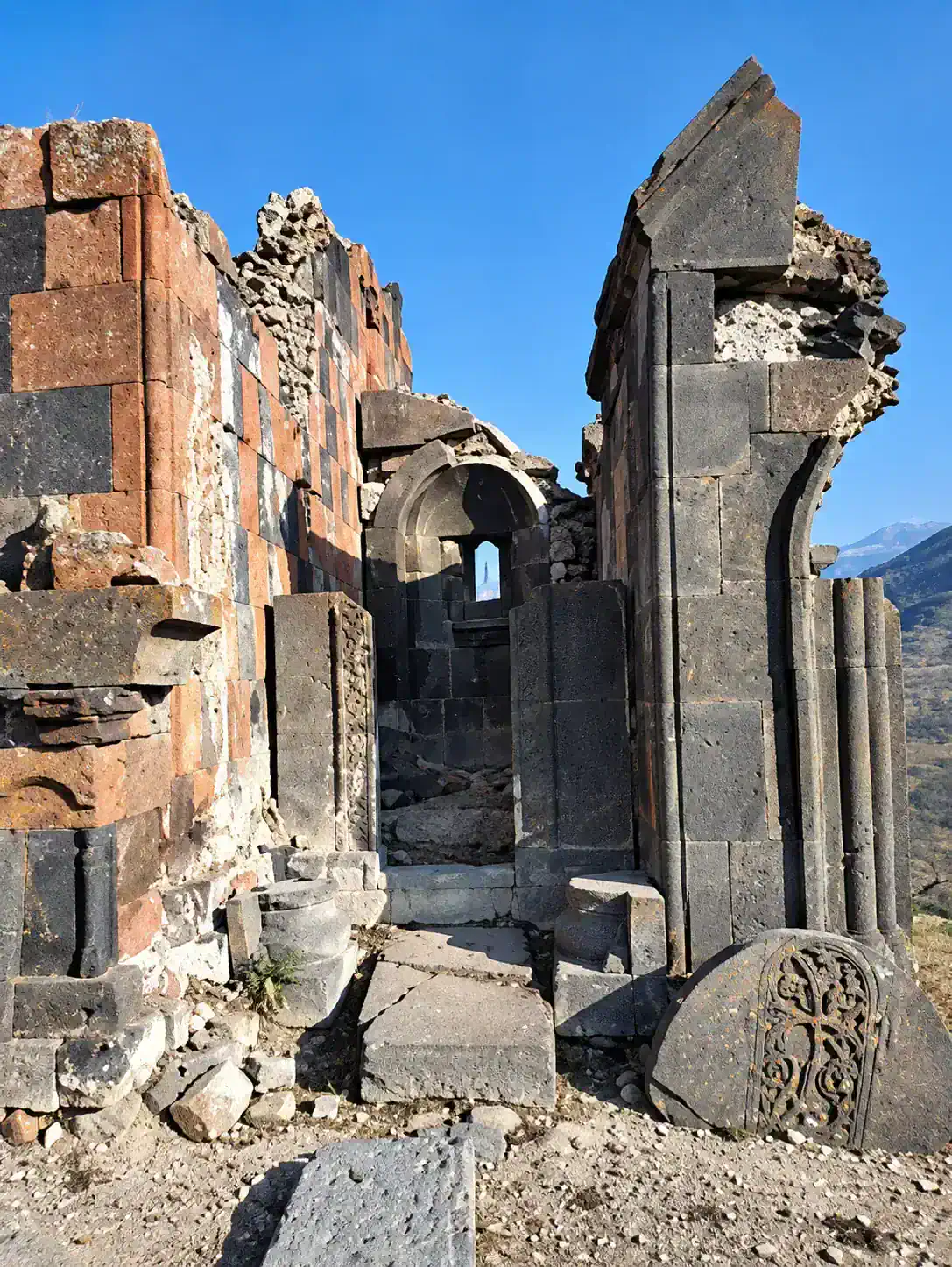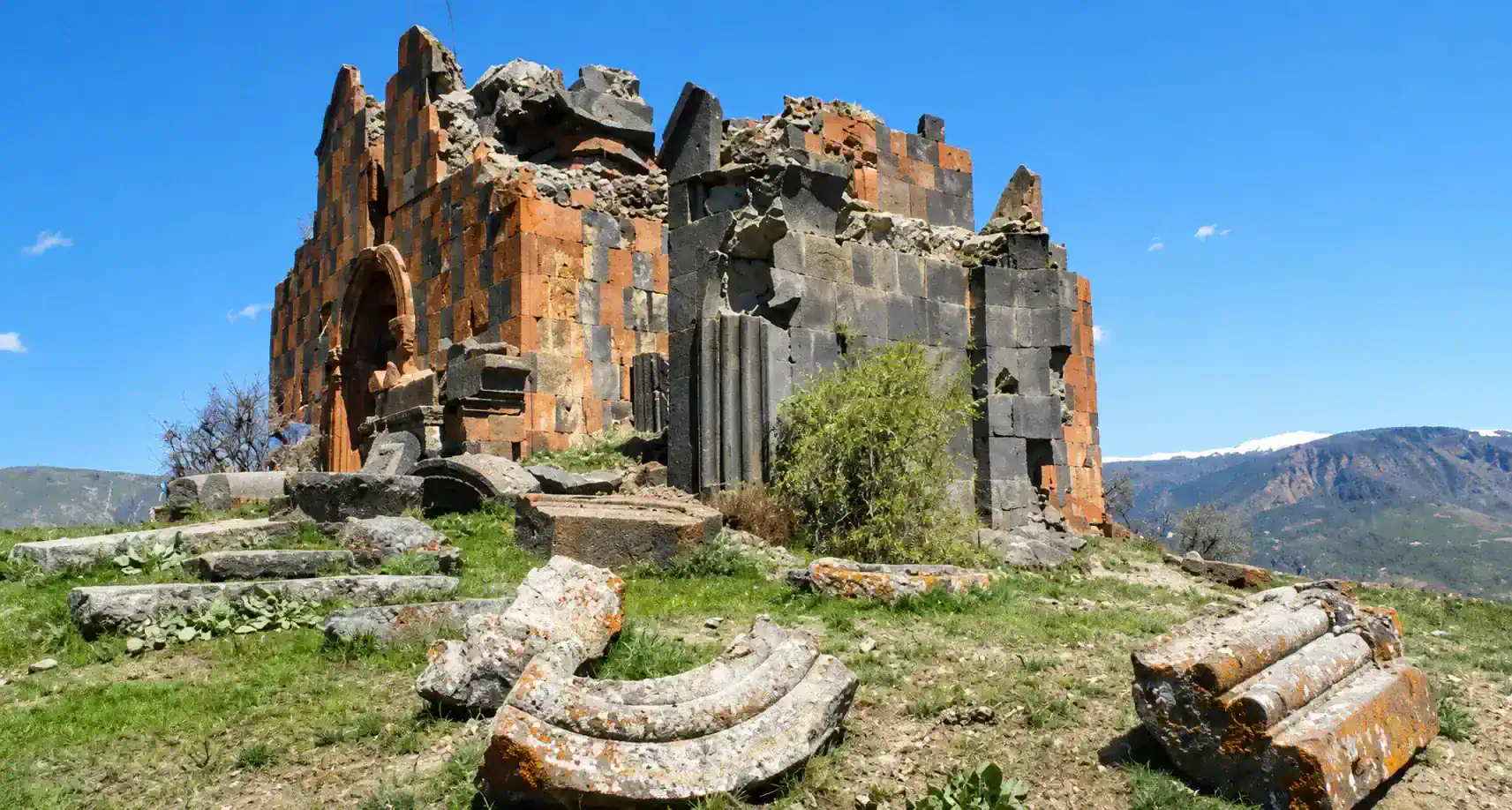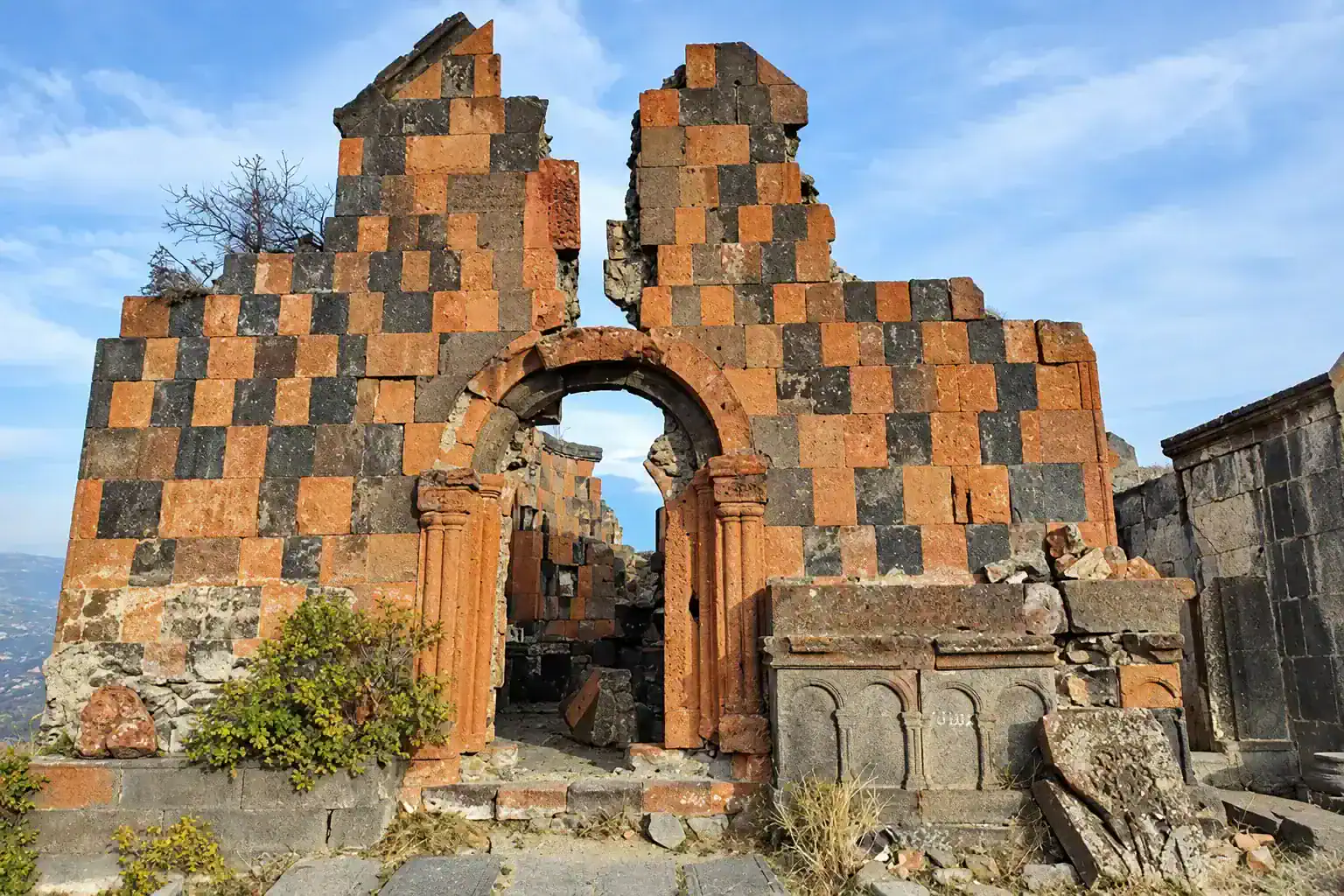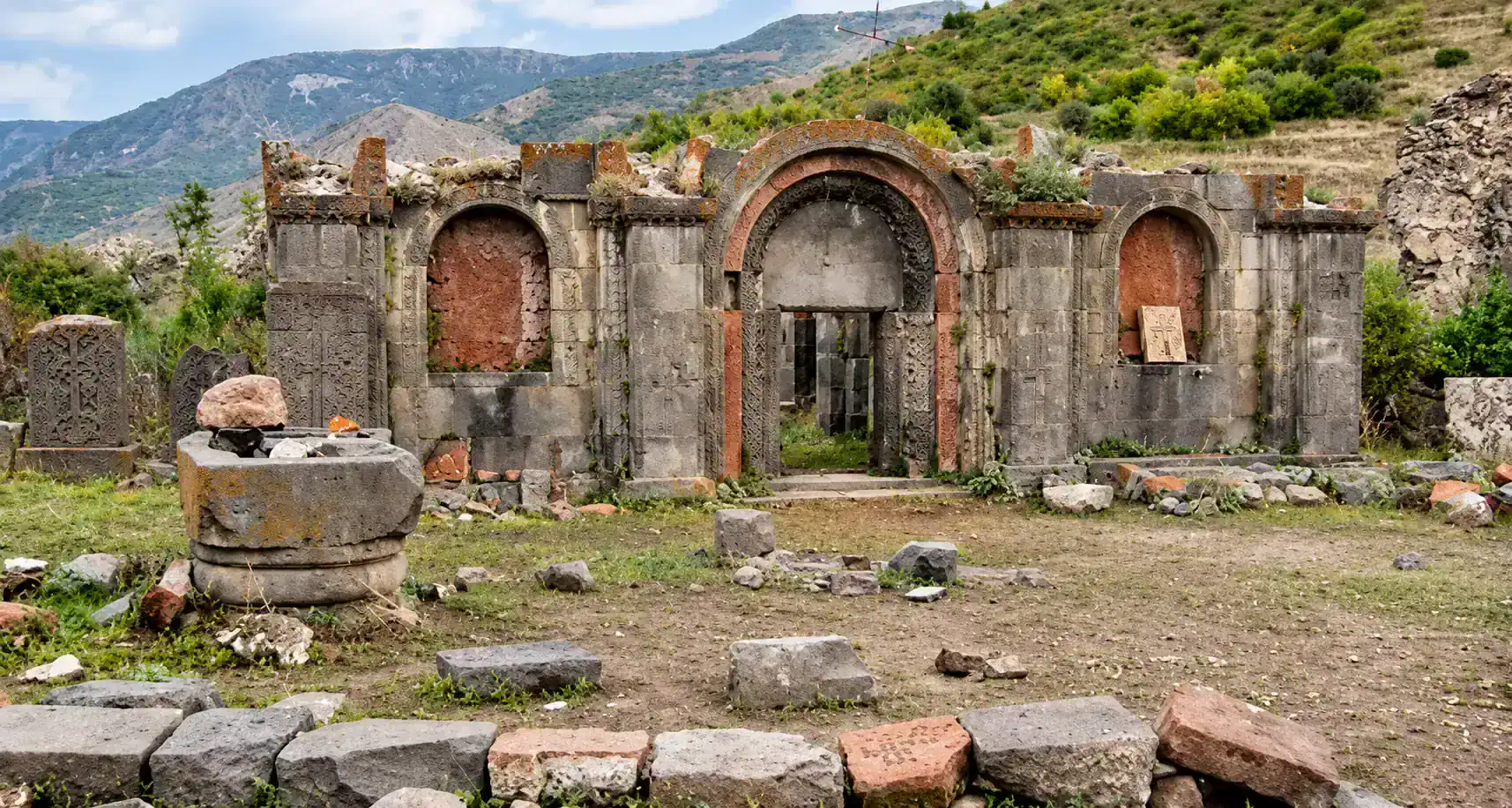
Havuts Tar monastery is located in Kotayk province, between the settlements of Garni and Goght, on one of the heights on the left bank of the Azat river. The complex consists of two main monument groups, western and eastern. In the western section is the main 13th-century church, while the eastern section was rebuilt in the first half of the 18th century.
One of the most important surviving medieval accounts about the monastery concerns Prince Grigor. Mkhitar Ayrivanetsi records that he built a church at Havuts Tar. More detailed information has been preserved by the 14th-century abbot, Bishop Natanayel: according to his record, in 1002 Prince Grigor renovated the monastery and built the nine-apse Cathedral (Katoghike) church. Natanayel also notes that the prince bought the nearby village of Goght from King Gagik I and Hovhannes-Smbat and donated it to the monastery.
One of the most notable relics of Havuts Tar was the cross known as the All-Savior (Amenaprkich). In 1213 the Surb Karapet chapel was built on the monastery grounds. Its inscription records that three disciples — Sostanes, Matteos, and Grigores — built the chapel over the graves of their teachers, Sita and Simavon.
Havuts Tar was also an important center of manuscript copying. Here, in 1214, the scribe Ignatios wrote and illuminated a Gospel; in 1236 another Gospel was created; and in the 15th century the scribe Stepanos worked at the monastery.
The monastery was heavily damaged by the earthquake of 1679. It was later devastated again during the Lezgin invasion of 1755 and abandoned. Simeon Yerevantsi attests that in 1765–1767, while writing the "Jambr," Havuts Tar was already deserted.