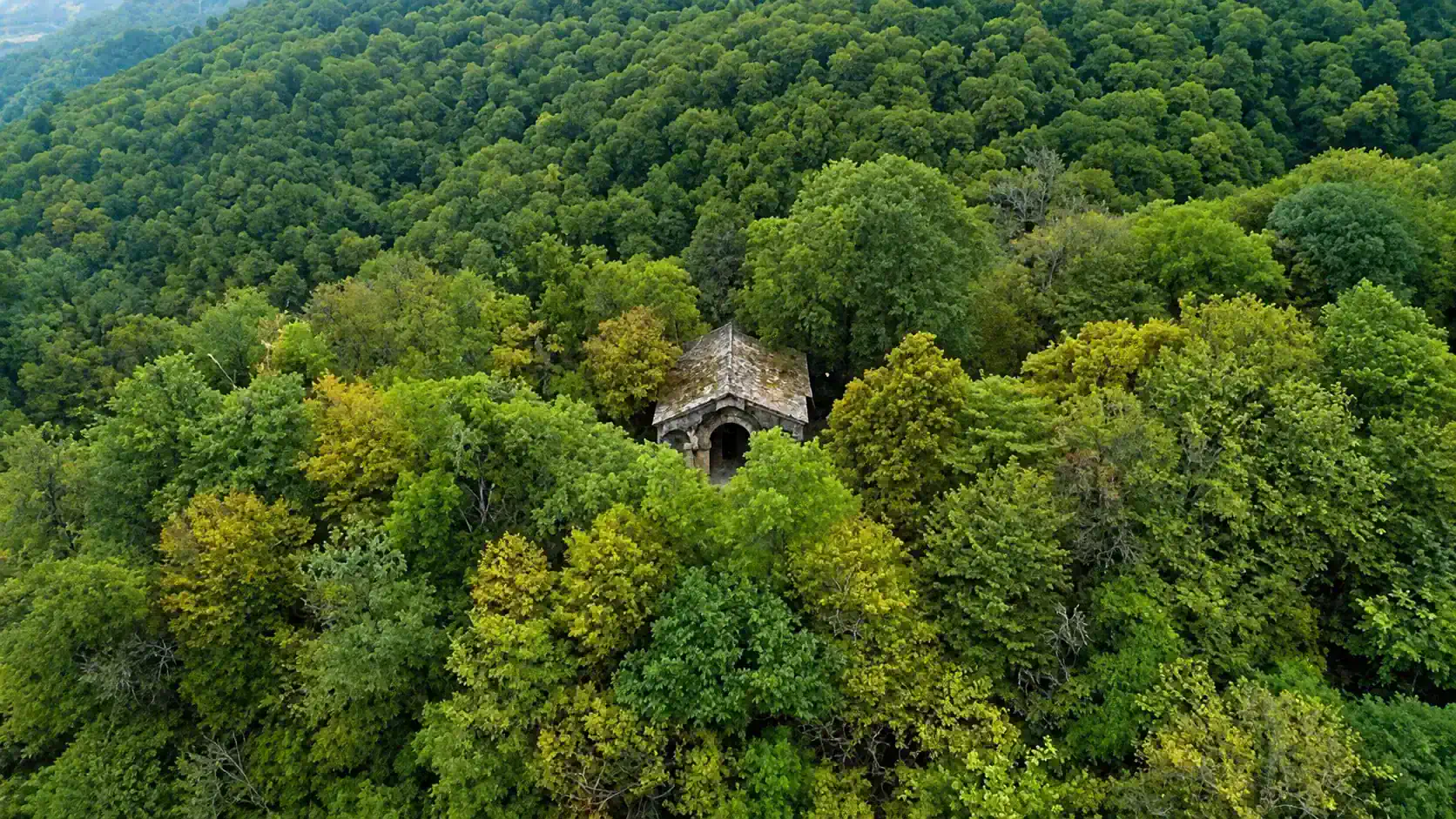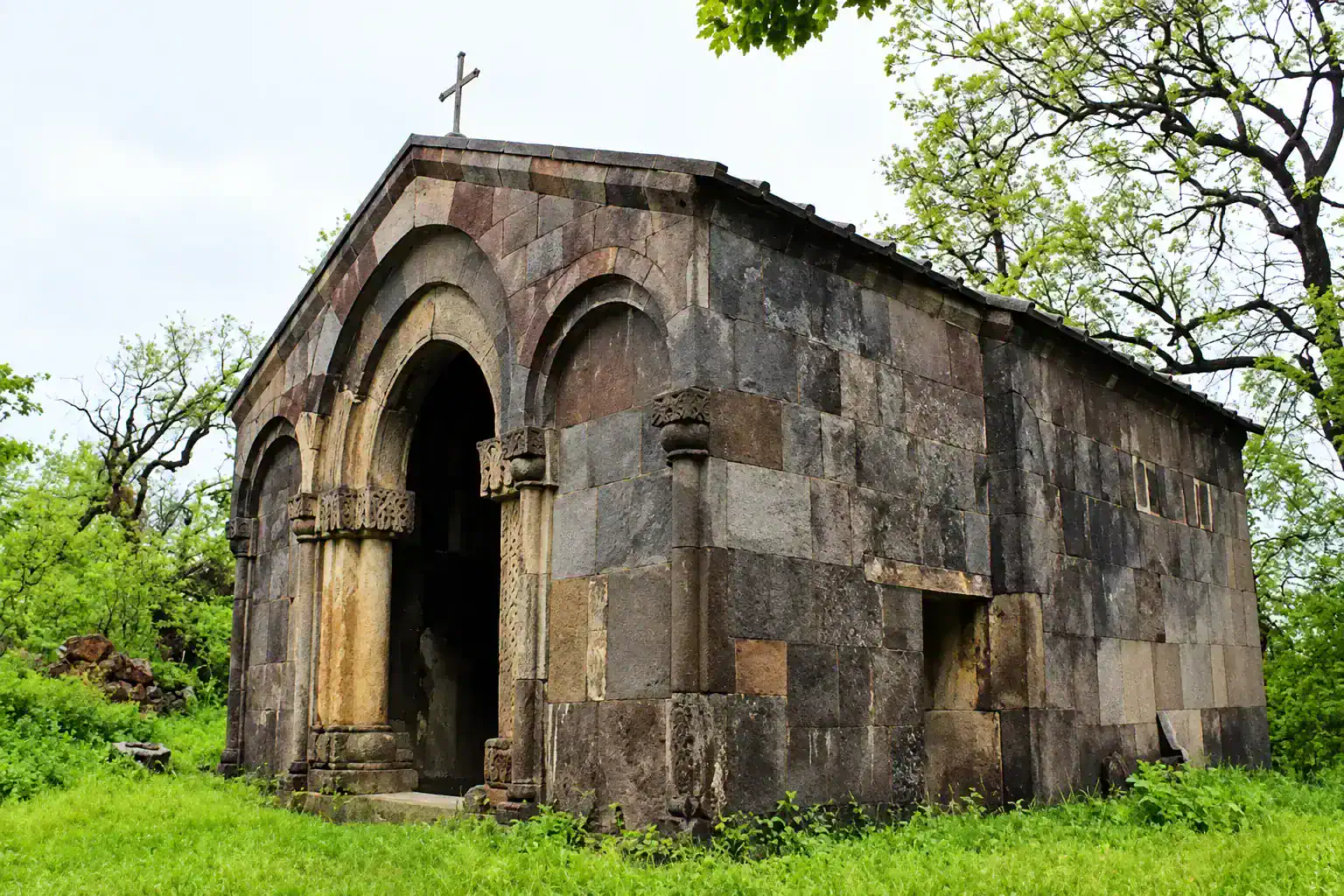
Bgheno-Noravank is located in Syunik province, about 3–4 km east of the present-day village of Bardzravan, on a high right-bank headland of the Vorotan river, surrounded by forested gorges. The monastery's ruins were discovered in 1946, during a scientific expedition organized by the Committee for the Protection of Monuments.
Bgheno Noravank was built in 936, on the initiative of the priest Stepanos of the Sisakan line, with the support of Prince Hrahat. The 936 structures included not only the church building but also a gavit, a hall, and a leper-house (borotanots). Later, in 1062, new and extensive construction work was carried out at the complex.
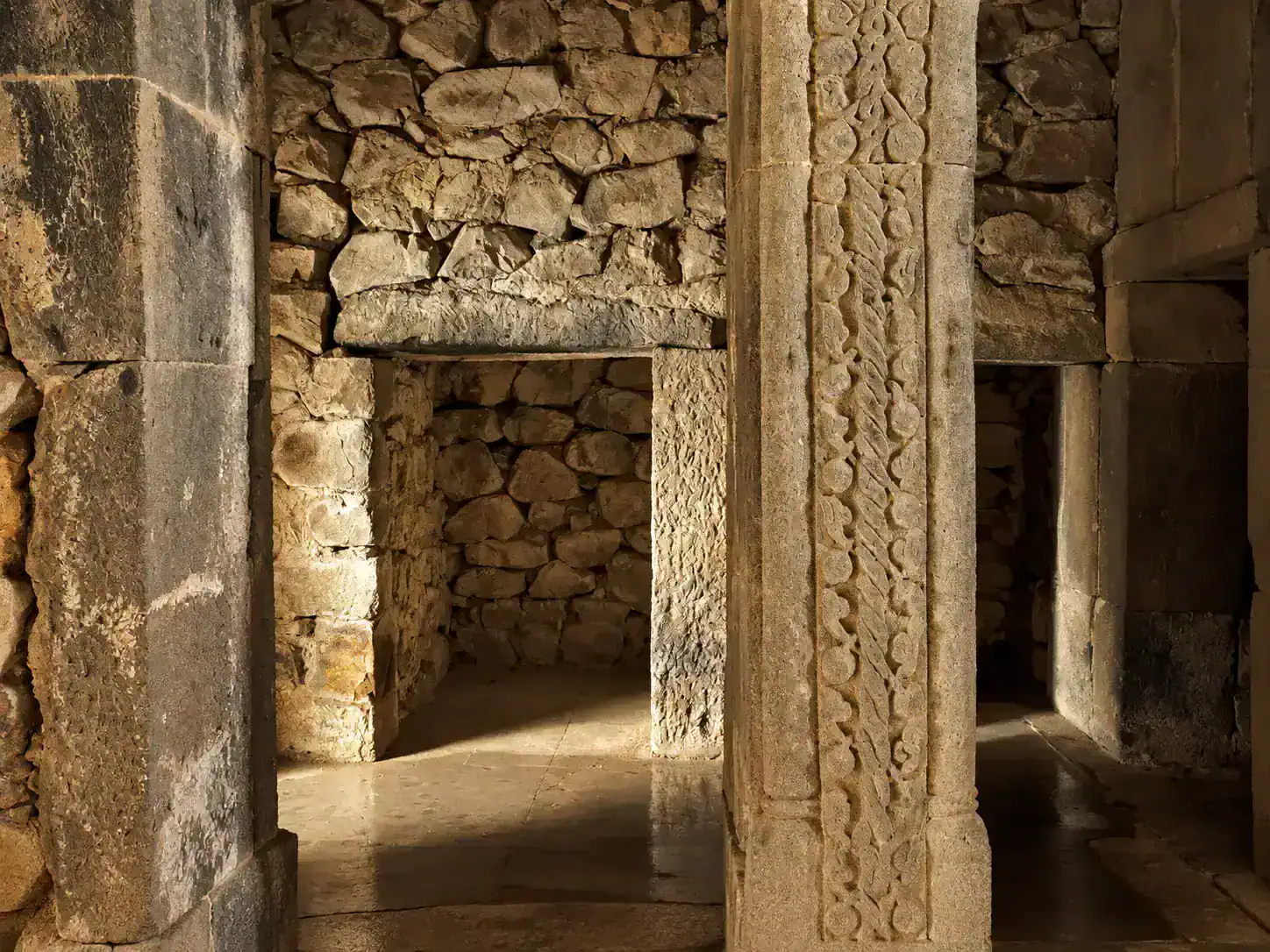
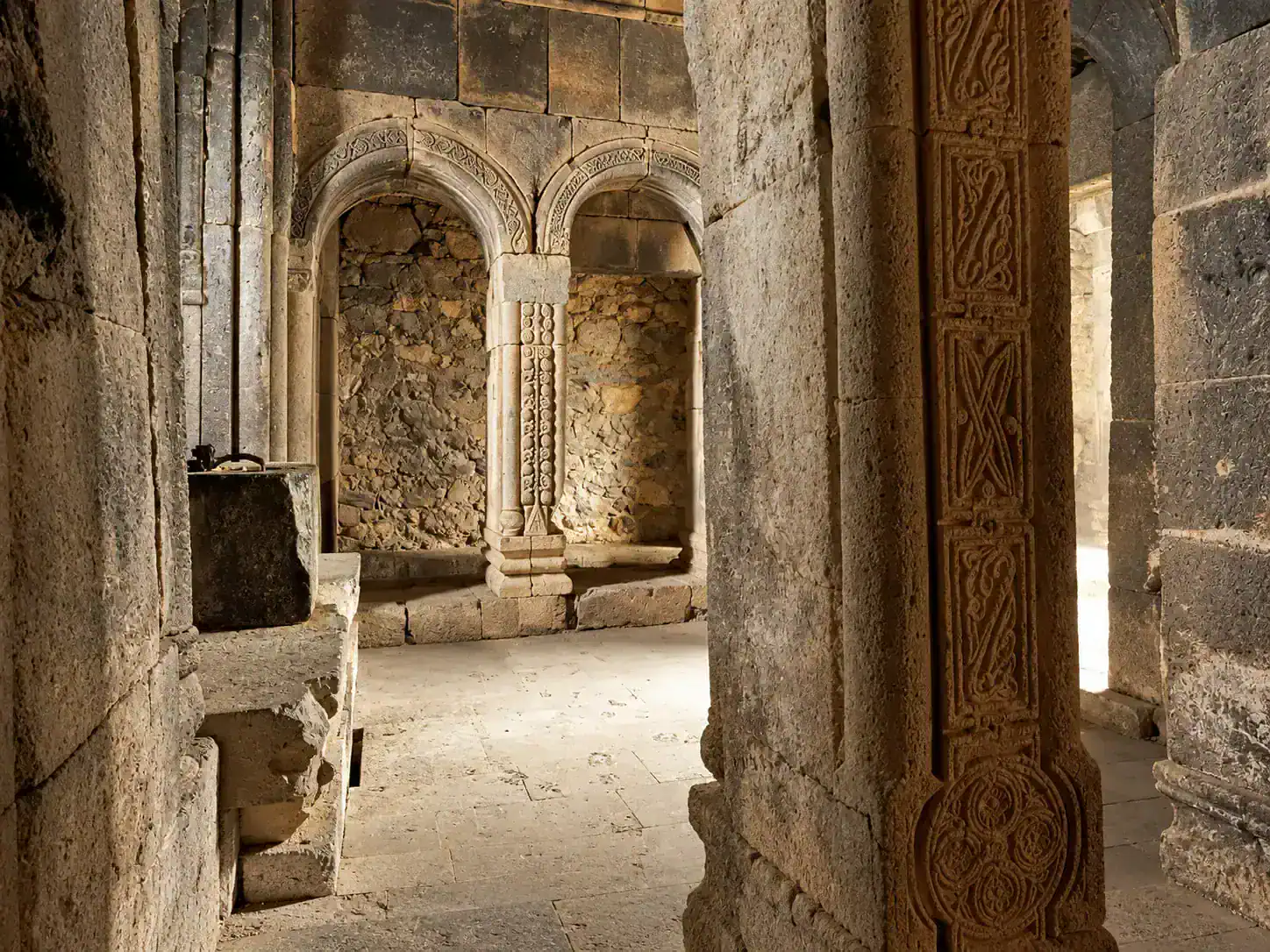
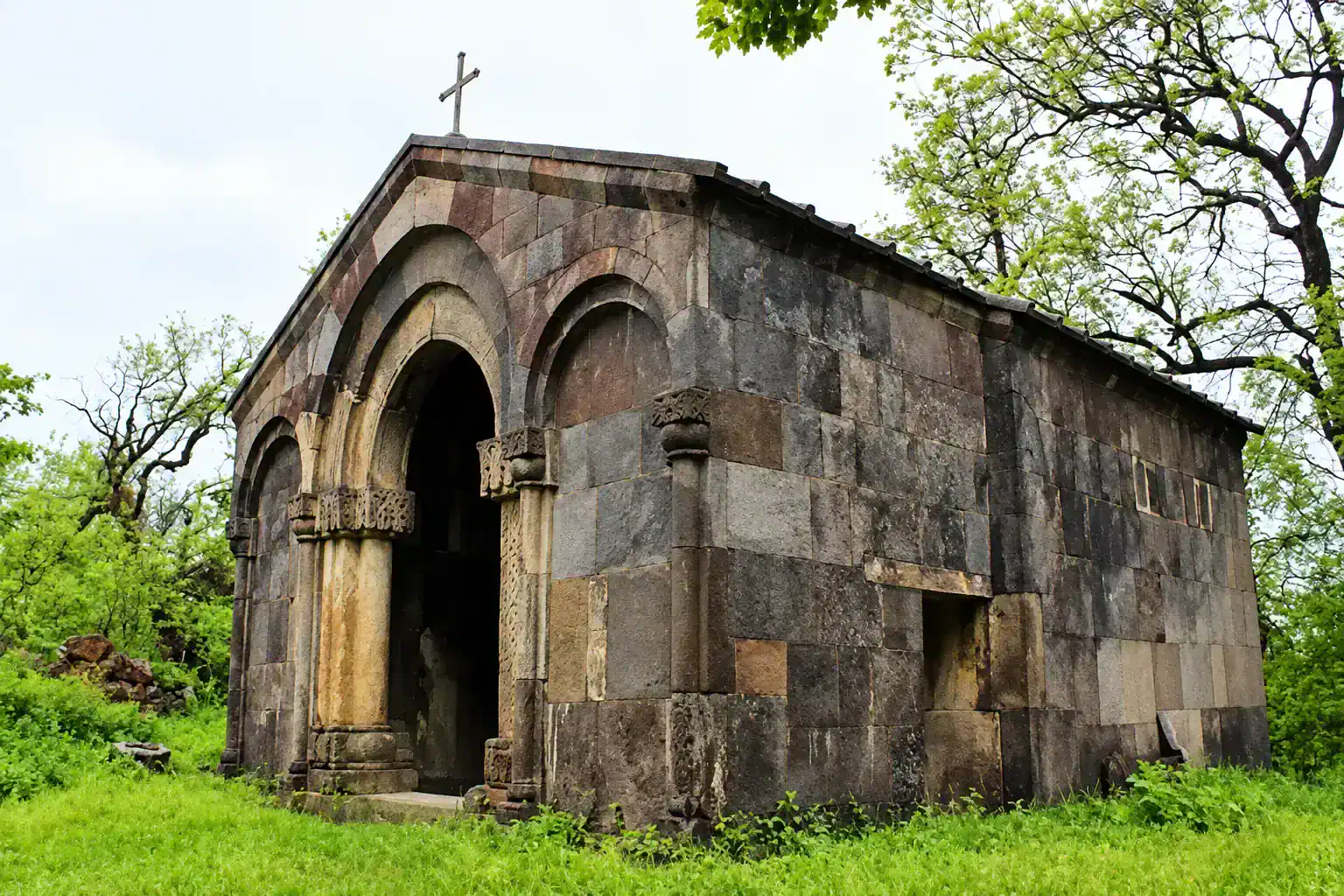
The monument is not large — its exterior length and width are 9 meters, and its height is 6 meters. During excavations, the foundations of structures adjoining the church were also uncovered. Especially notable is the church's main entrance. Its portal is rich with carvings. Twisting, woven, and plant-motif ornaments are used on the frames of the entrance.
Among the monastery's architectural details, the carved sections of the gavit hold a special place. There are grapevine-like ornaments, leaves, twisting stems, and other decorative forms.
Bgheno-Noravank is especially important for the history of Armenian manuscript copying. In 989, the famous manuscript known as the "Etchmiadzin Gospel" was copied and illuminated here. The manuscript's colophon names Bgheno Noravank as its place of creation, and its scribe was Hovhannes. The manuscript was later moved to Etchmiadzin and is now kept in the Matenadaran.