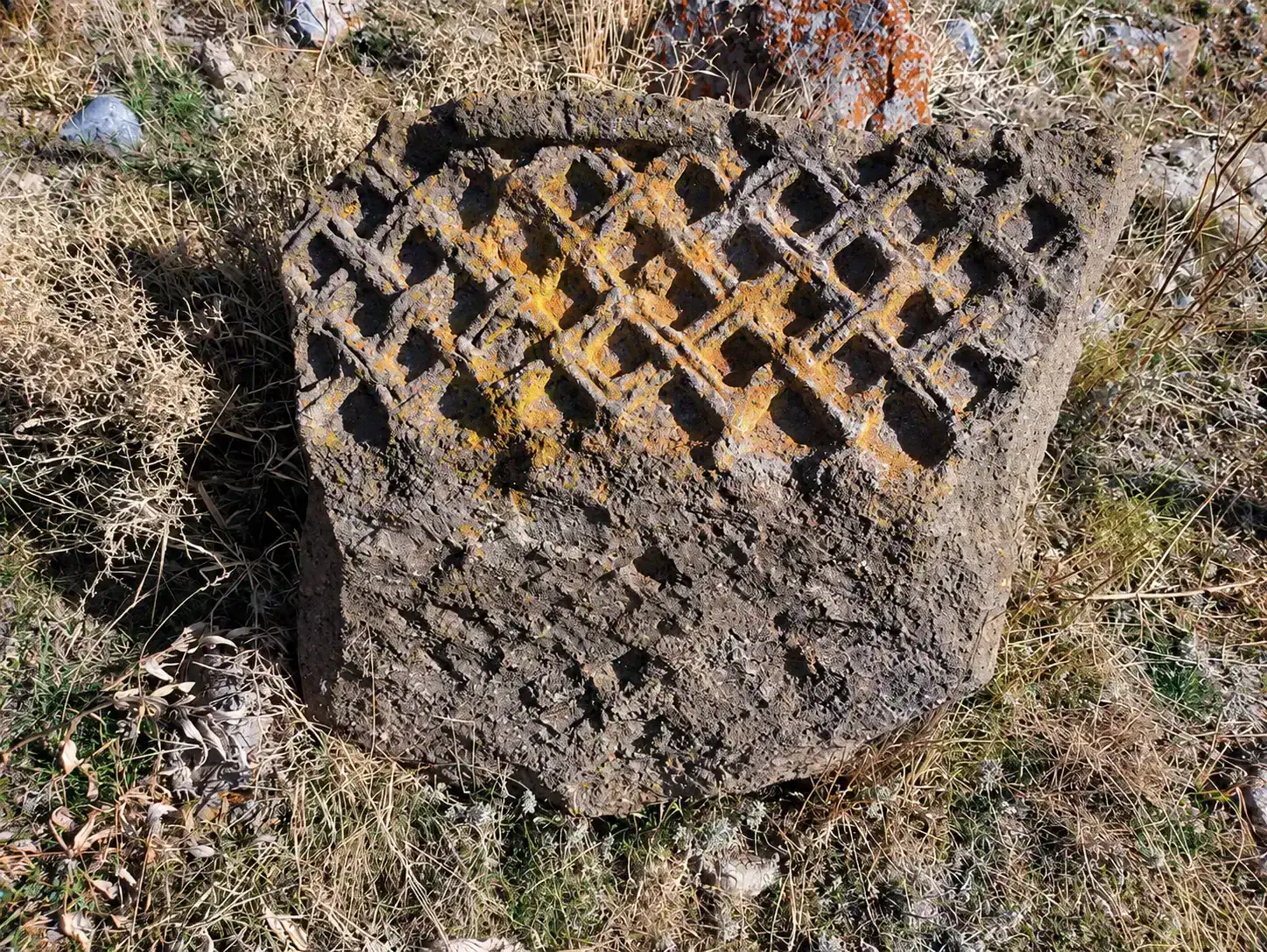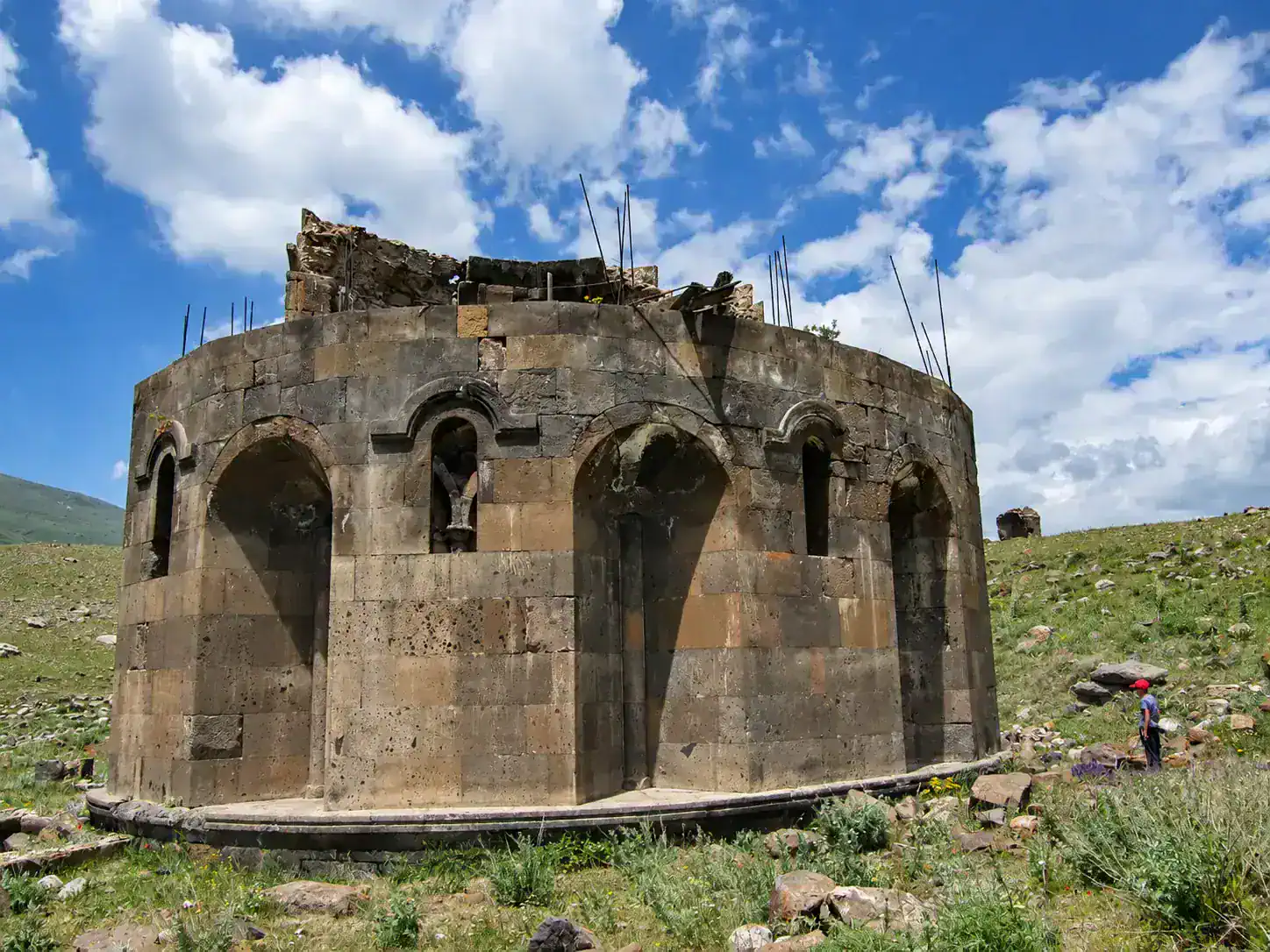
Zoravar church, also known as Surb Theodoros and Gharghavank, is located in Kotayk province, about 3 km northeast of Yeghvard, near the present-day village of Zoravan. It is a multi-apse church, built by Prince Grigor Mamikonyan in the 7th century, the golden age of Armenian architecture.
According to the historian Hovhannes Draskhanakerttsi, Grigor built, on the eastern side of Yeghvard, not only a church but also a monastery intended as a residence for celibate clergy.
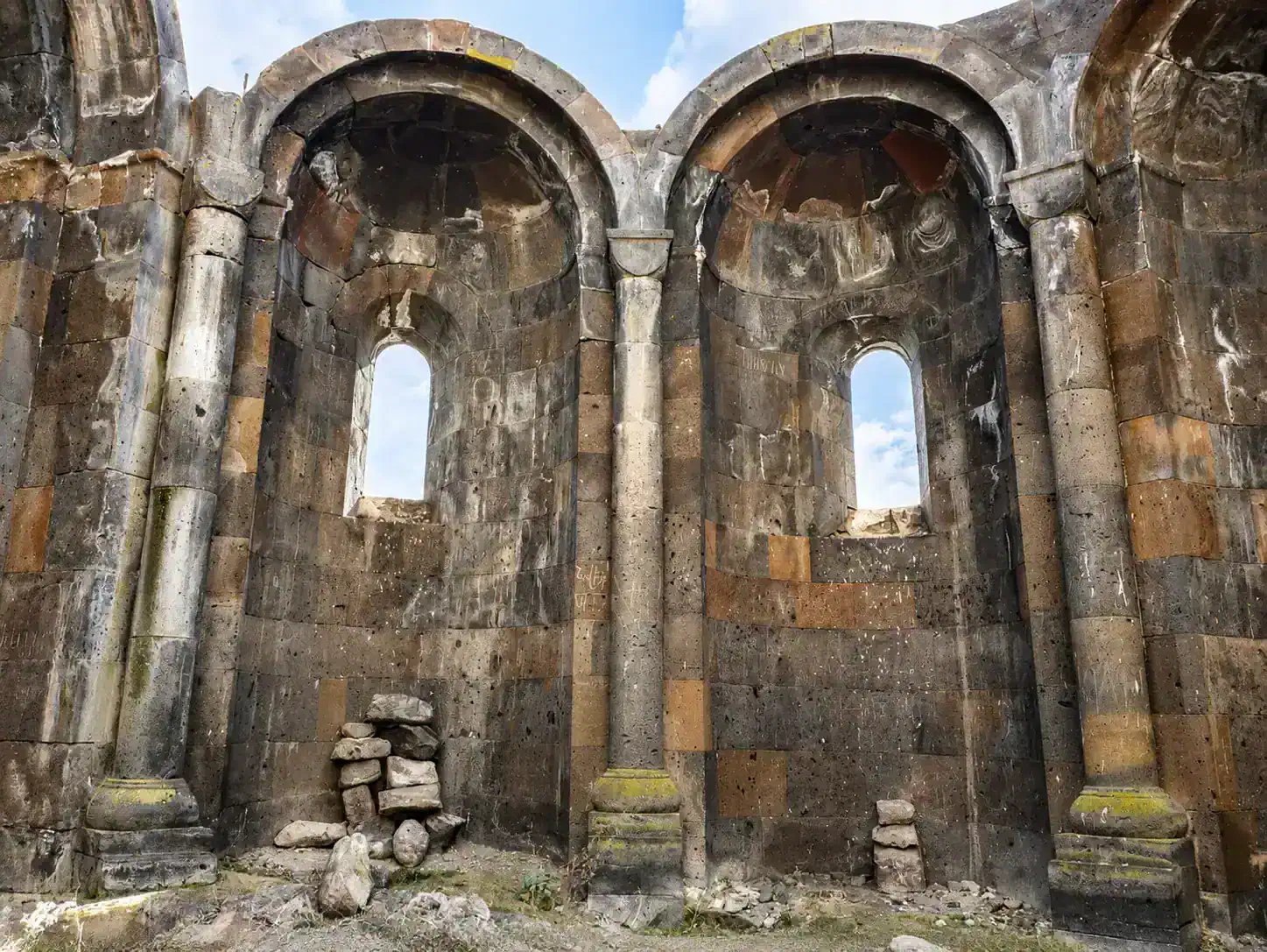
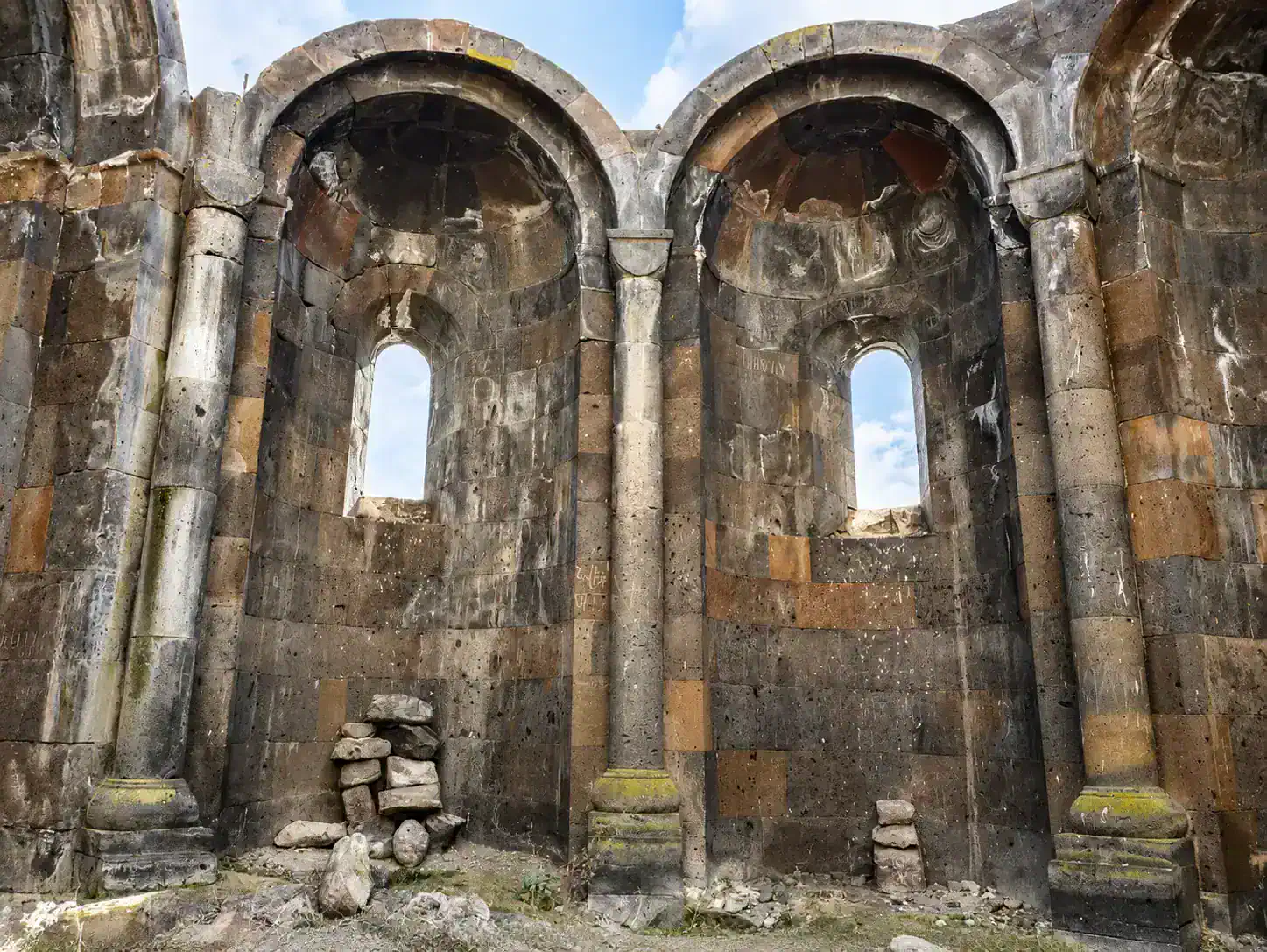
The church is, to this day, among the earliest known Armenian round, eight-apse structures. It is built of brown tufa. Of the eight apses, the eastern one — the Main Apse (Avag Khoran) — was somewhat larger than the others. Between the apses, deep triangular niches open on the exterior, while inside, at their points of intersection, three-quarter columns with capitals rise.
The church probably had three entrances, of which the northern and western have survived.
The church's interior was once painted. As early as the beginning of the 20th century, Toros Toramanian saw traces of plaster and murals. In the surviving sections, mostly ornamental motifs have been observed, but a fragment of a human figure's clothing has also been studied, its execution compared to the 666 mural of Aruch. A wall inscription also records that Hovhannes and Vardan later renewed the church's decoration.
The monastery was also a center of manuscript copying. In 1197, David and Nerses copied here Sargis Kunt's "Commentary on the Gospel of Luke." Donation inscriptions from the 12th–13th centuries have also survived on the church's walls, recording donations of vineyards in Yeghvard to the monastery.