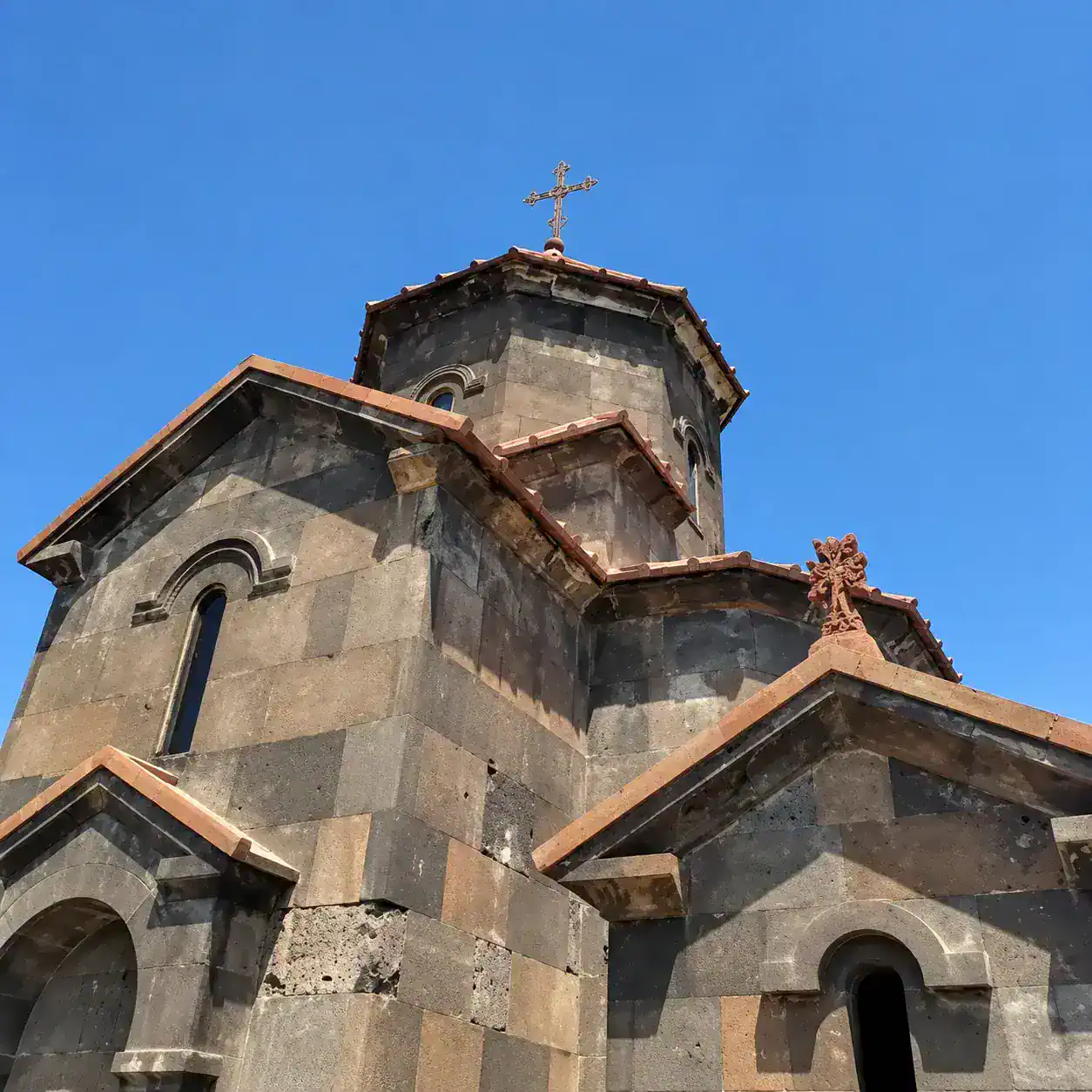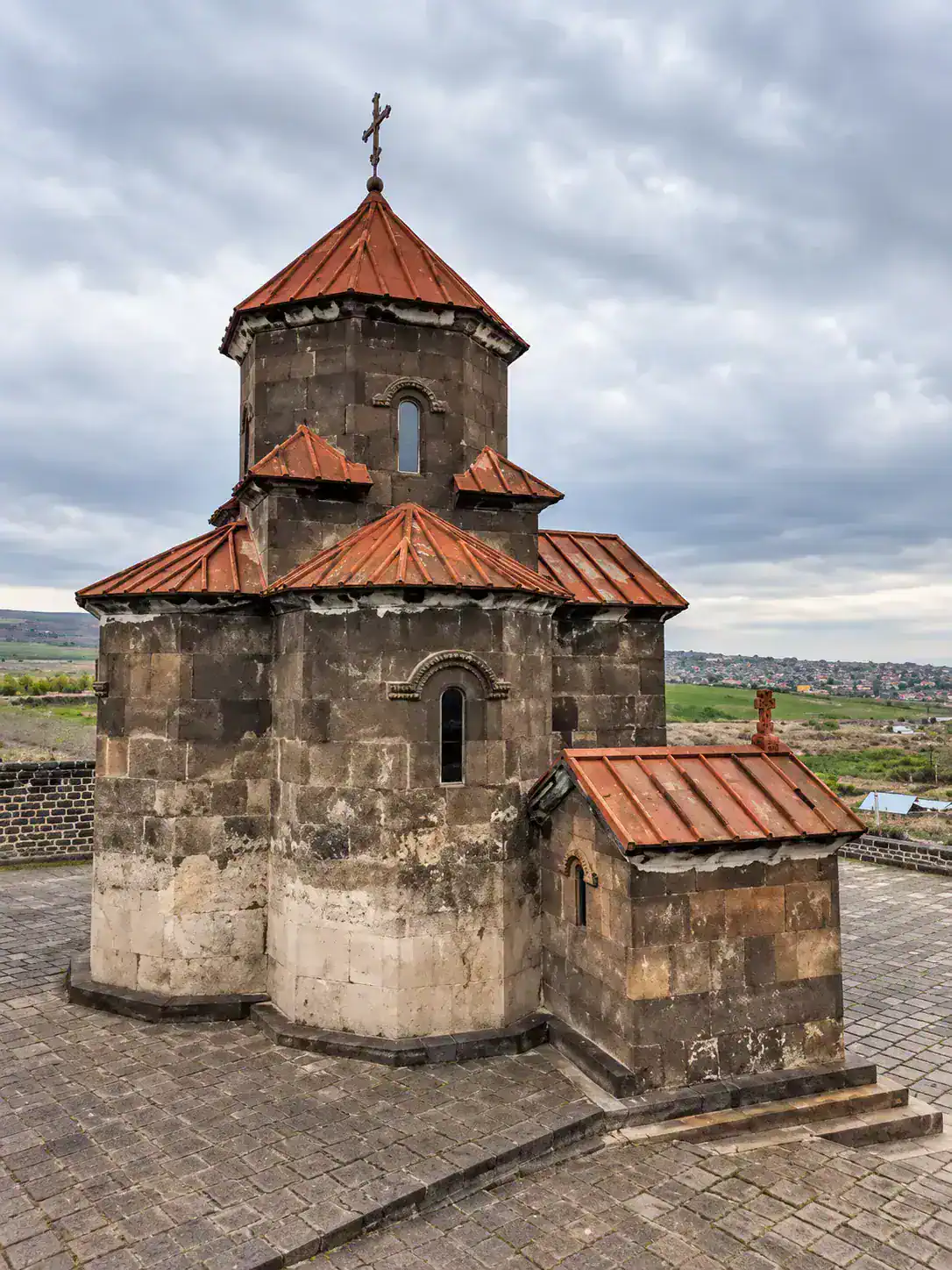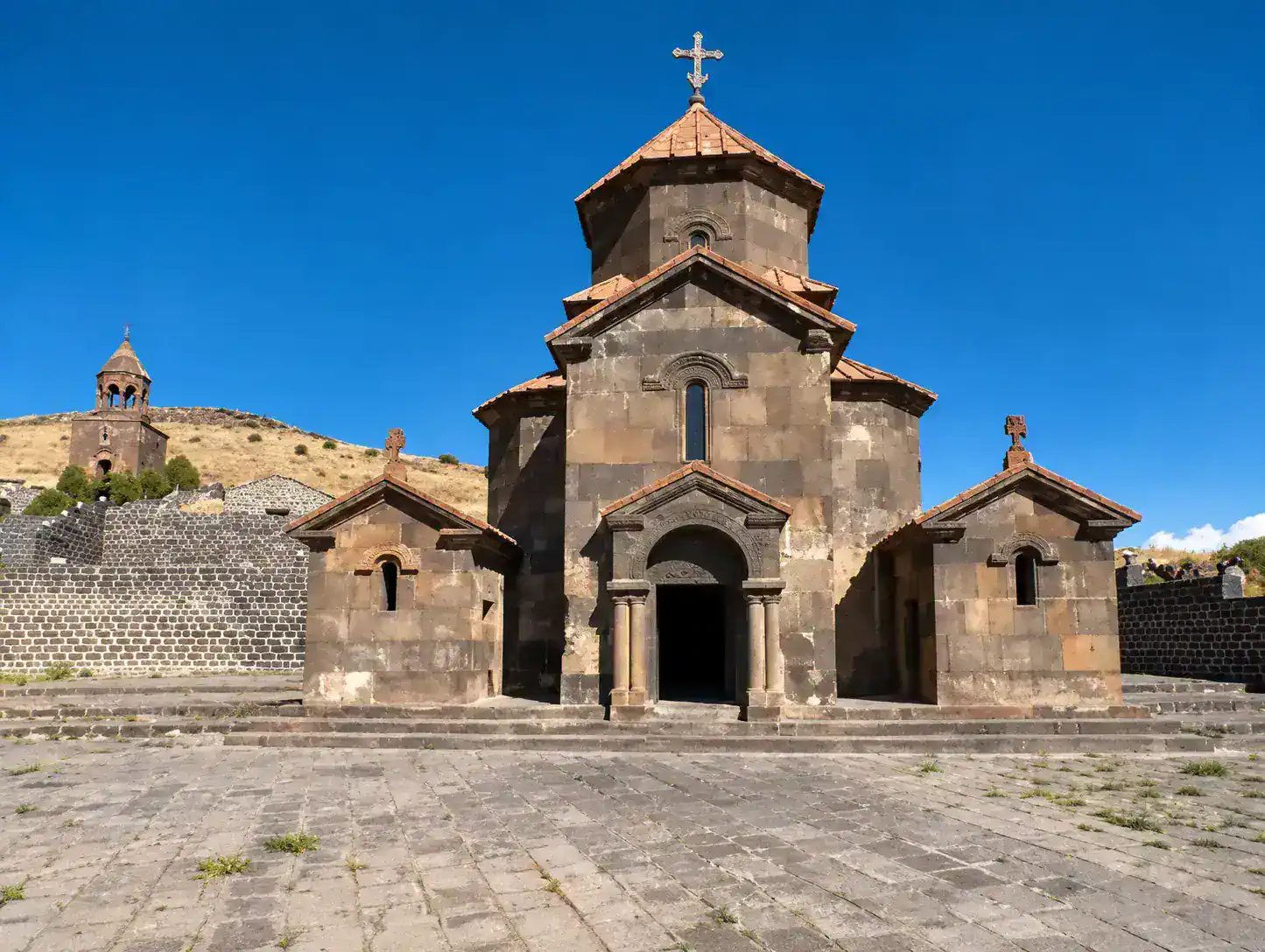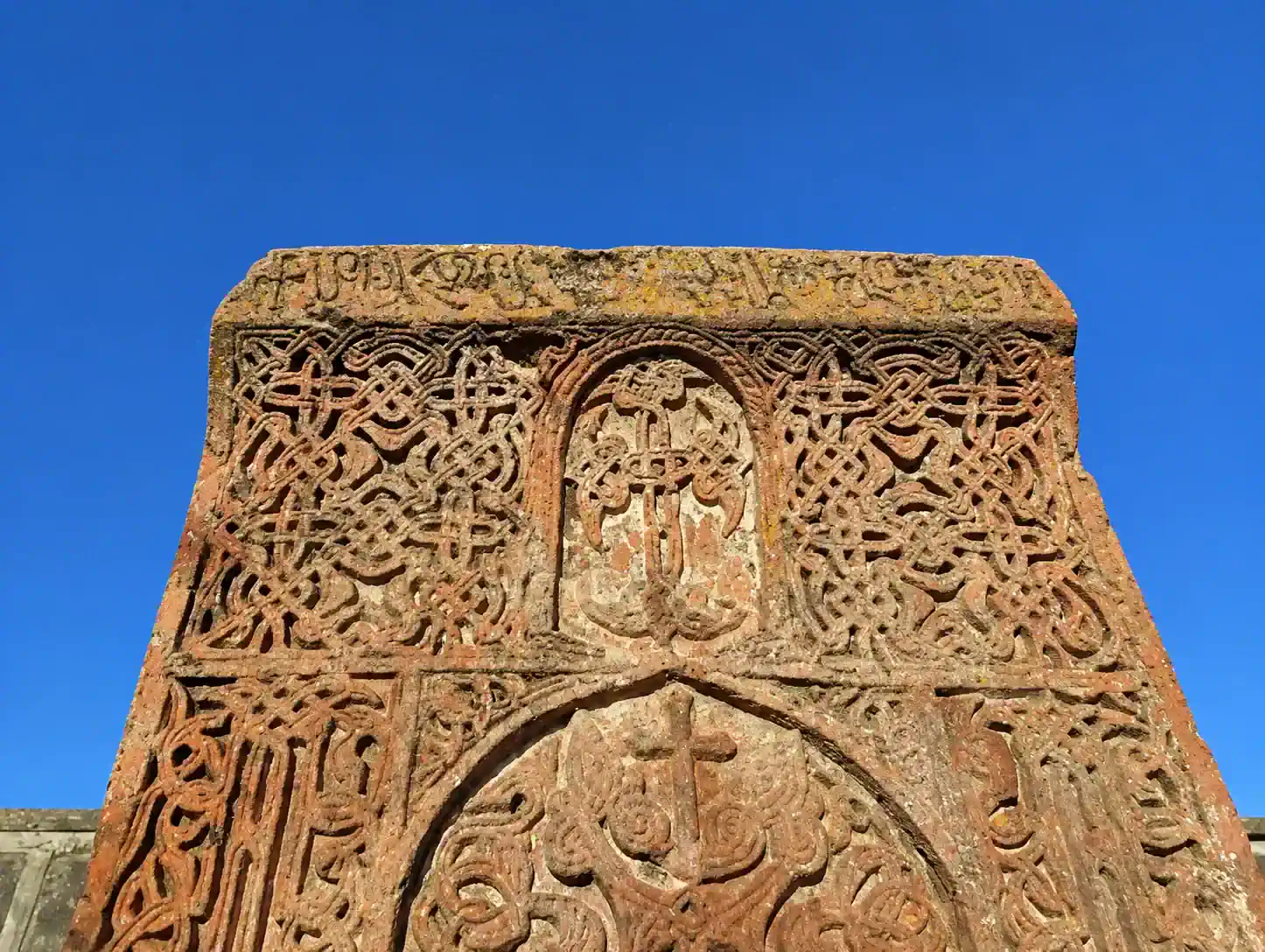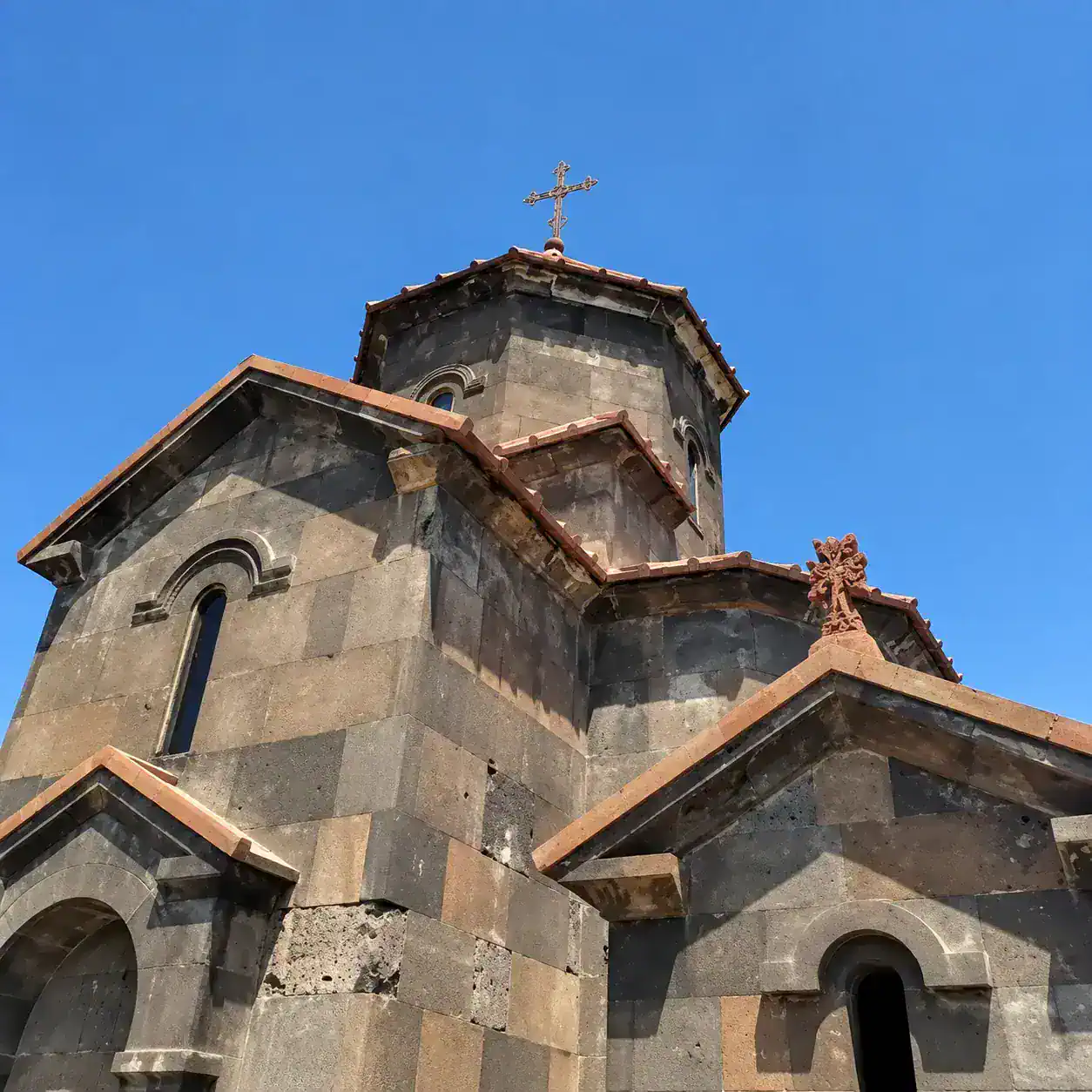
Dzagavank, also recorded as Getargeli or Getadardzi Surb Nshan, is located on the southeastern hillside of the village of Dzag in the historical Kotayk district, about 2 km northeast of the present-day village of Arinj. The monastery received the name "Getargeli Surb Nshan" (Holy Sign of Getargel) because of the sacred cross kept here.
The oldest surviving structure of the complex is the Surb Nshan church, belonging to the early medieval type of small, cross-shaped, domed, three-apse churches. On the exterior it is polygonal, on the interior cross-shaped in plan, and built of black tufa. Today mainly the lower courses of its walls have survived.
The church called Surb Nshan was built at the beginning of the 7th century or earlier, since, according to the 1834 Haysmavurk colophon, after the burial of the martyr Davit Dvnetsi the cross was taken to the town of Dzag and set up in the local church.
A few meters northeast of Surb Nshan stands a two-story church built of dressed reddish-brown tufa, resembling in its architectural composition the two-story Burtelashen church of Noravank. On the first floor — a square interior plan with a small square platform — two small windows have survived near the apse on the northern and southern walls.
From the 14th–15th centuries the monastery is also known as a center of manuscript copying. In 1317 the deacon Monogon copied a manuscript here, and in 1425 the scribe Stepanos, in his colophon, calls the place "the God-dwelt holy shrine of Dzagavank."
Dzagavank was heavily damaged by the 1679 Ararat earthquake but was not completely abandoned — at the beginning of the 18th century it was still a functioning monastery. In 1670 it is also recorded as an episcopal seat.