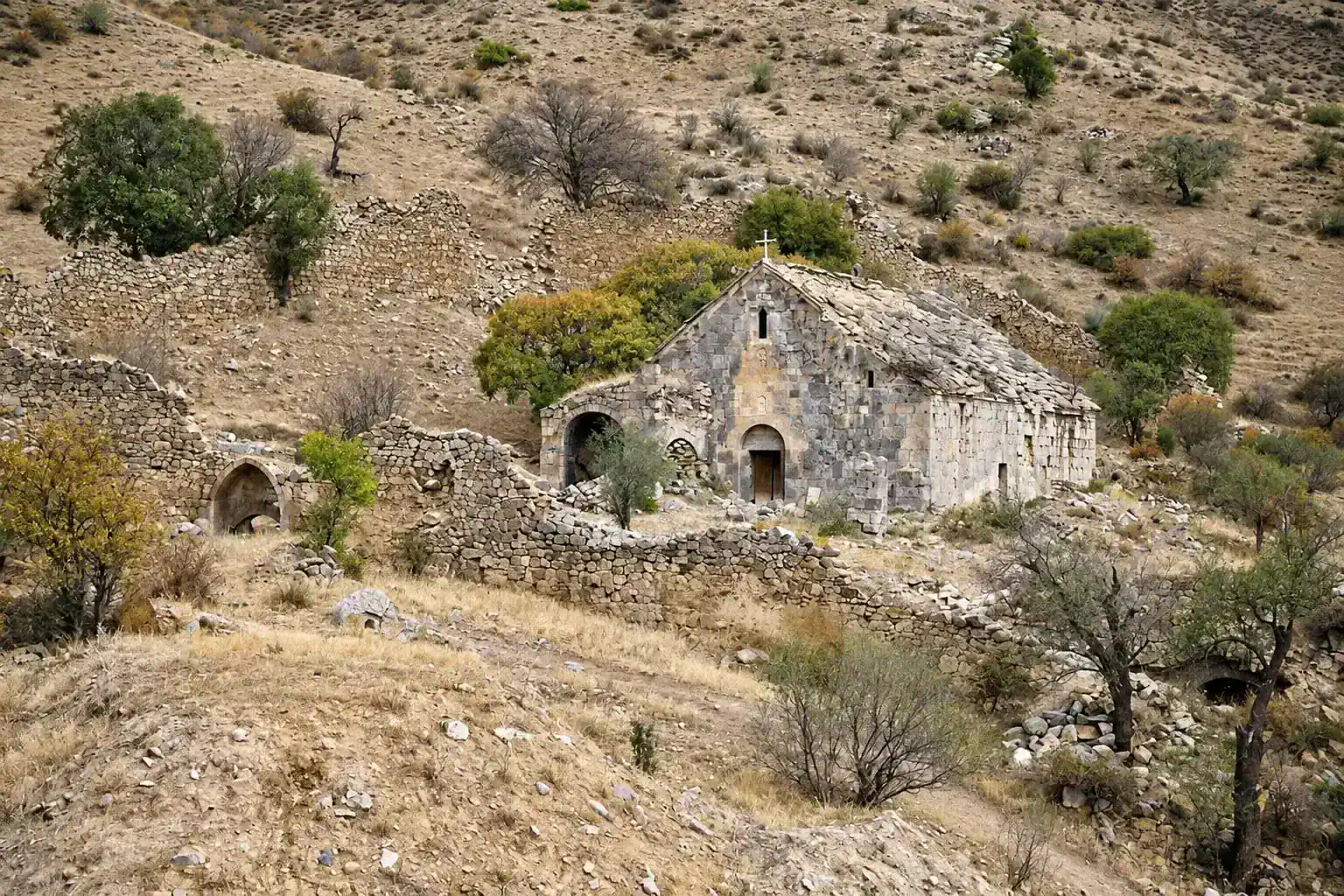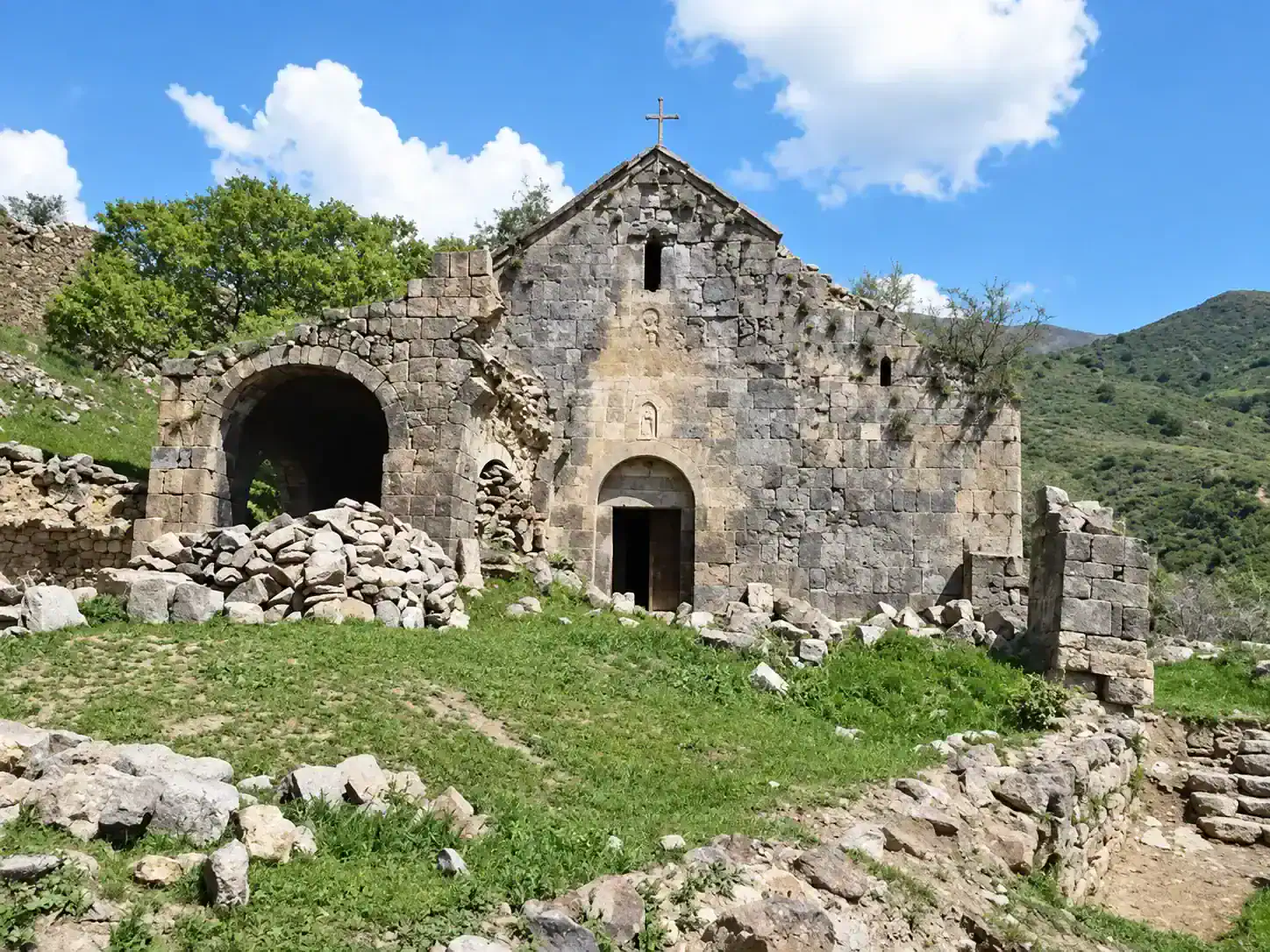
Shativank (also Shatin Monastery, Shatik Hermitage) is located in Vayots Dzor province, about 4 km east of the village of Shatin, on the bank of the Yeghegis river.
One of the main sources on Shativank's early history has been preserved through Stepanos Orbelian's "History of Syunik." According to his account, the monastery was founded in the 10th century, during the reign of King Abas I Bagratuni.
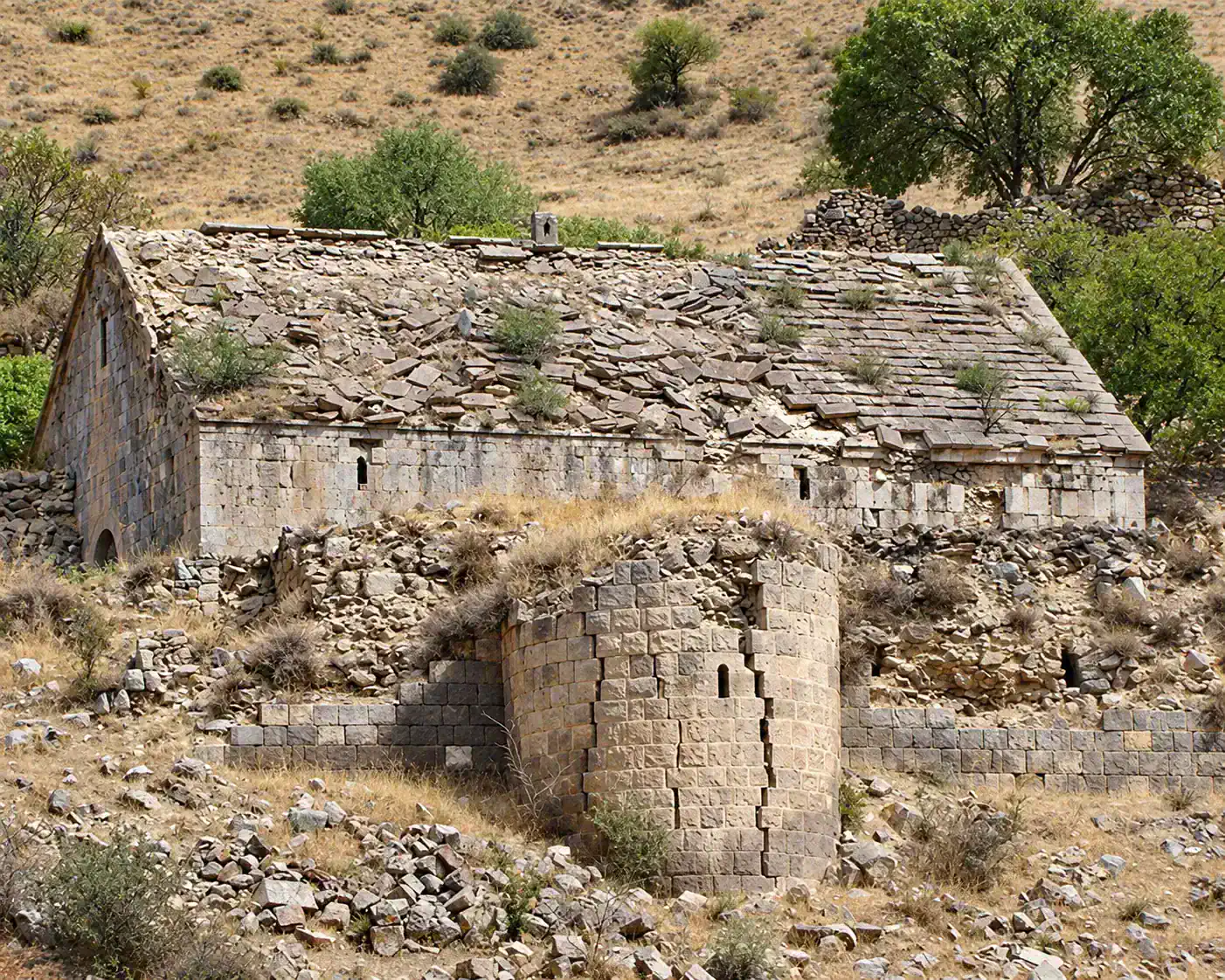
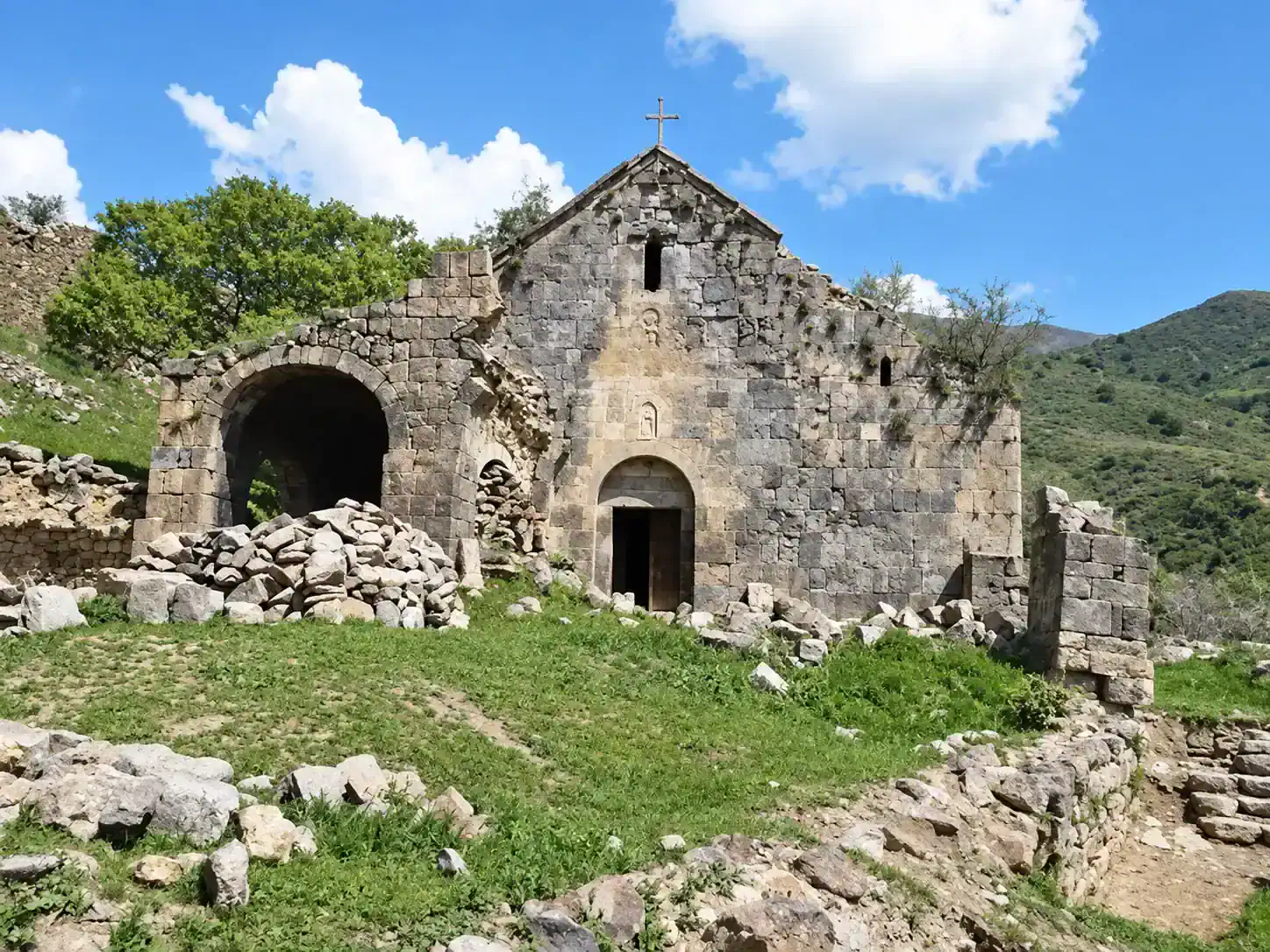
The buildings of Shatin Monastery have lost their original appearance through later renovations. Today the complex's main structure is the Surb Sion church, built in the 17th century on the site of the old monastery. The church is a three-aisled basilica with four interior piers. On the east side is a semicircular apse flanked by rectangular side chambers. The church has three entrances — from the west, south, and north. Eight windows open in the walls, in which well-dressed stones and khachkars from the old building were reused.
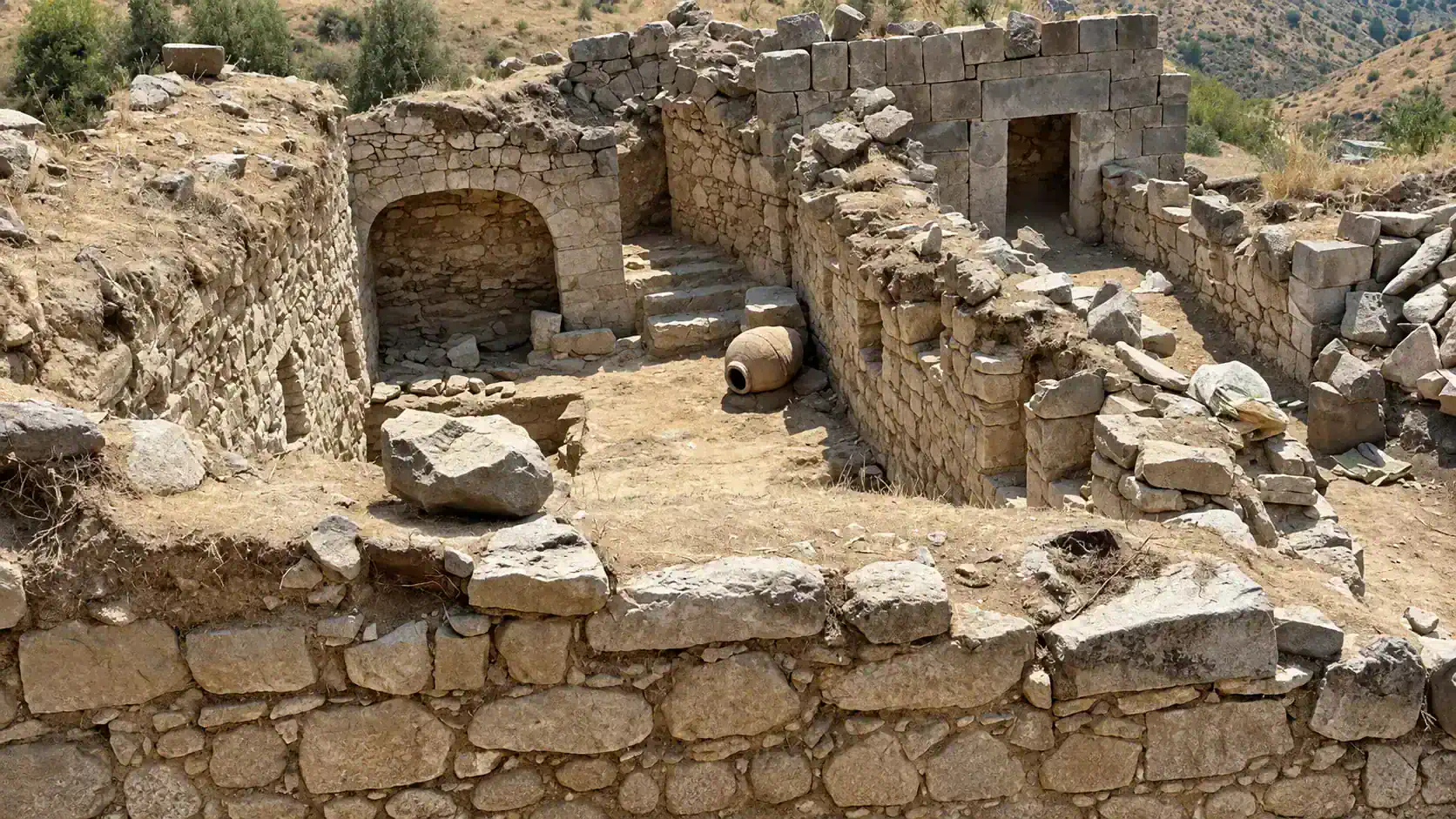
Adjoining the monastery's southern wall, the half-ruined remains of monastic auxiliary buildings have survived. The construction of the Surb Sion church is linked to the patronage of the Julfa merchant Mahtesi Hakob (Hakob Julayetsi). Above the church's western entrance, a khachkar bearing his name has survived, dated to 1661. He later became a monastic brother of the monastery and supported the complex's development with his own funds.
In the 17th century Shativank was a major spiritual and educational center. The monastery had a school, a scriptorium, and a brotherhood — 90 monks in all. About 35 two-story residential buildings were built inside the walls, their upper floors serving as living quarters and guest rooms, and their lower floors as refectories, kitchens, storerooms, and so on. In the monastery courtyard are large water cisterns and grain pits.
In the apse section of Shativank's Surb Nshan church there were once images with Gospel themes. Recent cleaning and reinforcement work has uncovered surviving sections of murals, including a scene of the Last Supper.