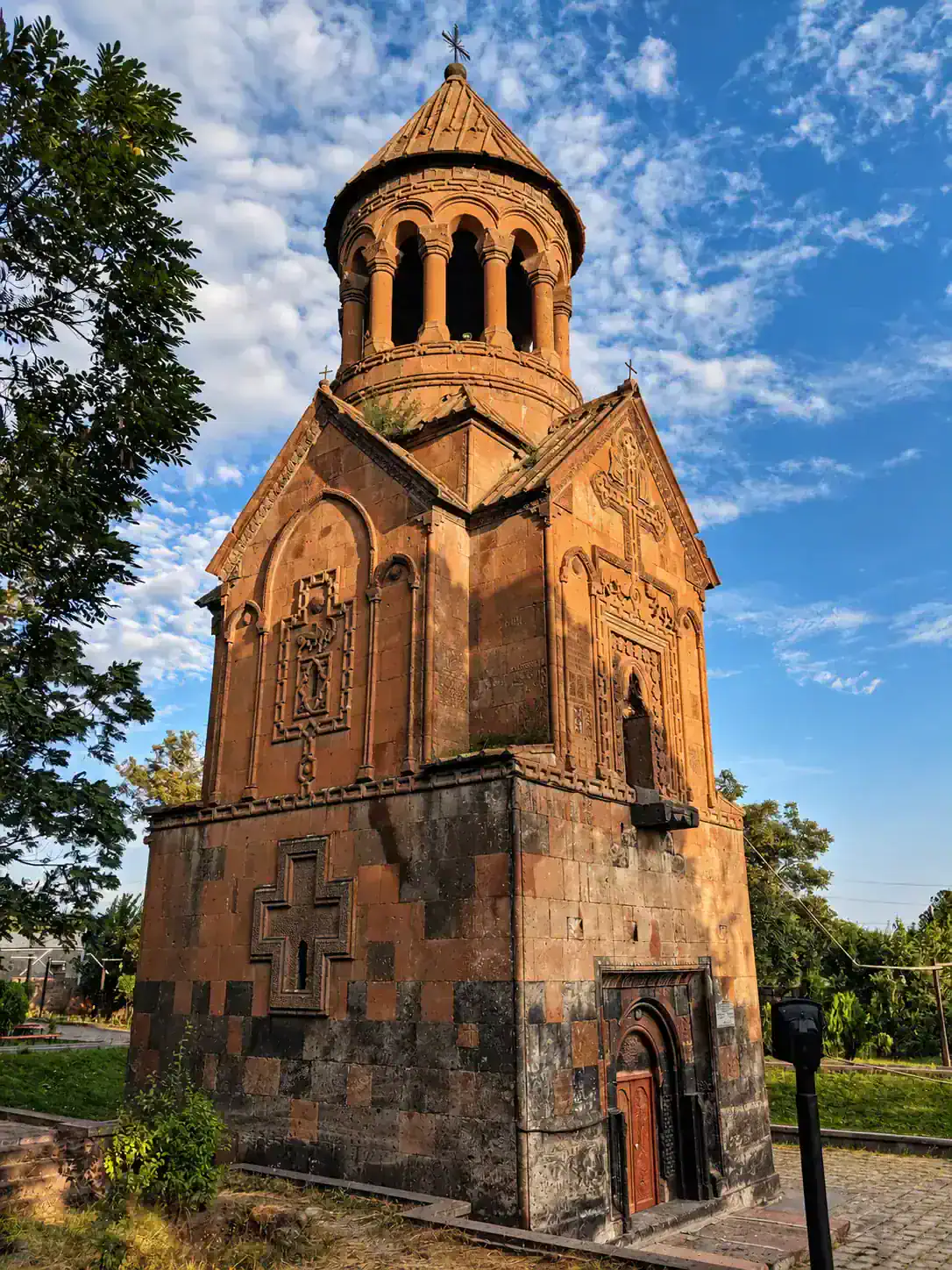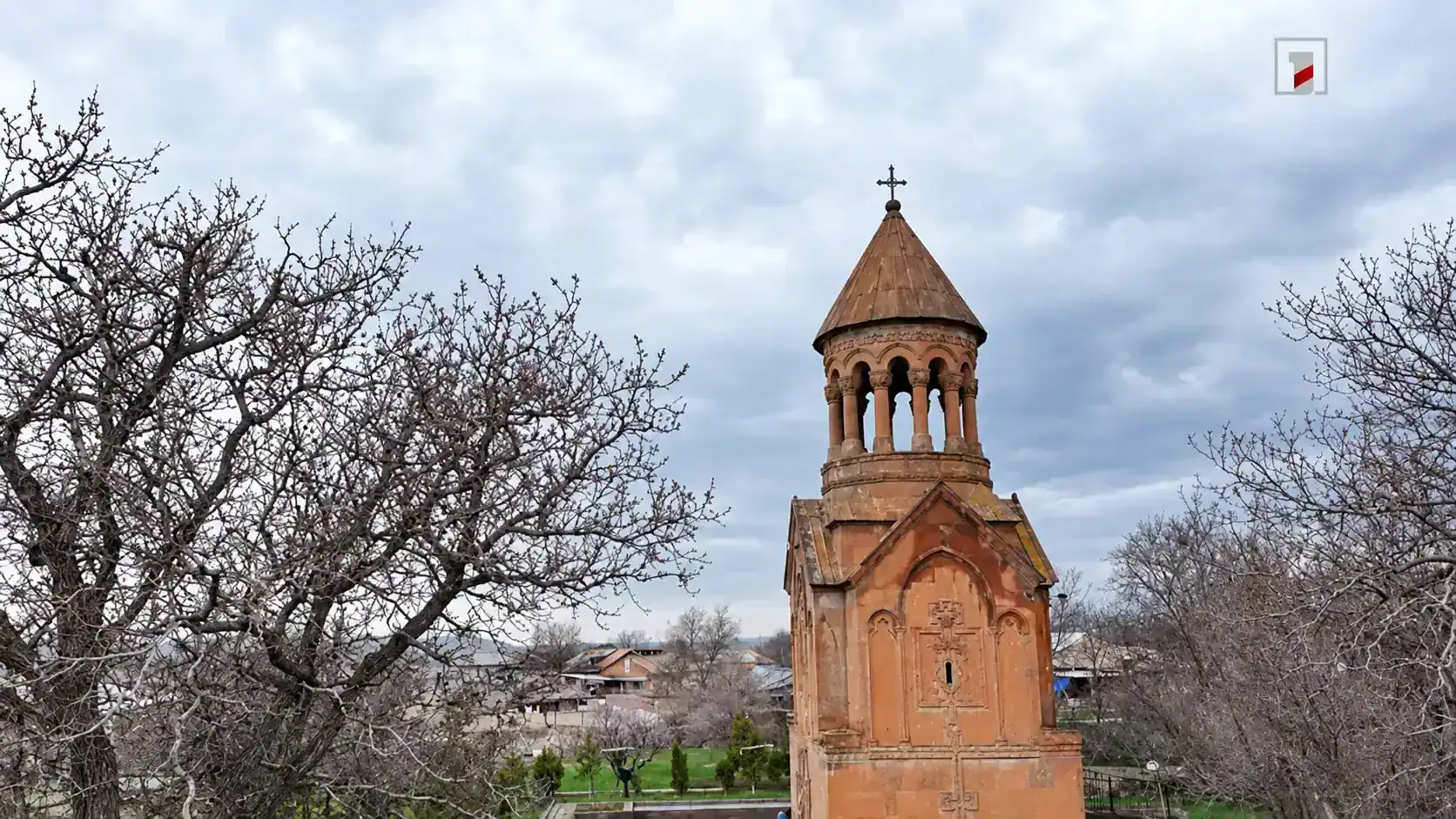
The Surb Astvatsatsin (Holy Mother of God) church of Yeghvard is located in the town of Yeghvard, Kotayk province. The structure is dated to the early 14th century, within the range of 1301–1328. It was built under the patronage of Prince Azizbek and his wife Vakhakh, and its architect was Shahik.
The structure is not an ordinary church — it is regarded as a chapel-mausoleum and belfry. The lower floor was intended as a burial space, the upper floor for cult/liturgical use. This type of two-story, tower-like structure became widespread in Armenia from the end of the 13th and the beginning of the 14th century.
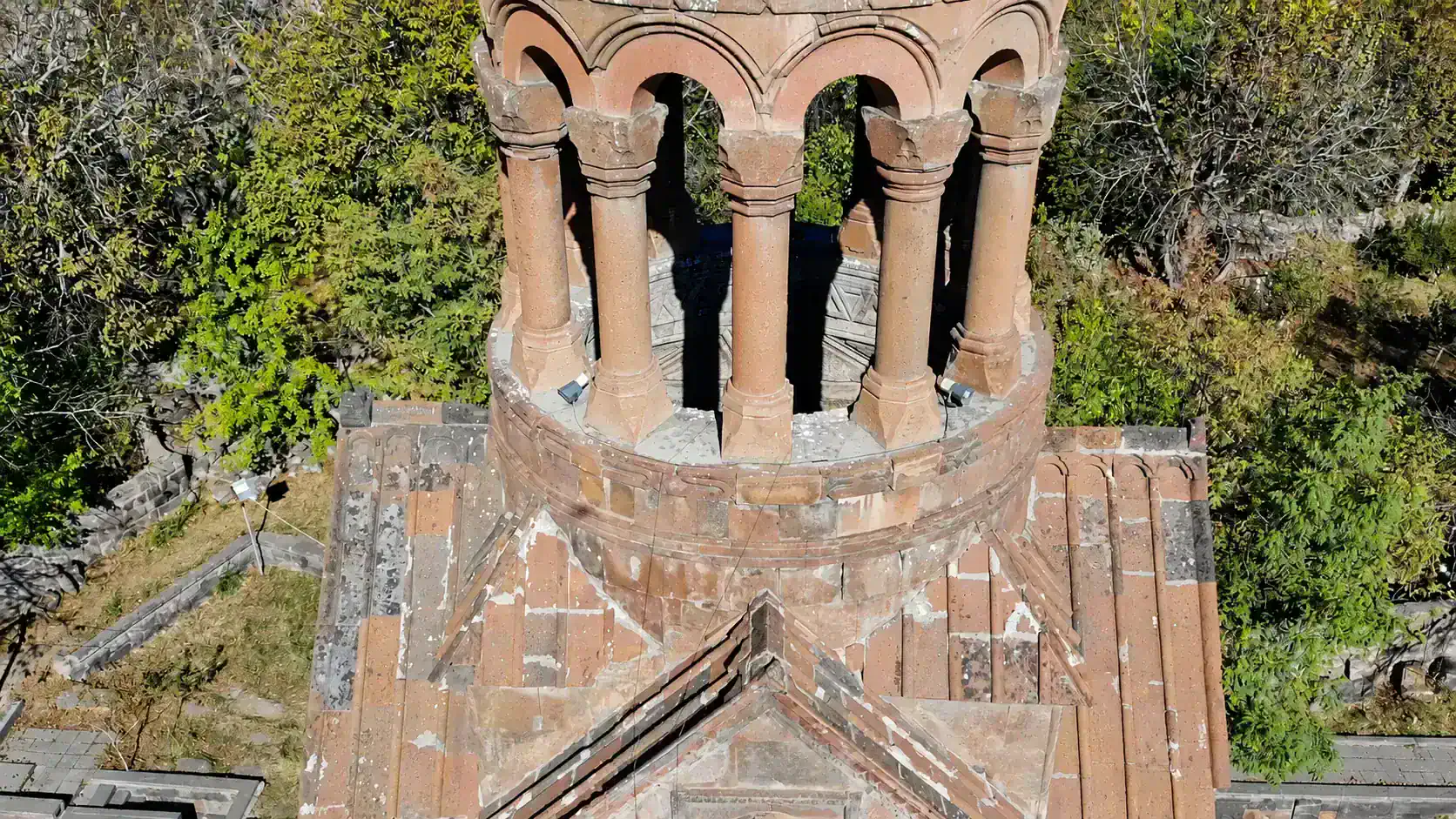
The structure is crowned by an open rotunda formed of twelve columns and a conical spire. The stone steps leading to the second floor have not survived; researchers note that access was probably by a movable wooden ladder.
The Yeghvard Surb Astvatsatsin is especially distinguished by the sculptural decoration of its façades. On the western façade are depicted the Mother of God with the Child, and the prophet Isaiah, on either side of a large cross. Other façades bear animal images — an eagle holding a living creature in its talons, a mountain goat, and a scene of a predator's attack.
The same architect, Shahik, built the mausoleum of Khachen-Dorbatlu in 1314, and certain animal images in the decoration of the two structures are repeated in almost identical form.
Glazed tiles, rare in Armenia, have also survived on the church's drum.
The church was renovated in 1745, as attested by a surviving inscription. In the 20th century a wooden narthex that had existed adjoining the structure was removed during archaeological work, and 2007 excavations uncovered, northwest of the church, the remains of two small chapels dated to the 5th–6th and 7th centuries.