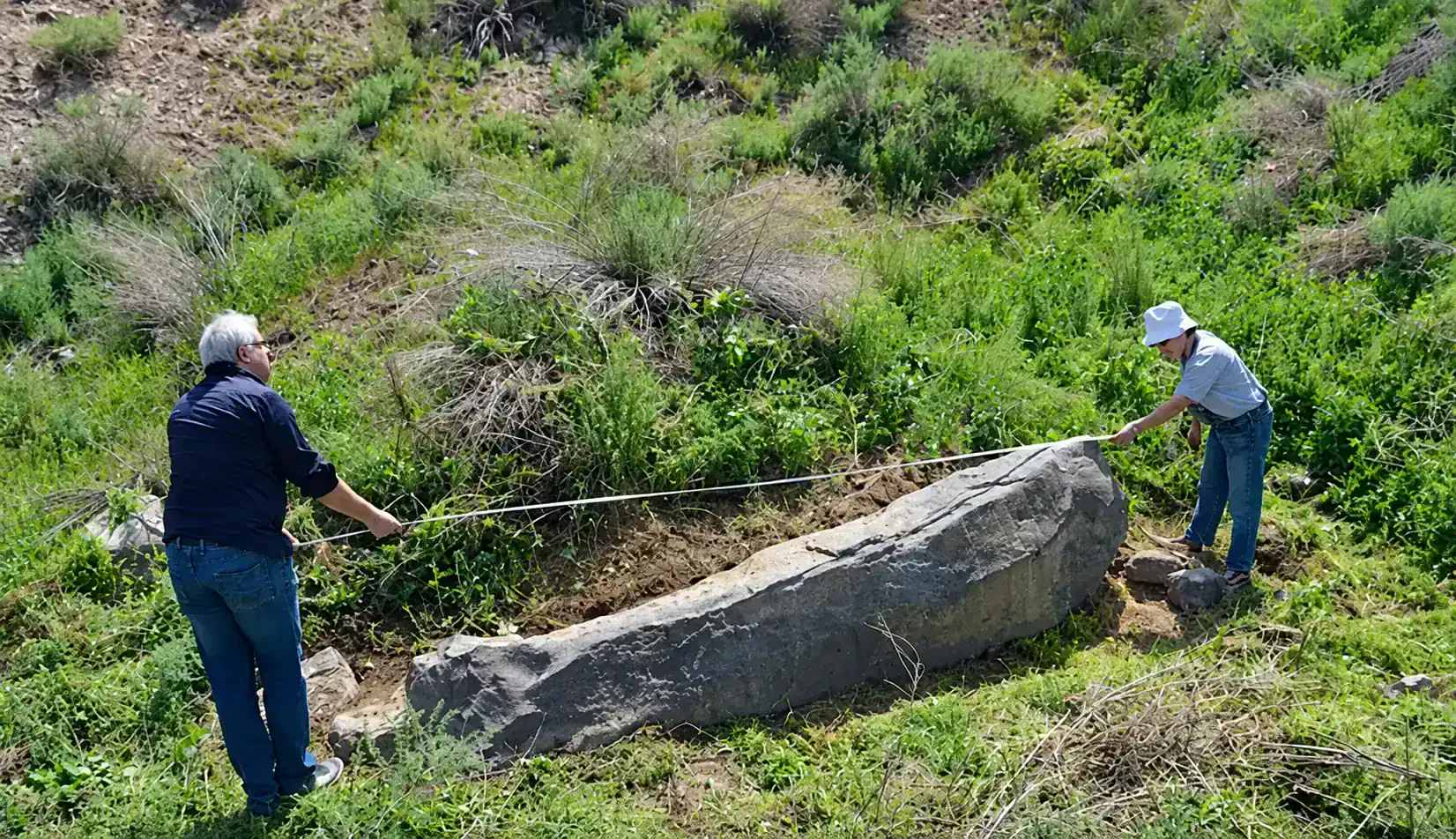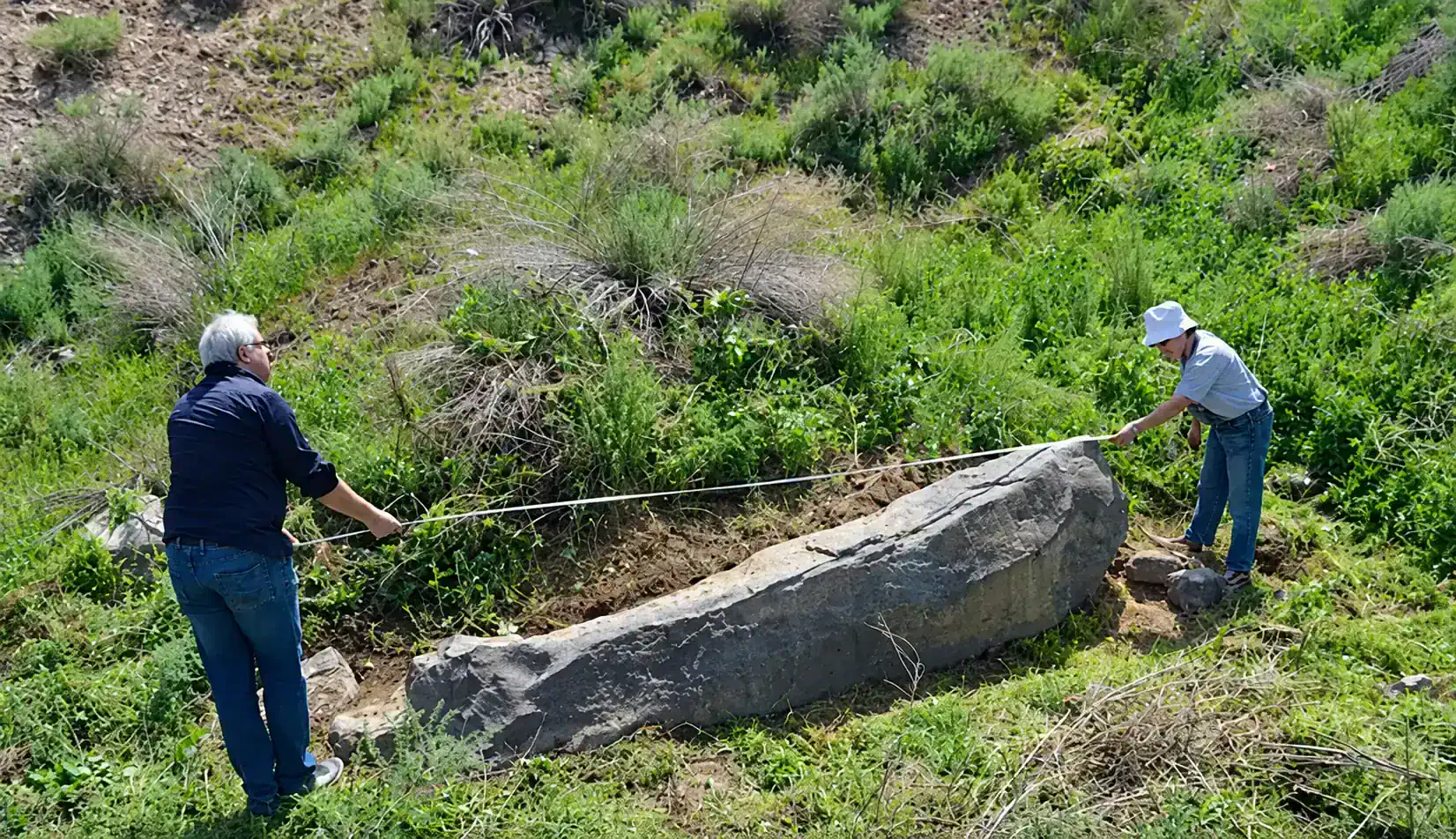
Mokhrablur is an early Bronze Age, multi-layered settlement mound in the Ararat plain, about 4 km south of Etchmiadzin, on the left bank of the old channel of the Kasagh river. The site covers about 3.5 hectares, and the maximum thickness of the cultural layer reaches around 10 m. Remains of 12 settlement horizons, formed one atop another, have been uncovered here. In the site's main lower layer, more than 8 m thick, nine successive settlements have been distinguished. The oldest of these dates to the second half of the 4th millennium BC, while the upper phase of the Early Bronze Age settlement extends to the middle of the 3rd millennium BC.
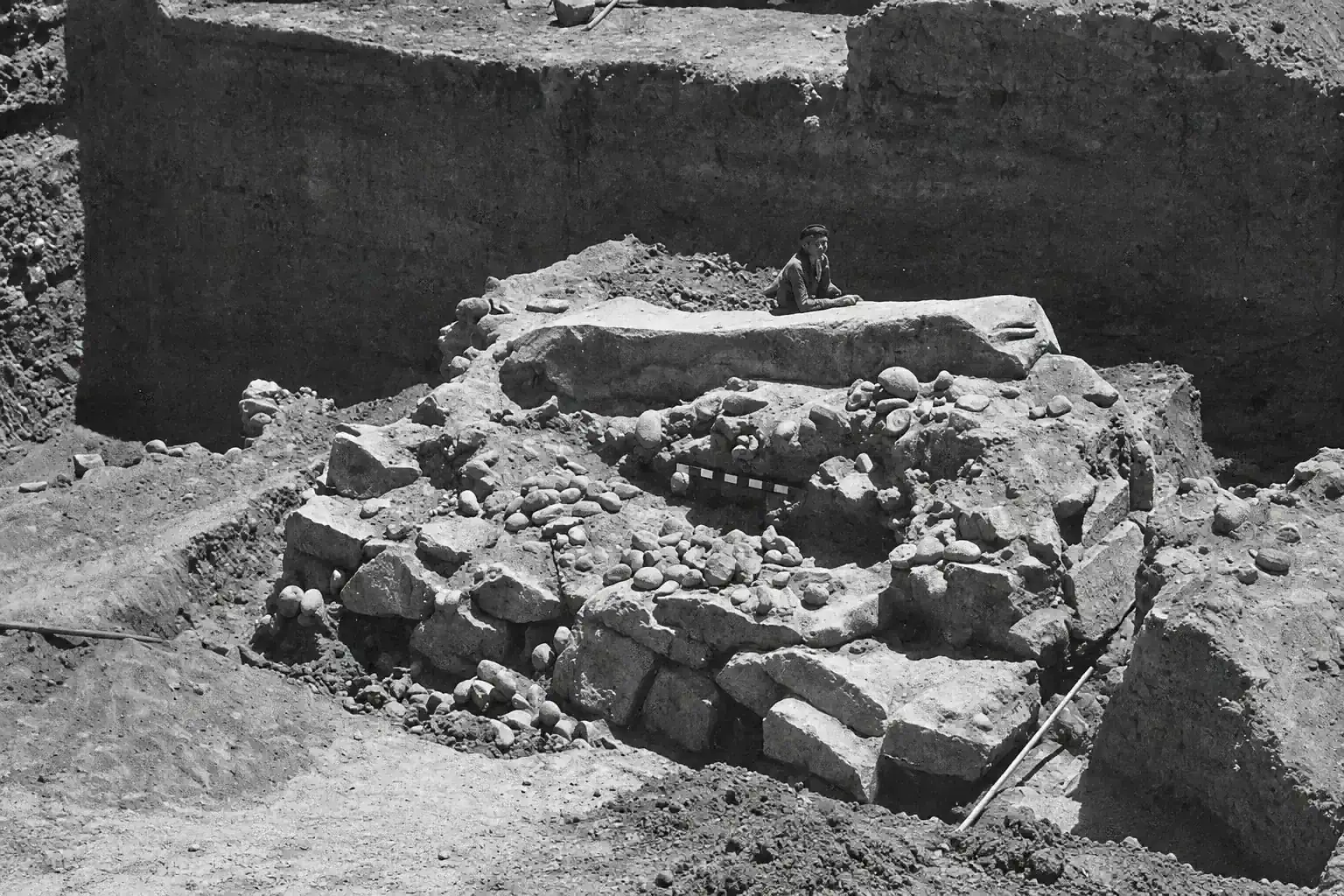
The most ancient settlement consisted of small, round-plan dwellings built of mudbrick. In the first half of the 3rd millennium BC it was built up with large structures with thick walls and was walled on the outside. A temple was built on the central square, with a tower 4.5 m high at its center, topped by a sacrificial altar. This temple is the oldest known monument of monumental architecture found to date on the territory of the former USSR.
In layers XI–IX of Mokhrablur, early Kura-Araxes pottery with pitted and relief ornament was found, while in layers VIII–III pottery close to the materials of Shresh-blur was already widespread.
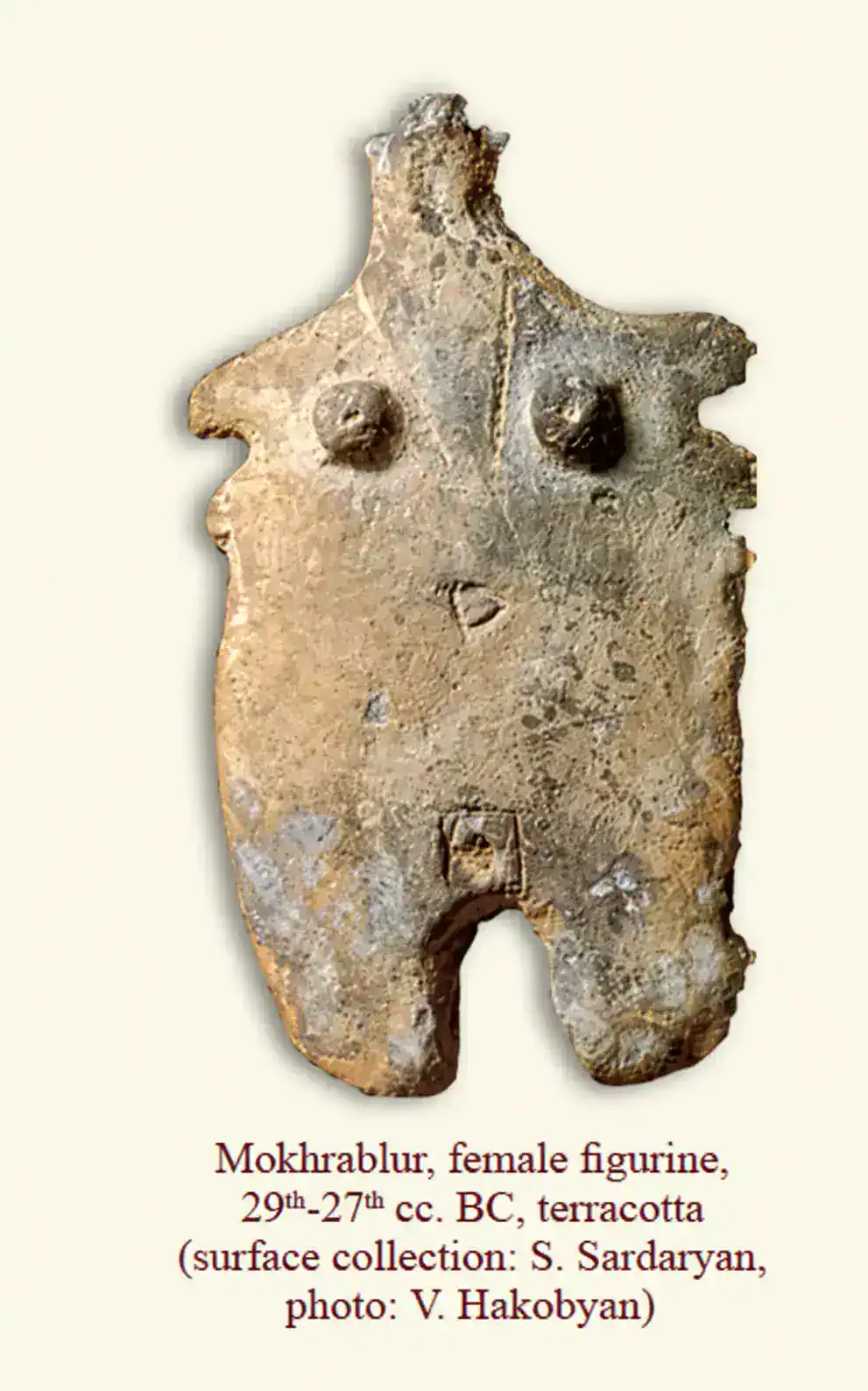
Objects found at the site also give a picture of the inhabitants' ritual life. The Early Bronze Age collection of the History Museum of Armenia includes, from Mokhrablur, ritual hearths, stands/pedestals, clay vessels, and anthropomorphic and zoomorphic clay figurines.
Water dams were also found at Mokhrablur. They were designed to accumulate water and regulate its flow, and also made it possible to enrich the cultivated land with silt. The inhabitants crossed the bed of the Kasagh river with a long dam, creating a complex hydro-technical structure. The development of crafts was closely tied to bronze-working.
According to stratigraphic data, settlement here was renewed in the Early Iron Age, then interrupted, and resumed again in the Hellenistic period.