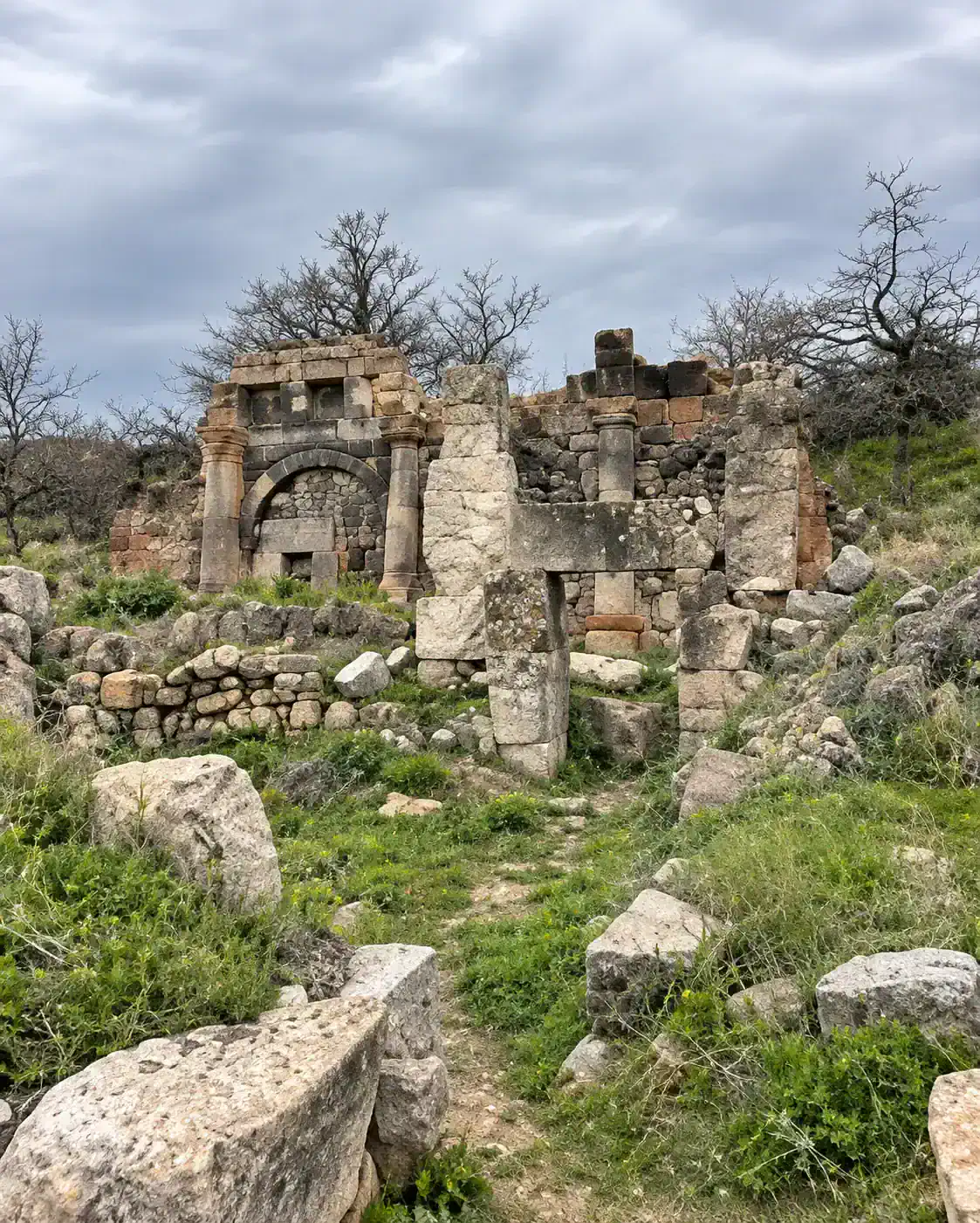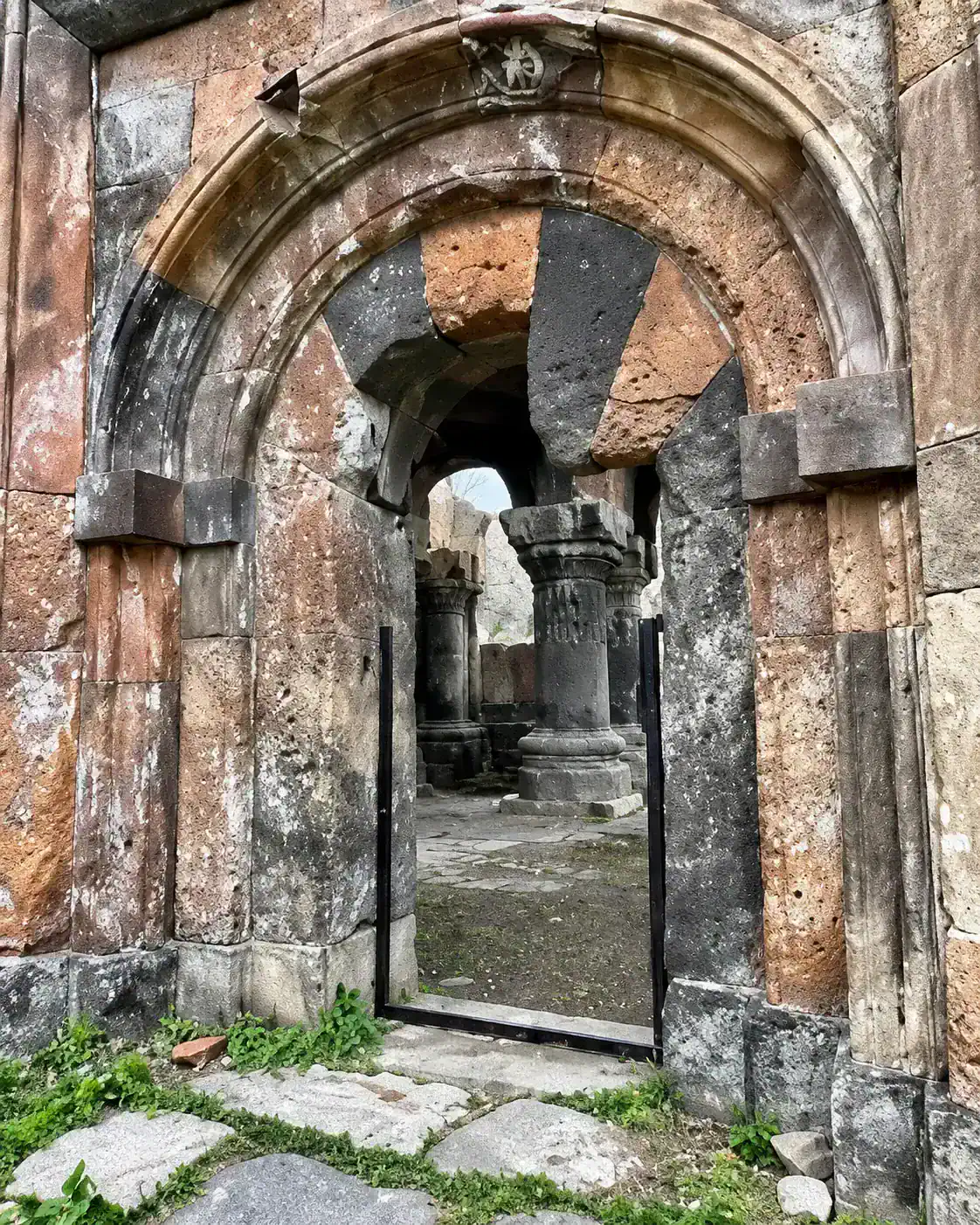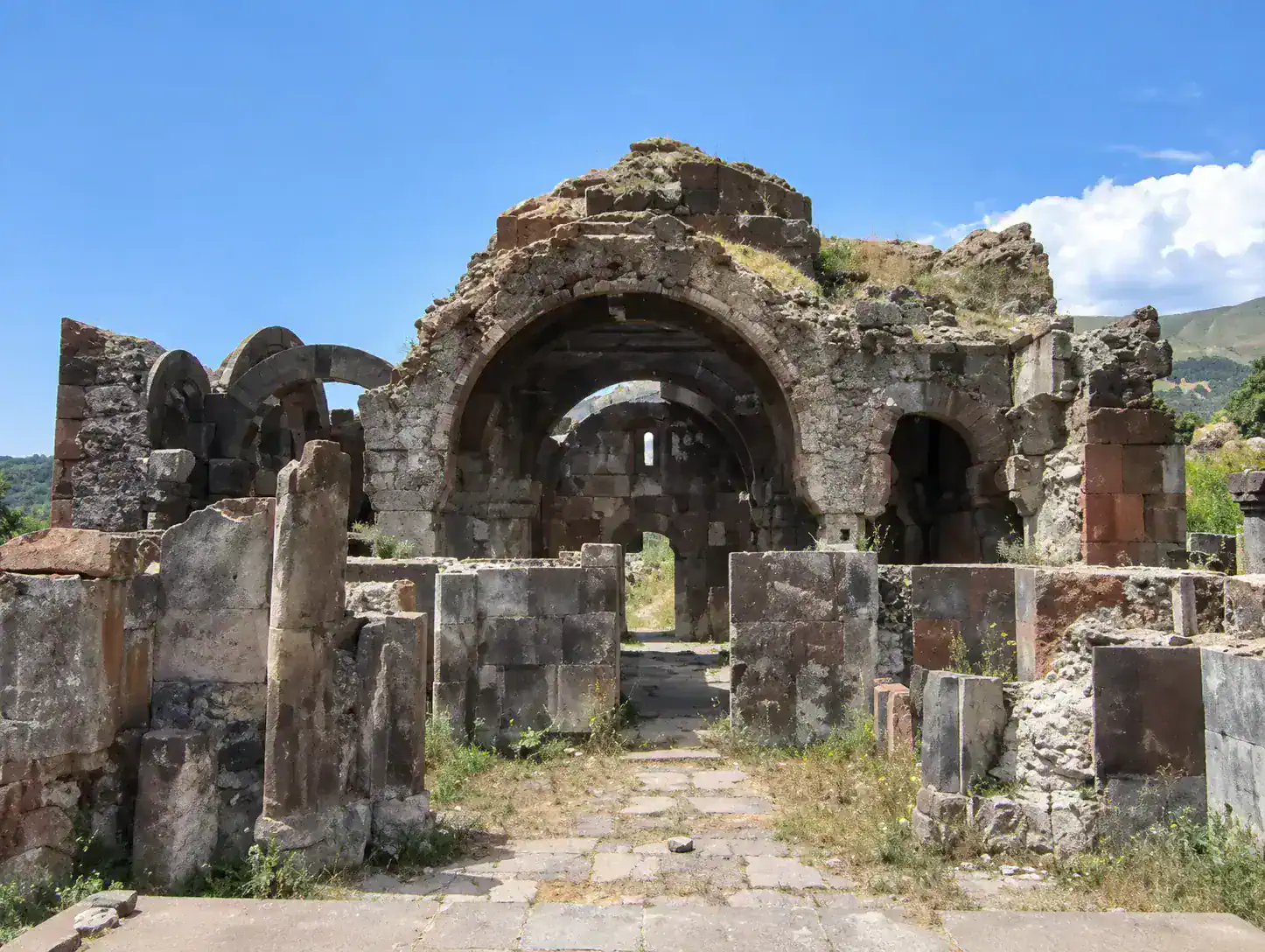
Teghenyats monastery is located in Kotayk province, about 3 km north of the village of Buzhakan. It is dated to the 7th–15th centuries and includes an early church, the Katoghike (Cathedral) church, narthexes (gavits), a refectory, and other structures.
The most notable part of the Katoghike church is the front section of its altar platform, consisting of six square and rectangular stones. On the central stone is carved a peacock with its tail spread, wings half-open, and its head turned to the right; on the bird's head is the three-pointed, cross-shaped crest characteristic of peacock depictions.
Excavation work at the monument began in 1979. During the excavations the scriptorium (book-repository) was uncovered, adjoining the southern wall of the Katoghike church. Of great interest among the finds are small locks; locks of this type were known as far back as ancient China, Japan, Rome, and Asia Minor.
Teghenyats was an important educational and scriptorial center in the 11th–14th centuries. Kirakos Gandzaketsi, Sargis Imastaser, Vardan Areveltsi, Vanakan Vardapet, Hakob Vardapet, and Mkrtich Rabuni lived or worked here; Gevorg Skevratsi and Terter Yerevantsi also studied here. Some manuscripts created by scribes who worked at the monastery are preserved at the Matenadaran, others at the British Museum.
Excavations from 2008–2011 provided further material on the monastery's everyday life. Researchers have divided the pottery found there into household/economic and construction groups, with the household vessels further split into plain and glazed types. A large number of storage jars (kchuchs) and pithoi (karases) have also been found.