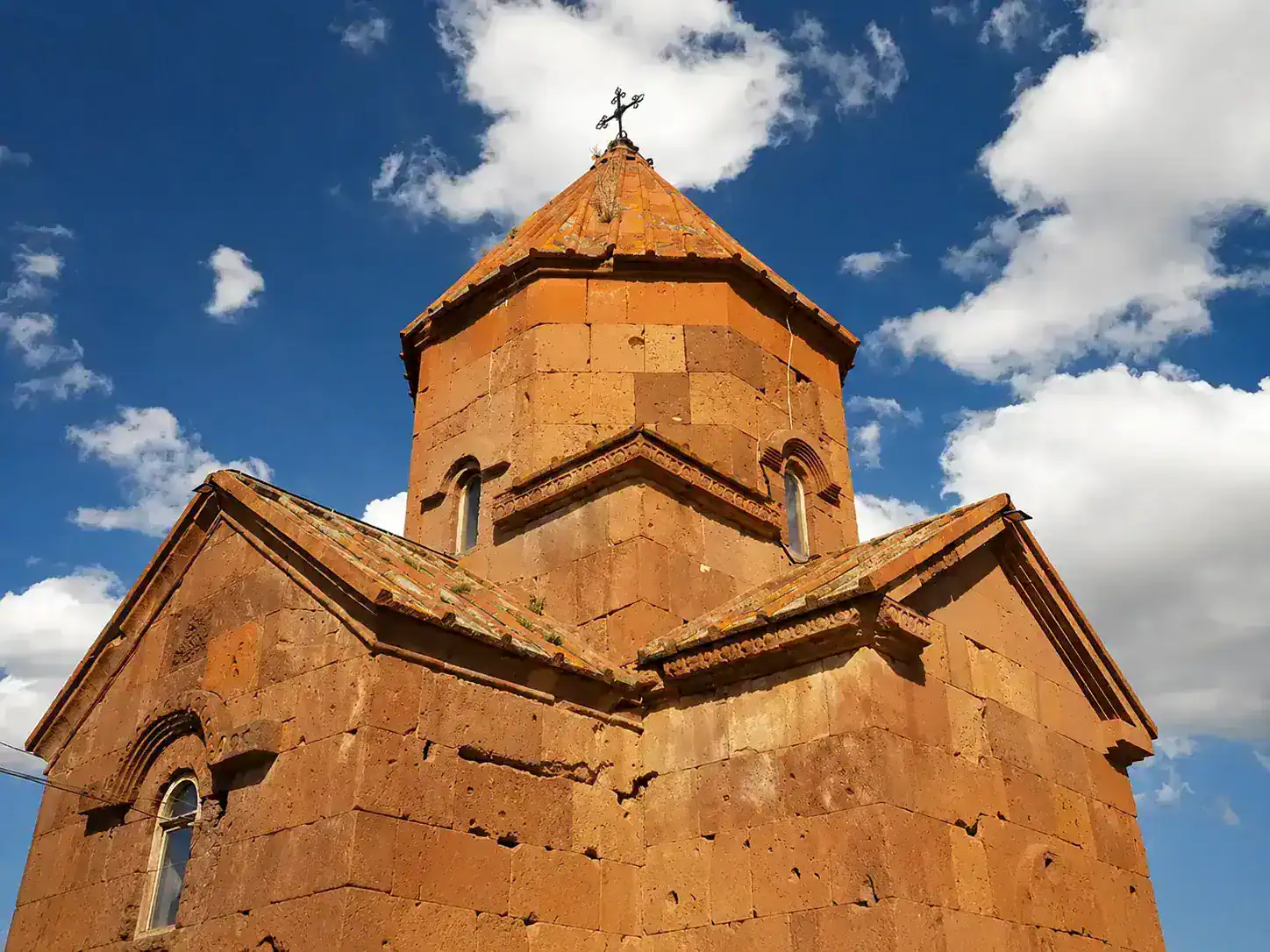
The Holy Stephen Church of Lmbatavank is located in the Shirak region, about 1.5–2 km southwest of the town of Artik. The monastery has also carried the names Karmir Vank ("Red Monastery") and Hrashagorts Vank ("Miracle-working Monastery").
According to T. Toramanyan, the monastery is a 7th-century structure. The church is a small, cross-shaped, domed, single-apse building, built of finely dressed tuff. In its plan the eastern main apse stands out, while the other three directions form the cross arms.
Cleanup work carried out around the church in 1955 showed that Lmbatavank is only part of a former, larger complex. On the southern side of the western cross-arm, the remains of another structure's apse and western portal were uncovered, along with khachkars. The foundations of a large mausoleum and gravestones typical of the 9th–10th centuries were also found.
According to one inscription, Ter Barsegh, son of Vahram Pahlavuni, bought the monastery back from "the lawless" for money, restored the water rights that had previously belonged to it, and donated the village of Tsitsk to the monastery.
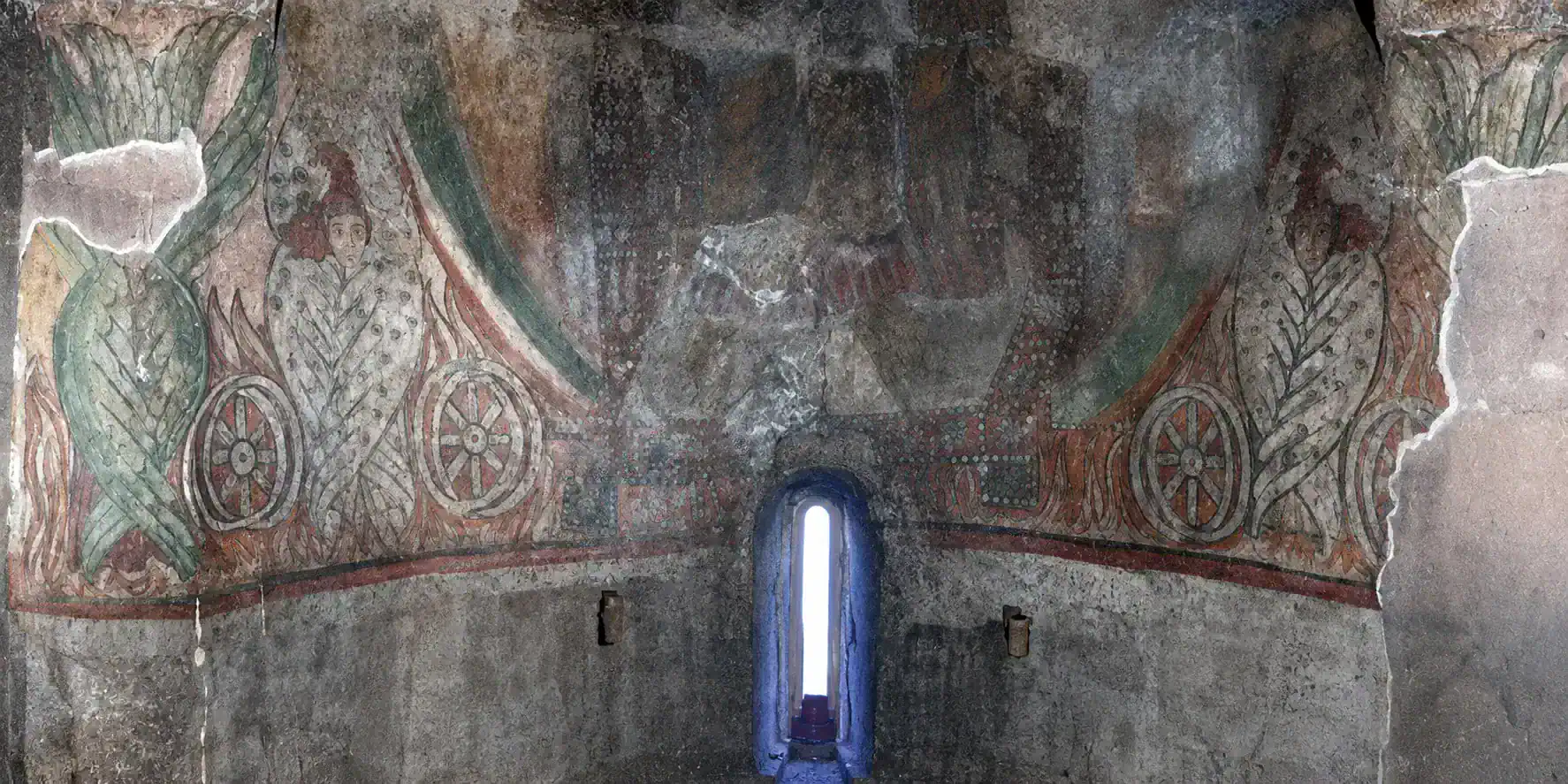
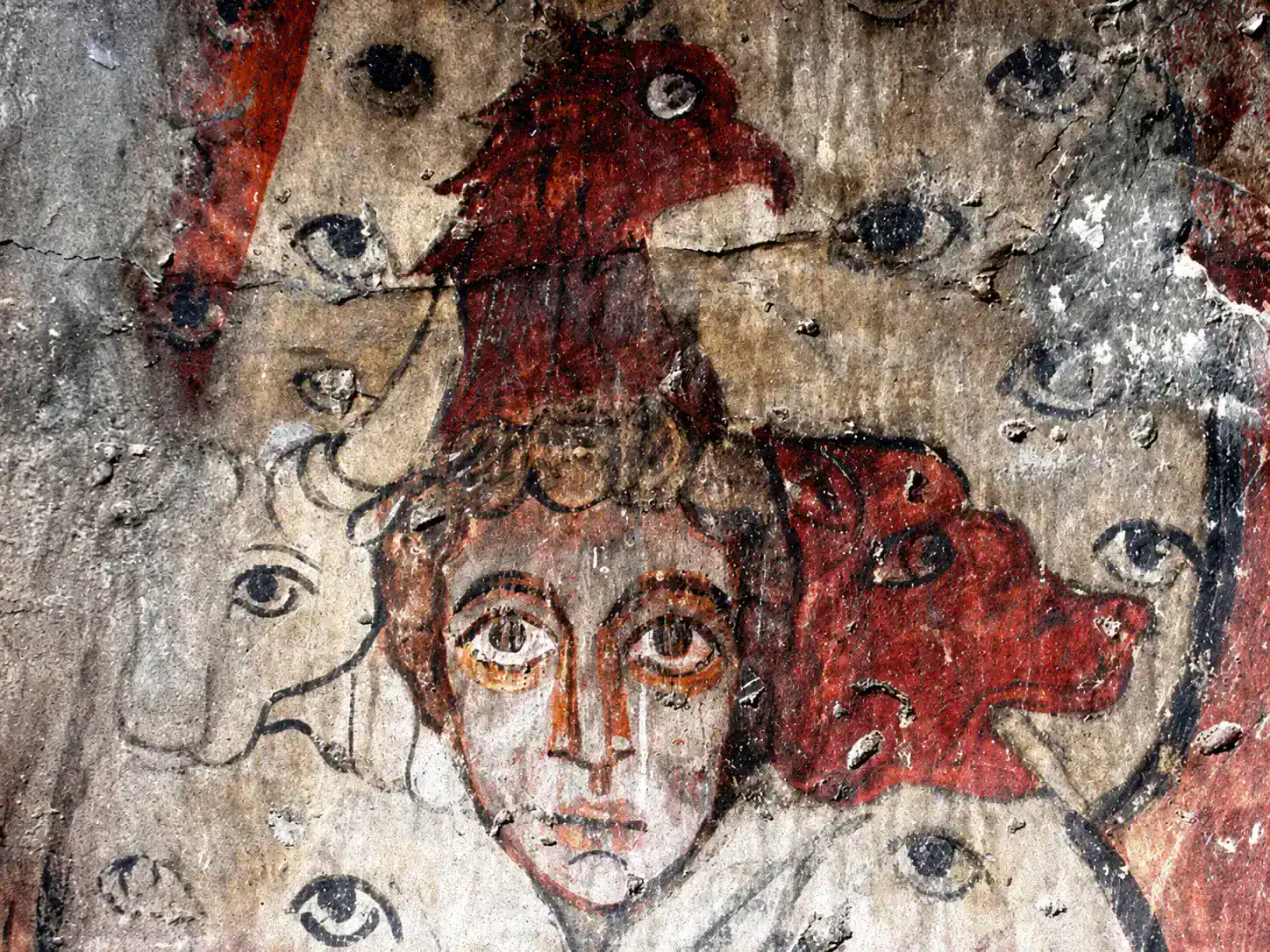
Early medieval murals have been preserved at Lmbatavank. In the vault above the main apse, part of a Theophany composition based on the Prophet Ezekiel's vision has survived. At the center was Christ enthroned, seated on a rainbow arc and a pearl-adorned throne.
The church is currently known as a place of pilgrimage. The main pilgrimage takes place on the first Saturday of October, when the relic of Saint Stephen the Protomartyr is brought here from the Mother See of Holy Etchmiadzin.