Abovyan Street is one of the main streets of Yerevan’s historic centre and an important chapter in the history of the city’s regular urban planning.
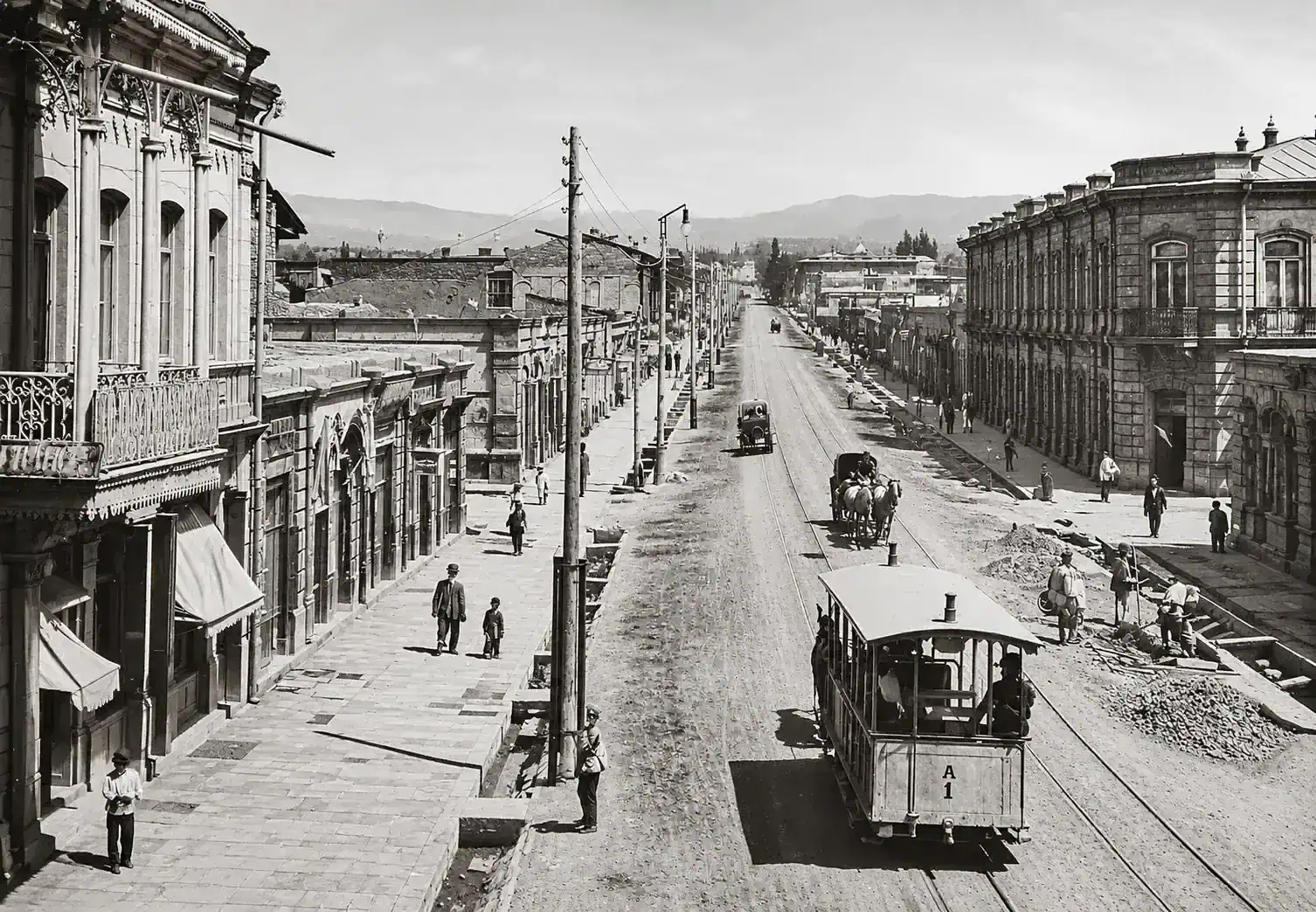
Under Yerevan’s 1856 master plan, the street was laid out as the city’s main north–south axis. It was first called Fortress Street (Krepostnaya), as it led south towards the Yerevan Fortress. In 1869, part of the street was renamed Astafyan Street after Mikhail Astafyev, the governor of Yerevan. In 1920, it was named after Khachatur Abovyan.
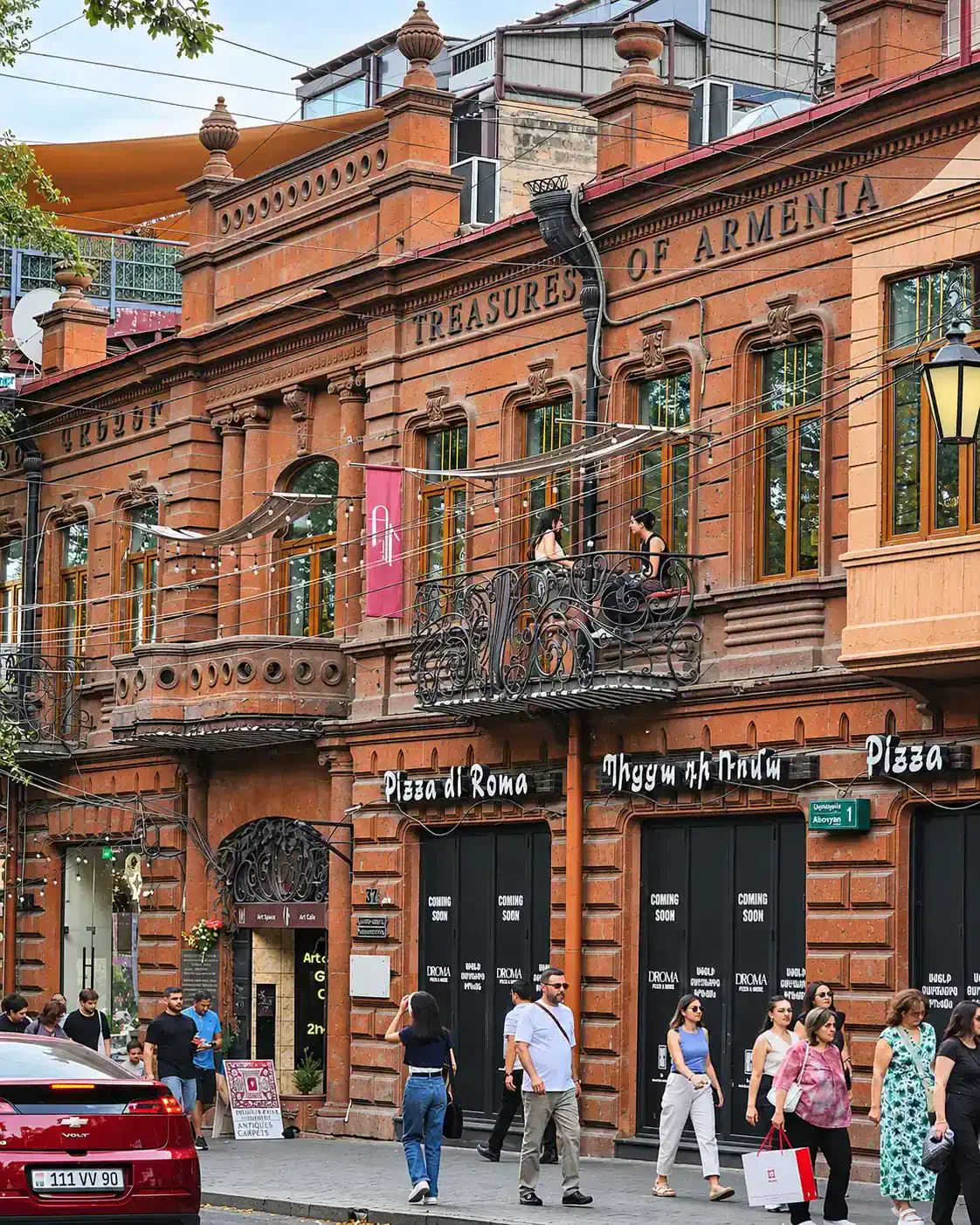
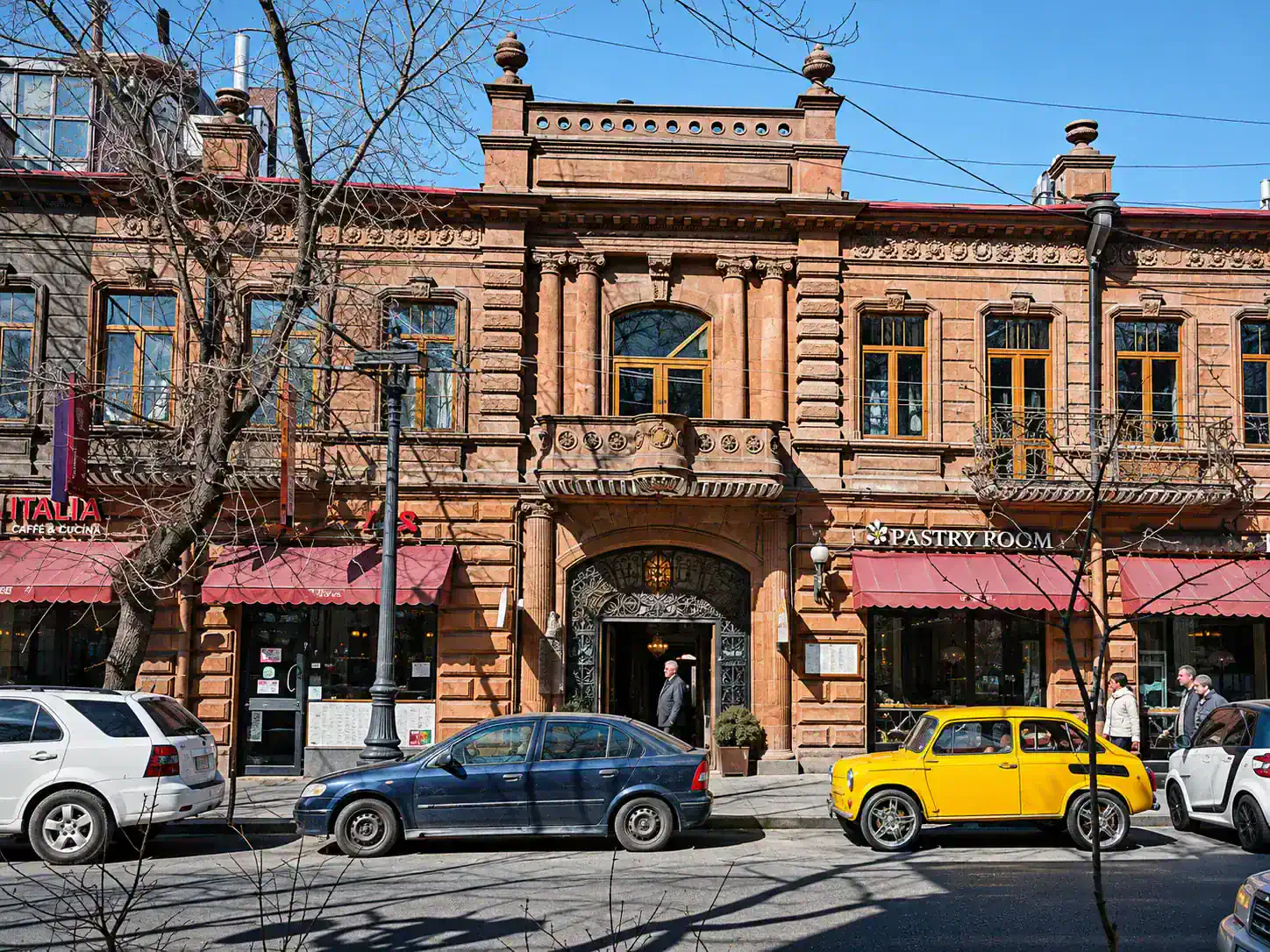
In the second half of the 19th century, Astafyan Street gradually became one of the liveliest parts of Yerevan. The city’s wealthy families lived here, alongside shops, workshops, hotels and other businesses. A distinctive type of building spread along the street: houses whose ground floors were meant for shops or other businesses, while the upper floors were residential. A well-preserved example from this period is the Khanzadyan House complex at 3/1 Abovyan Street.
Construction of the Khanzadyan House began in 1896 to a design by architect Vasily Mirzoyan, and in 1905 new wings were added to the complex, designed by Boris Mehrabyan. The ground floor housed Yegor Khanzadyan’s well-known “Saxon” shop, founded back in 1877, which sold Russian and imported goods. The building’s architecture stands out for the horizontal divisions of its street façades, arched entrances, balconies with decorative metal railings and tuff stone masonry.
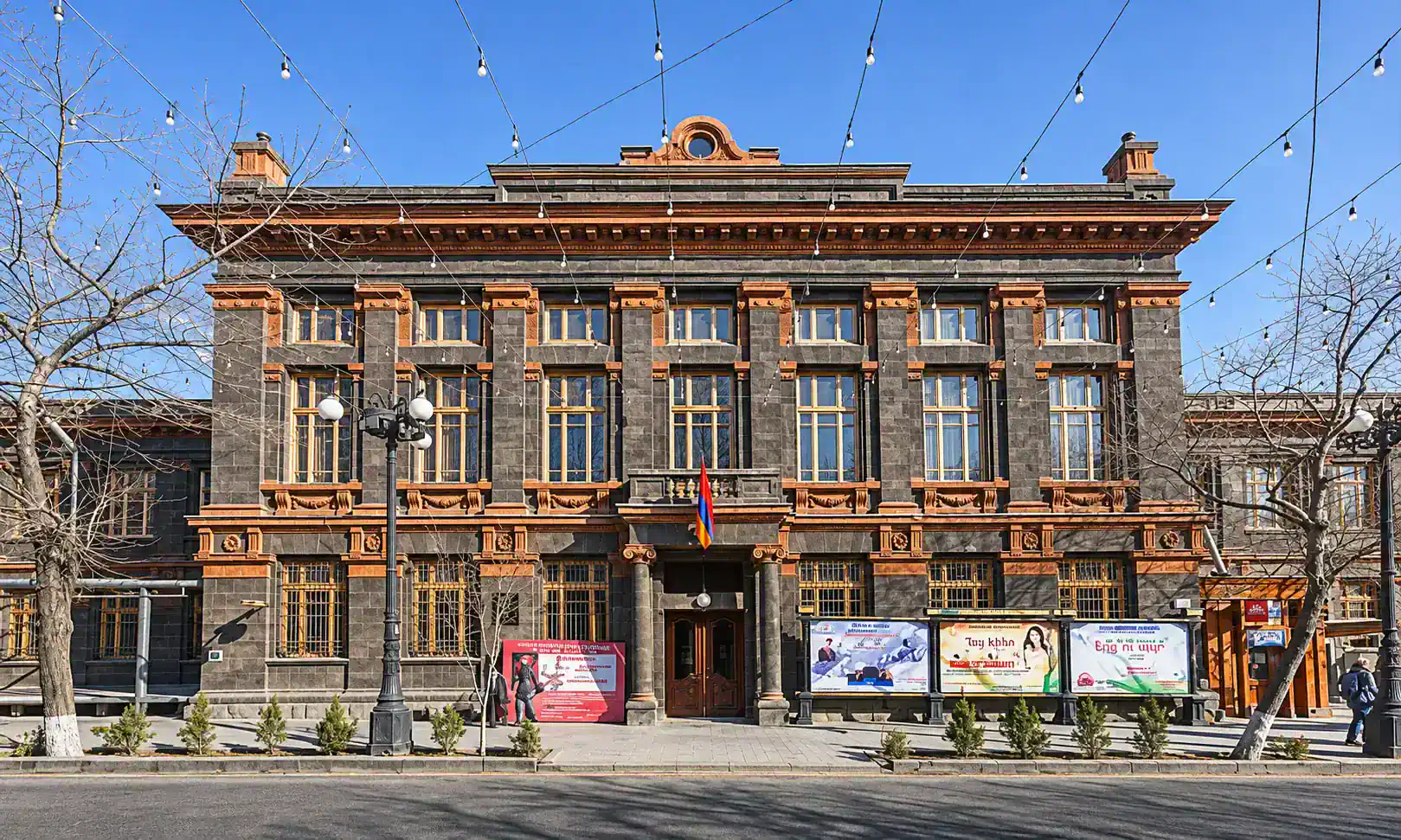
The black tuff building at 52 Abovyan Street was built in 1905 to a design by Vasily Mirzoyan and Nikolay Kitkin. It was originally intended for the Yerevan Teachers’ Seminary. Later the building served as barracks, then as an orphanage, and since the 1920s it has been connected with Yerevan’s university life.
The basilica of the Holy Mother of God (Surb Astvatsatsin), built in 1693–1695, once stood here. It was demolished in 1936, and during the demolition the 13th-century (1264) Katoghike Church was uncovered.
Khachkars (cross-stones) from different periods have been preserved on the church grounds, including ones dating from the 15th and 17th centuries and from 1693–1694.