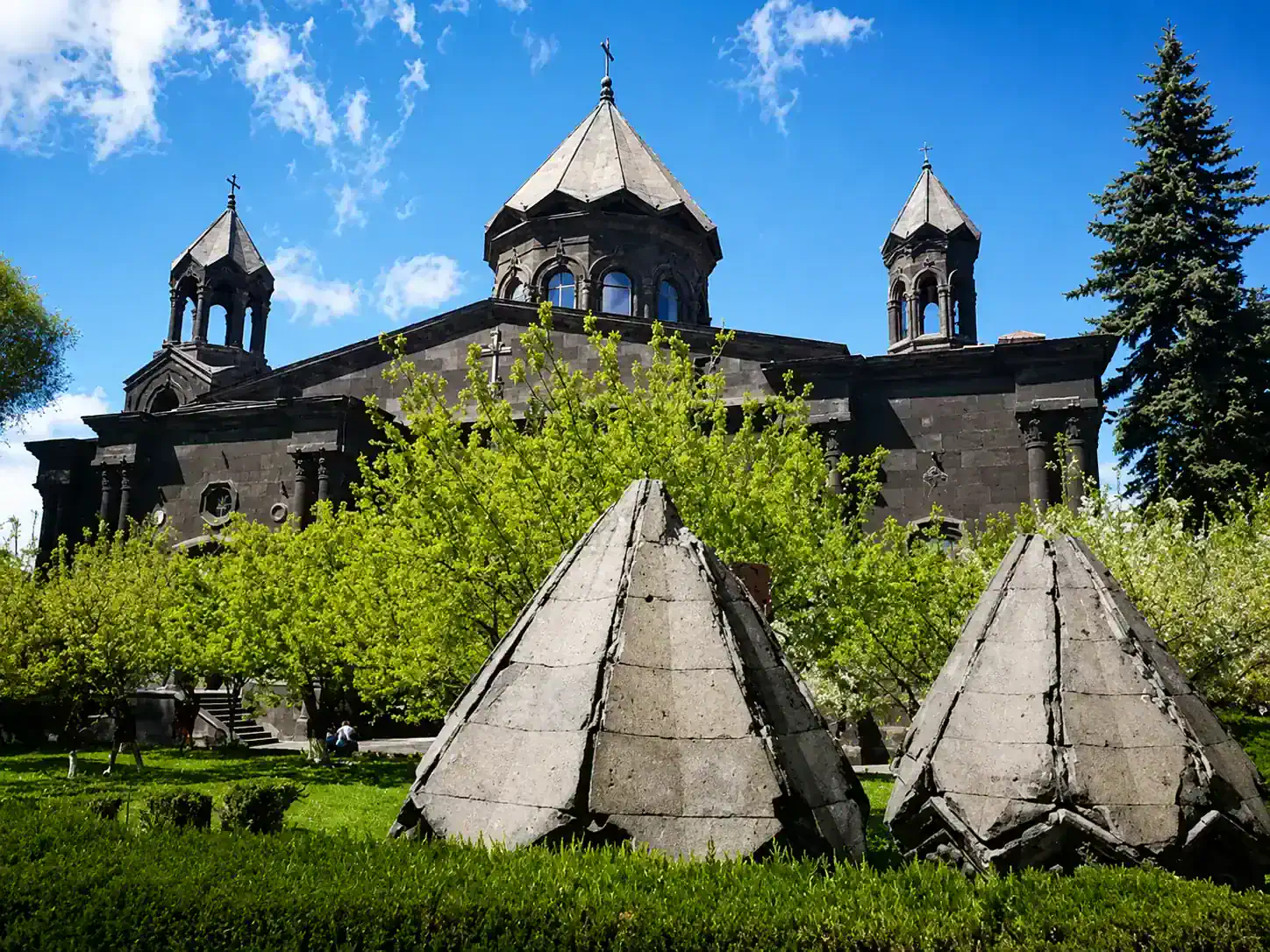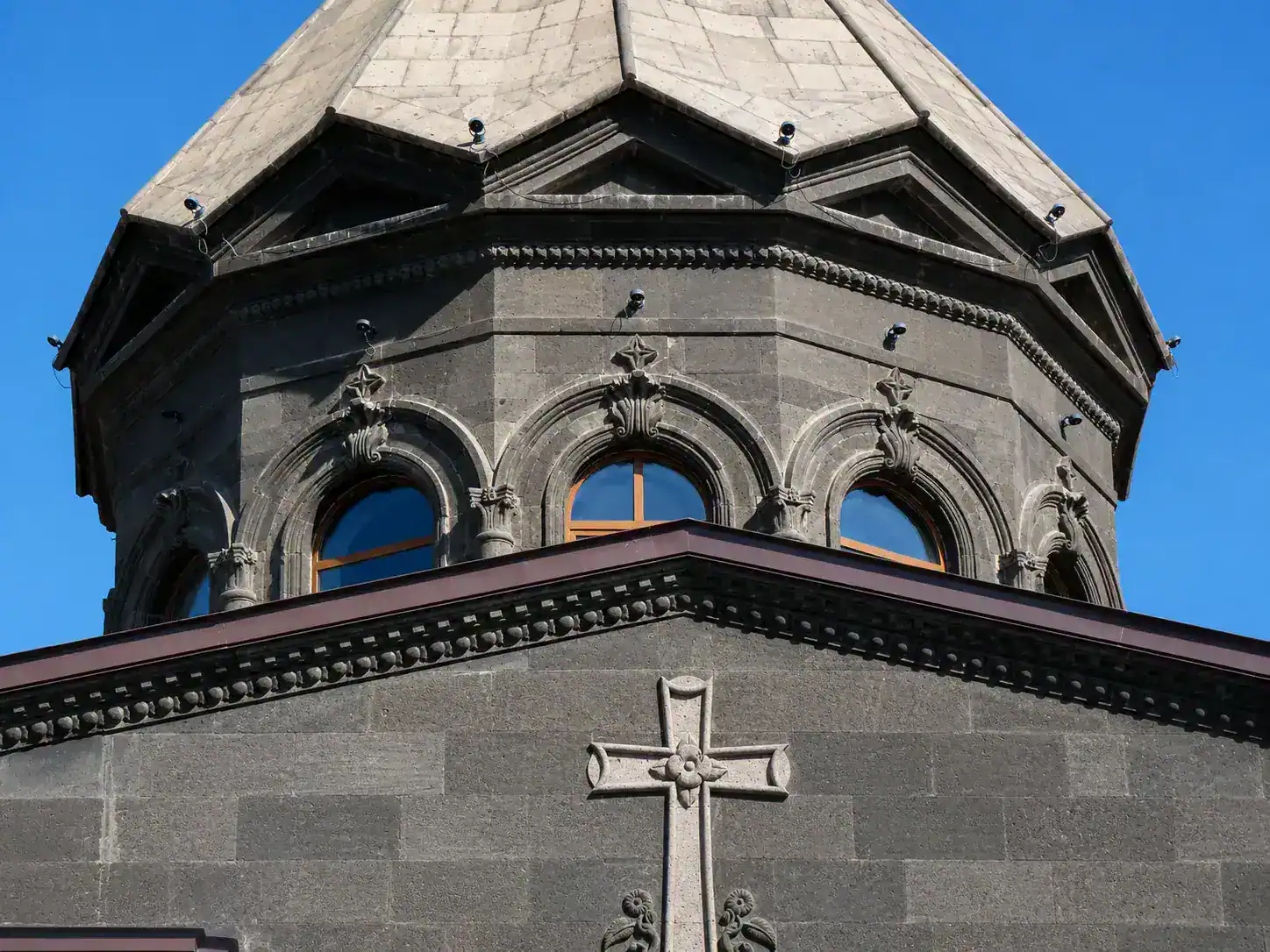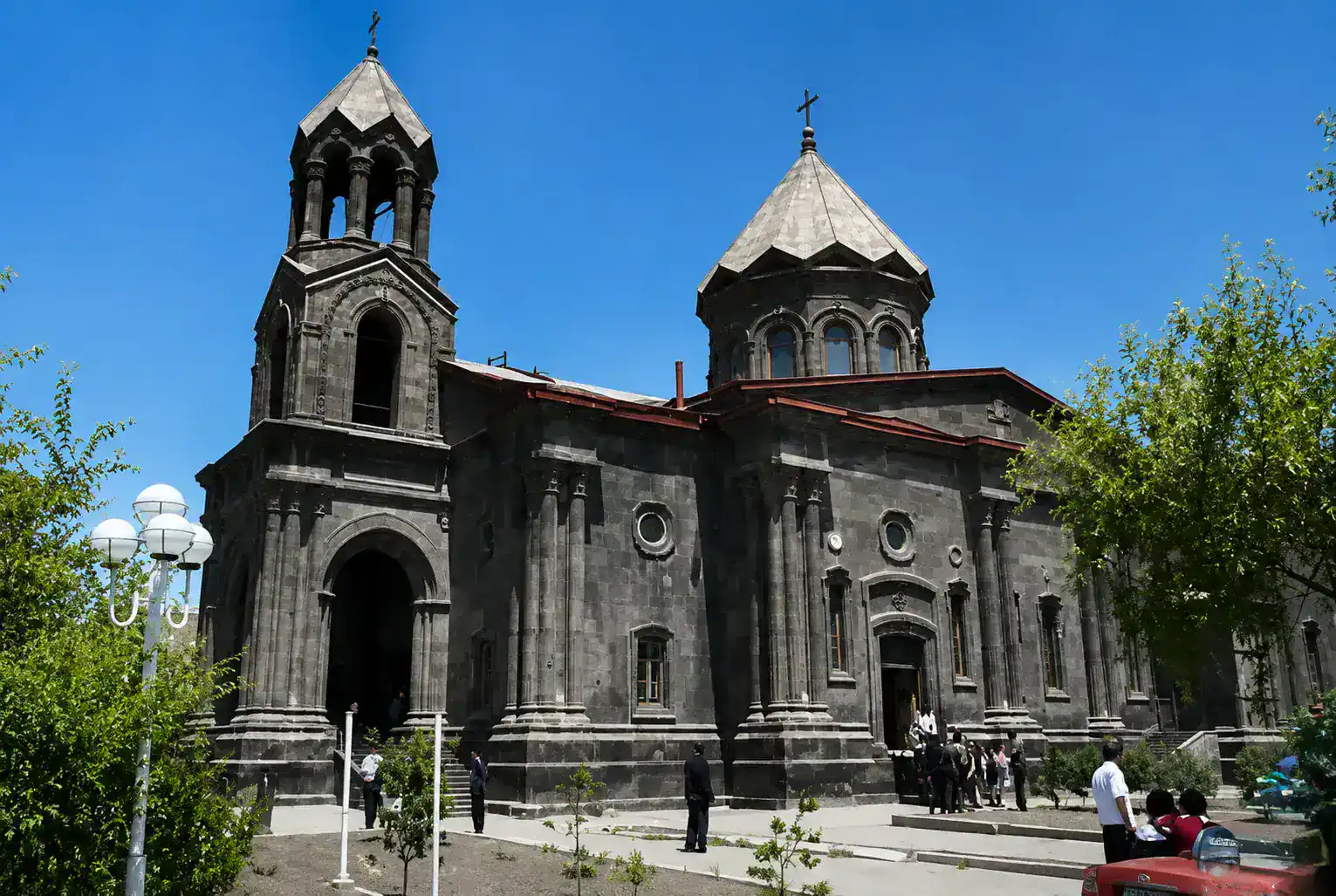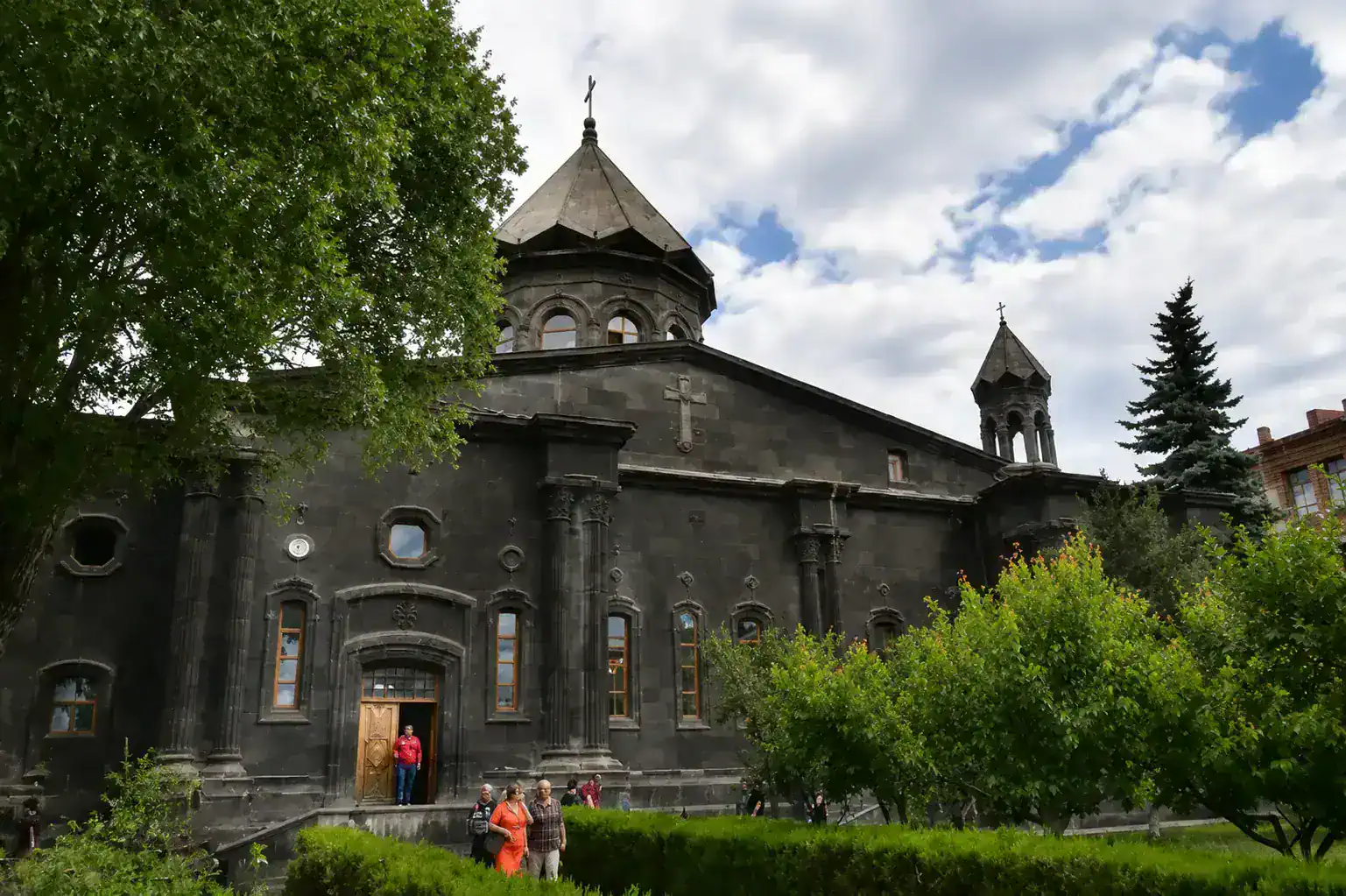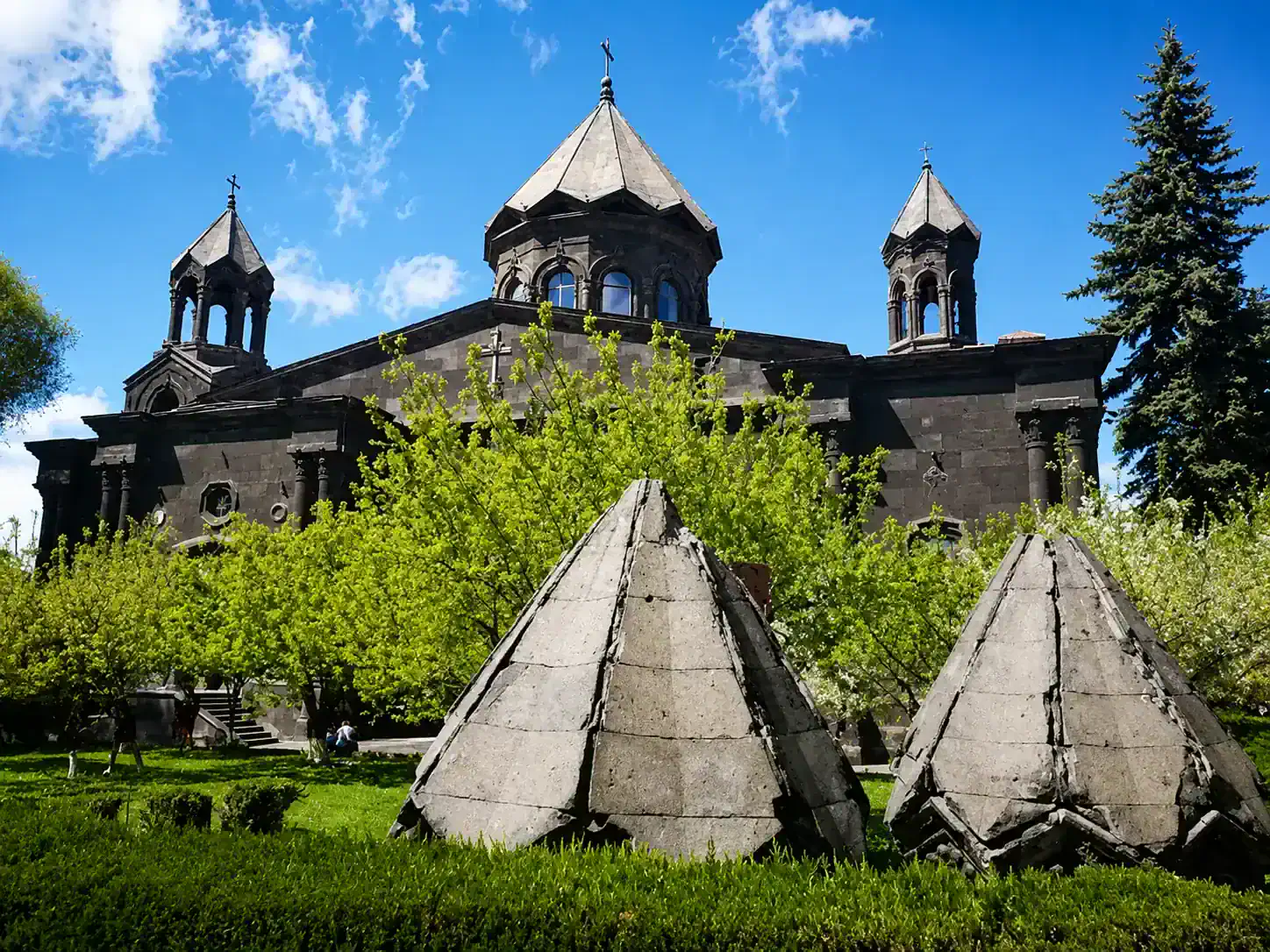
Gyumri's Holy Mother of God Church, or the "Yot Verk" (Seven Wounds) Church, is located in the central part of the city, adjoining Vardanants Square. It was built in the 19th century, beginning in 1837, of black tuff, and belongs to the three-nave basilica type.
The church has the ground plan and classical composition characteristic of domed basilicas of that period.
Its name is connected to the "Holy Mother of God of the Seven Wounds" icon preserved here. According to iconographic tradition, the "Seven Wounds" theme represents the sufferings of the Mother of God tied to key episodes of Christ's life.
On the western side stands the narthex (gavit) with its colonnaded bell tower. The approach of using pilasters to lighten a massive wall — characteristic of master Trdat from the 10th century onward — also became characteristic of Shirak's architecture.
The eastern façade is adorned with the "Seven Wounds" relief. The inscription beneath it notes that the church's icon was carried in 1830 by Father Poghos from the Hasankale Monastery in the Basen district of Greater Armenia to Harichavank, then to Etchmiadzin, and then to Gyumri. The decoration of the main apse's chancel screen resembles that of the Etchmiadzin Mother Cathedral.
The Yot Verk church is also distinctive in that its five apses were once intended for communities of different denominations: the main apse served the Armenian Apostolic Church, the St. Yot Verk apse the Orthodox Church, the Holy Trinity apse the Catholic Church, and the St. Sargis apse the Assyrians.
The 1988 Spitak earthquake damaged parts of the structure, and restoration works were subsequently carried out.