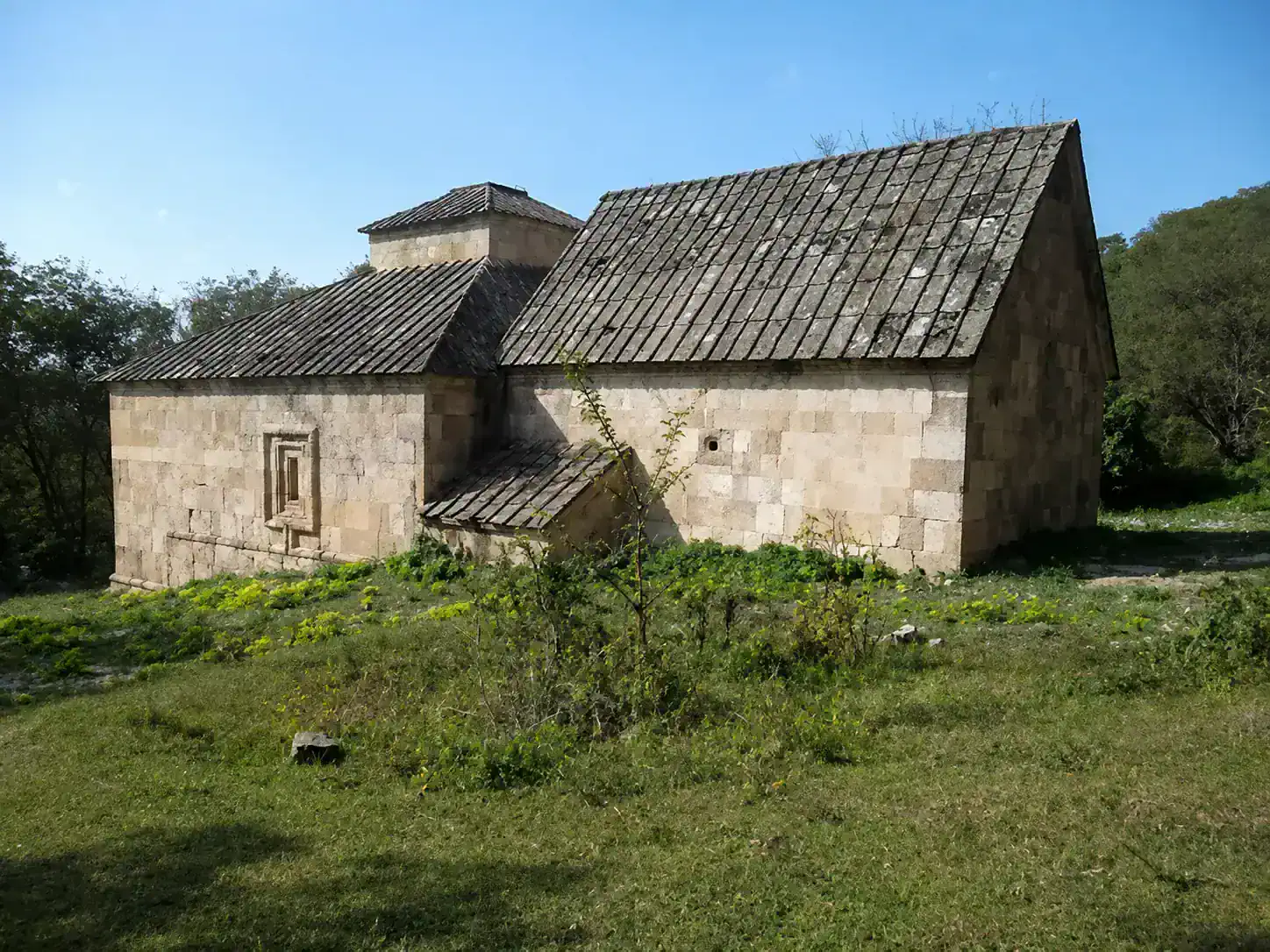
Mshkavank, also known as Mshakavank, is located in Tavush Province, about 3–4 km southwest of the village of Koghb, on a high forested plateau. The name “Mshakavank” derives from an inscription on the southern pillar of the church, while the monastery has also been referred to as “Koghbay Vank,” or the Monastery of Koghb.
The exact date of the construction of the complex is unknown.
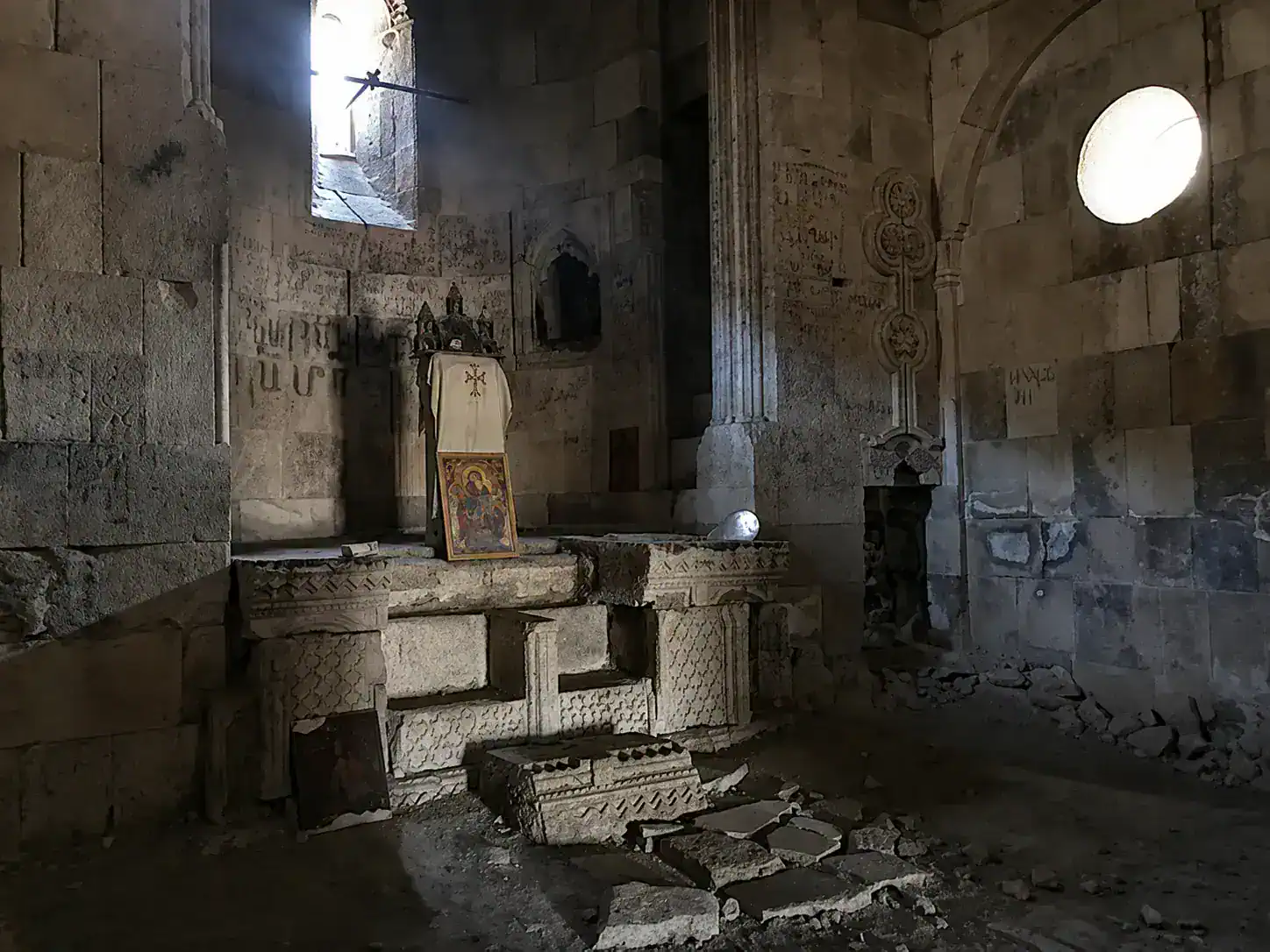
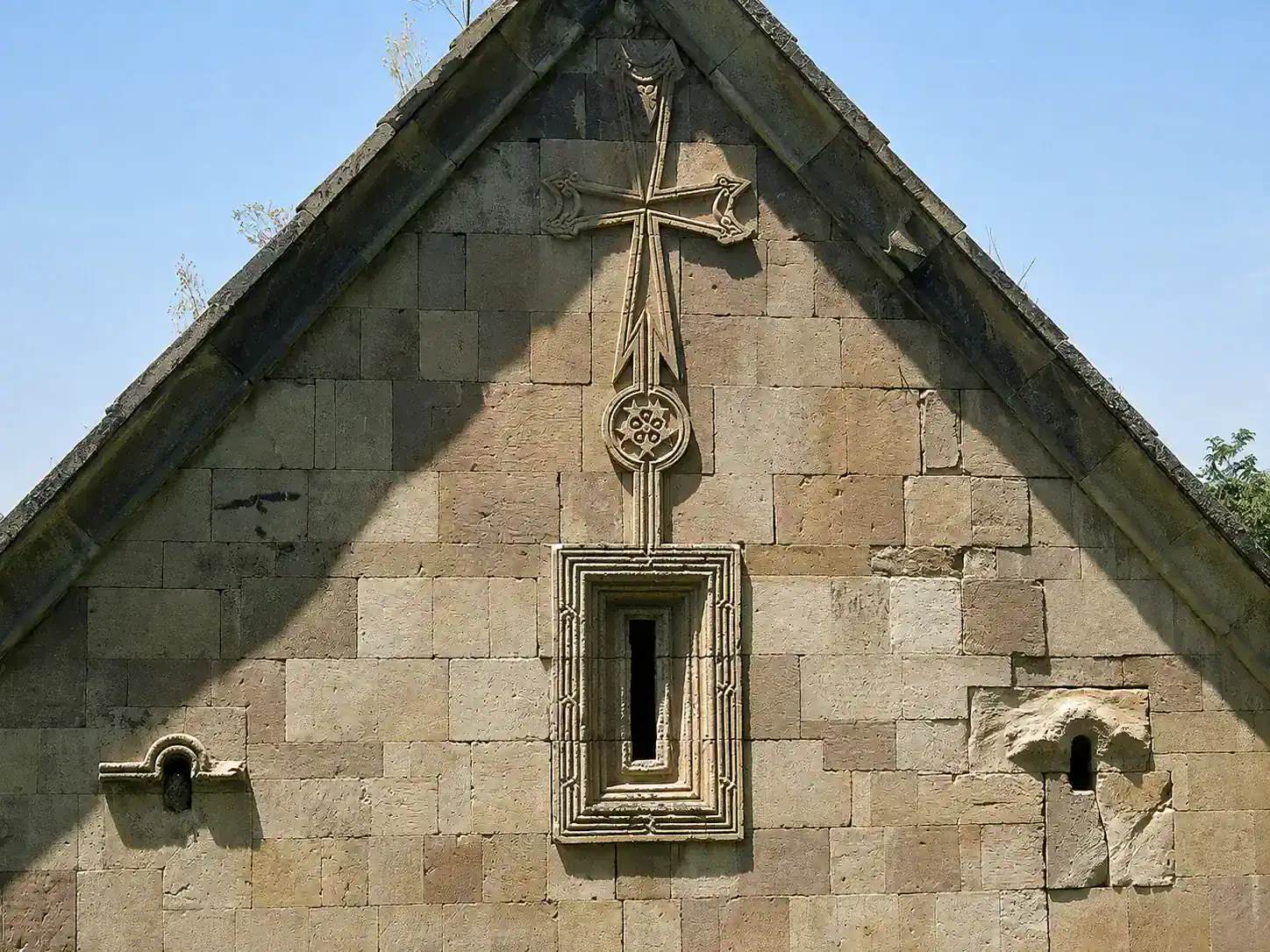
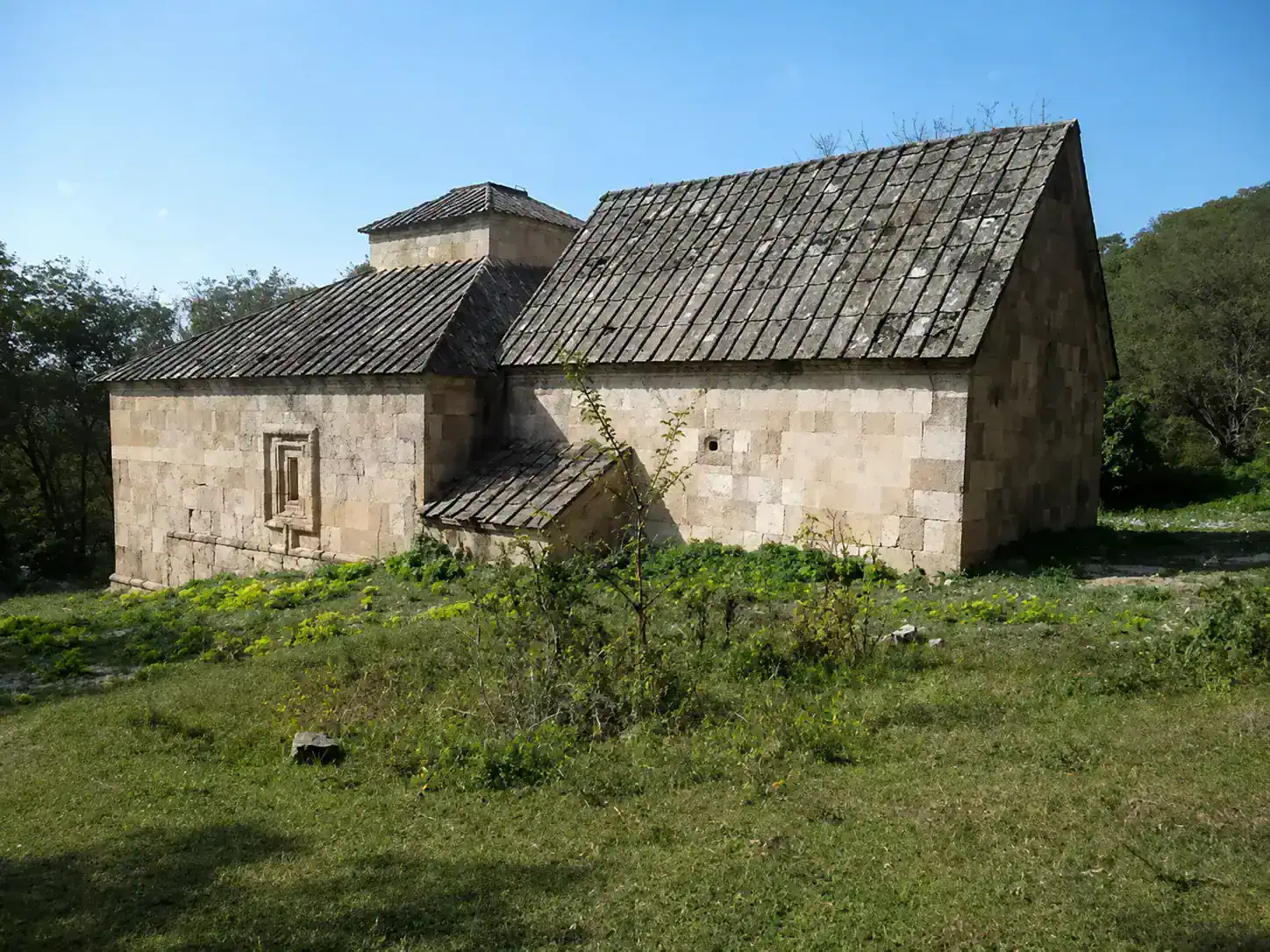
The Church of the Holy Mother of God, the principal structure of the complex that remains standing today, is dated to the 12th century, while the monastic complex as a whole is attributed to the 12th–13th centuries. The Church of the Holy Mother of God is a single-nave, barrel-vaulted hall. Narrow, two-story sacristies are built on either side of the semicircular main apse, while circular windows are set into the long façades. Above the window of the apse is a stylized carved cross, with a bull’s head depicted on its upper arm. An unusual relief carving appears on the eastern engaged column: a mounted man holding a raised spear, beside him a man offering a cup, and opposite them a woman bringing bread.
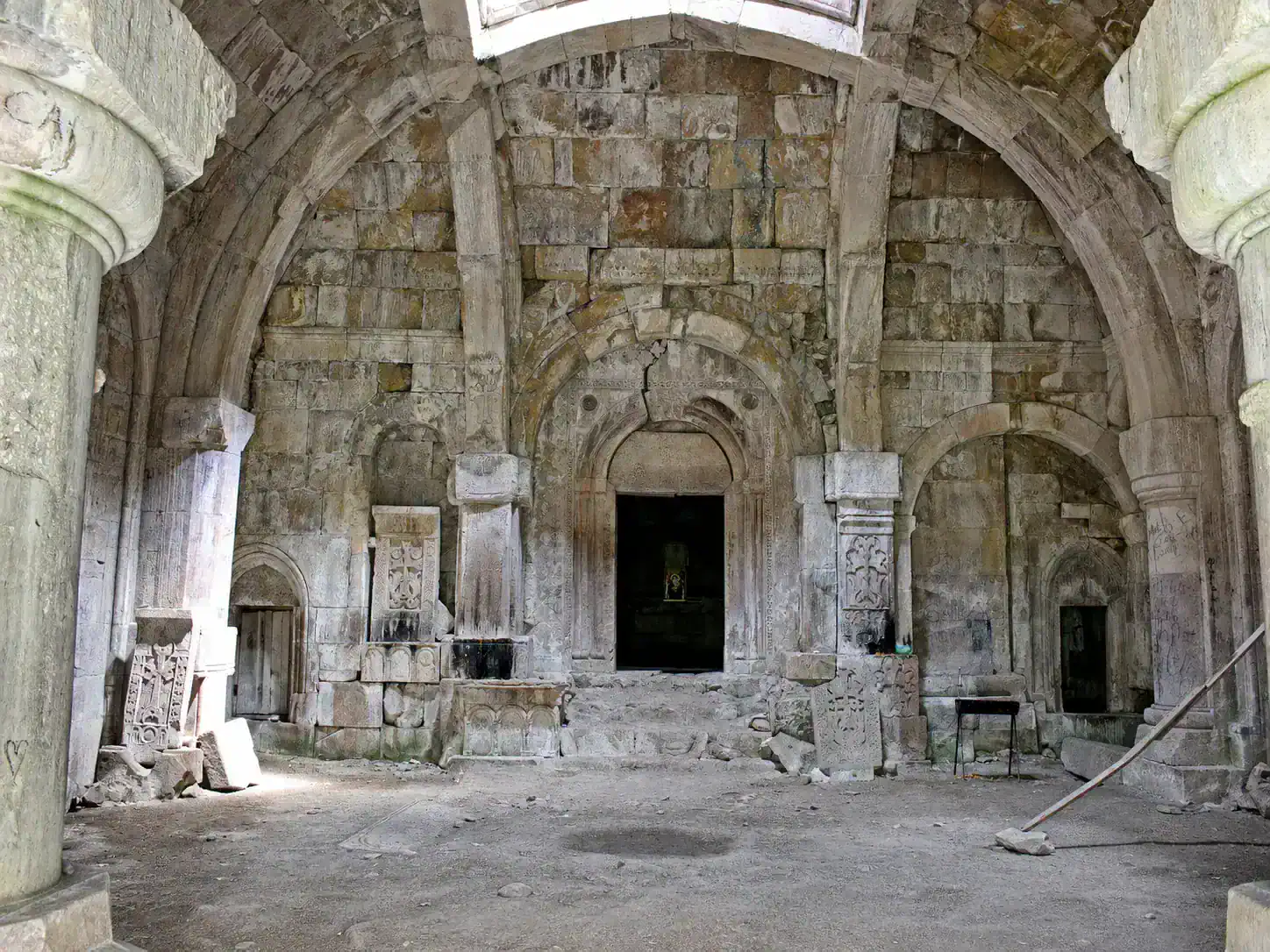
The porch adjoining the church from the west is one of the most architecturally remarkable parts of Mshkavank. Its central square section is covered by pairs of intersecting arches without the use of central columns.
The entrance portal of the porch has a recessed, perspective composition and is framed with shaped stones of different colors. Similar systems of intersecting arches were also used in the porches of Haghpat and Gandzasar.
One of Mshkavank’s khachkars has also become the subject of a specialized art-historical study. Zarui Hakobyan interprets the human faces depicted on either side of the cross on a 13th-century khachkar from Mshkavank as allegorical representations of the Sun and the Moon, considering it one of the finest Armenian examples of this iconography.
The monastic site extends beyond the church and the porch. The official list of monuments records a cemetery dating from the 12th–16th centuries about 500 meters southeast of the monastery, containing a number of khachkars from the 12th–15th centuries. A partially ruined 12th–13th-century chapel-mausoleum is also located about 300–400 meters north of the main complex.
In the 13th century, the monastery also served as a center of manuscript production. In the colophon of a manuscript dated 1281, the scribe Barsegh states that he completed a commentary on Isaiah at the “wonderfully adorned Mshakavank.”
The present appearance of Mshkavank is partly the result of 20th-century restoration. According to a scholarly article by architect Yuri Tamanyan, study of the monument began in 1954. The restoration works were completed in 1960.