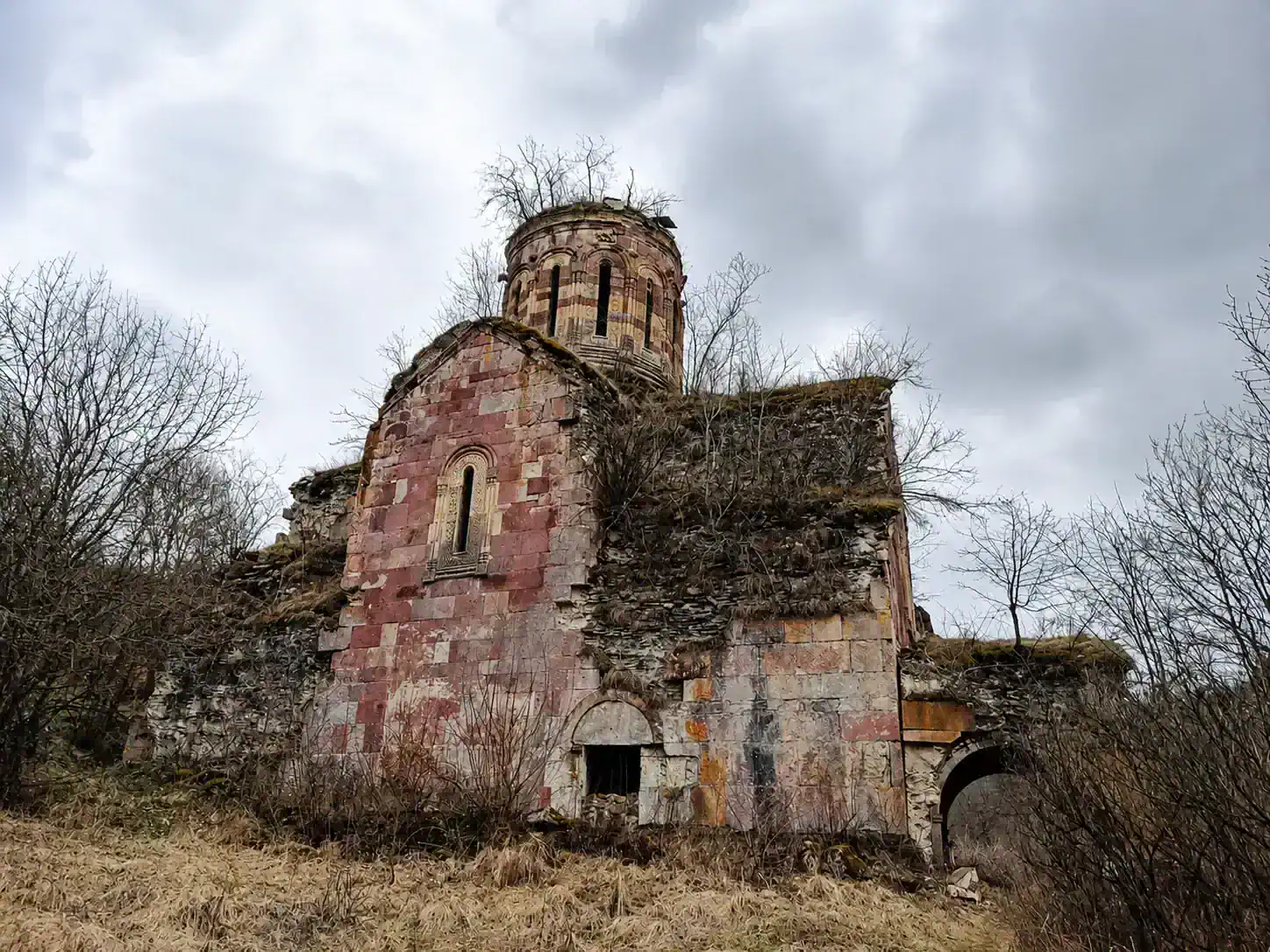
The Khujapi monastic complex is located in the Lori Region, 25 km east of the village of Privolnoye, on the forested northern slope of Mount Lalvar. It dates to the 12th–13th centuries, although the oldest structure in the complex is a single-nave basilica dating from the 9th–10th centuries.
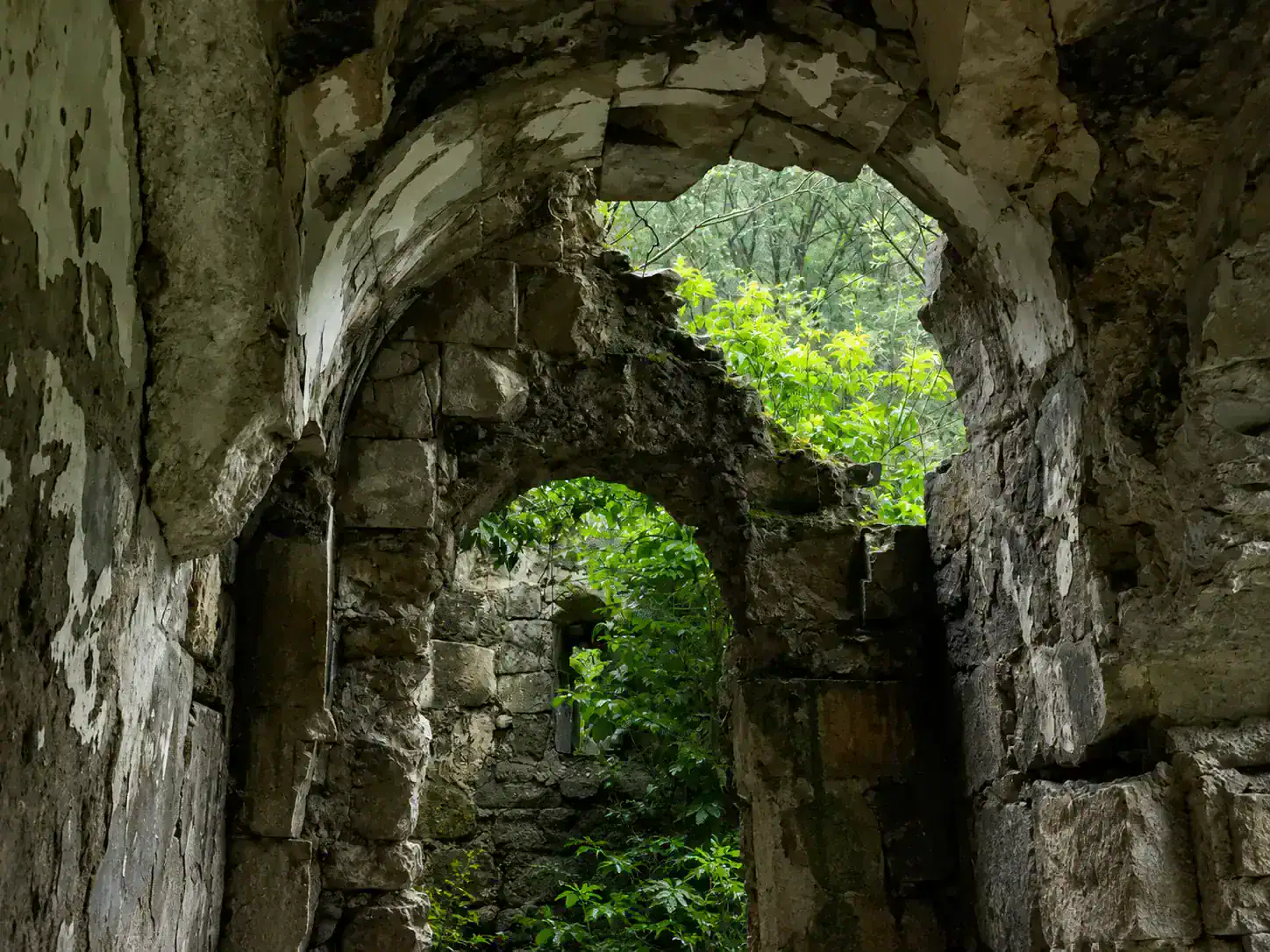
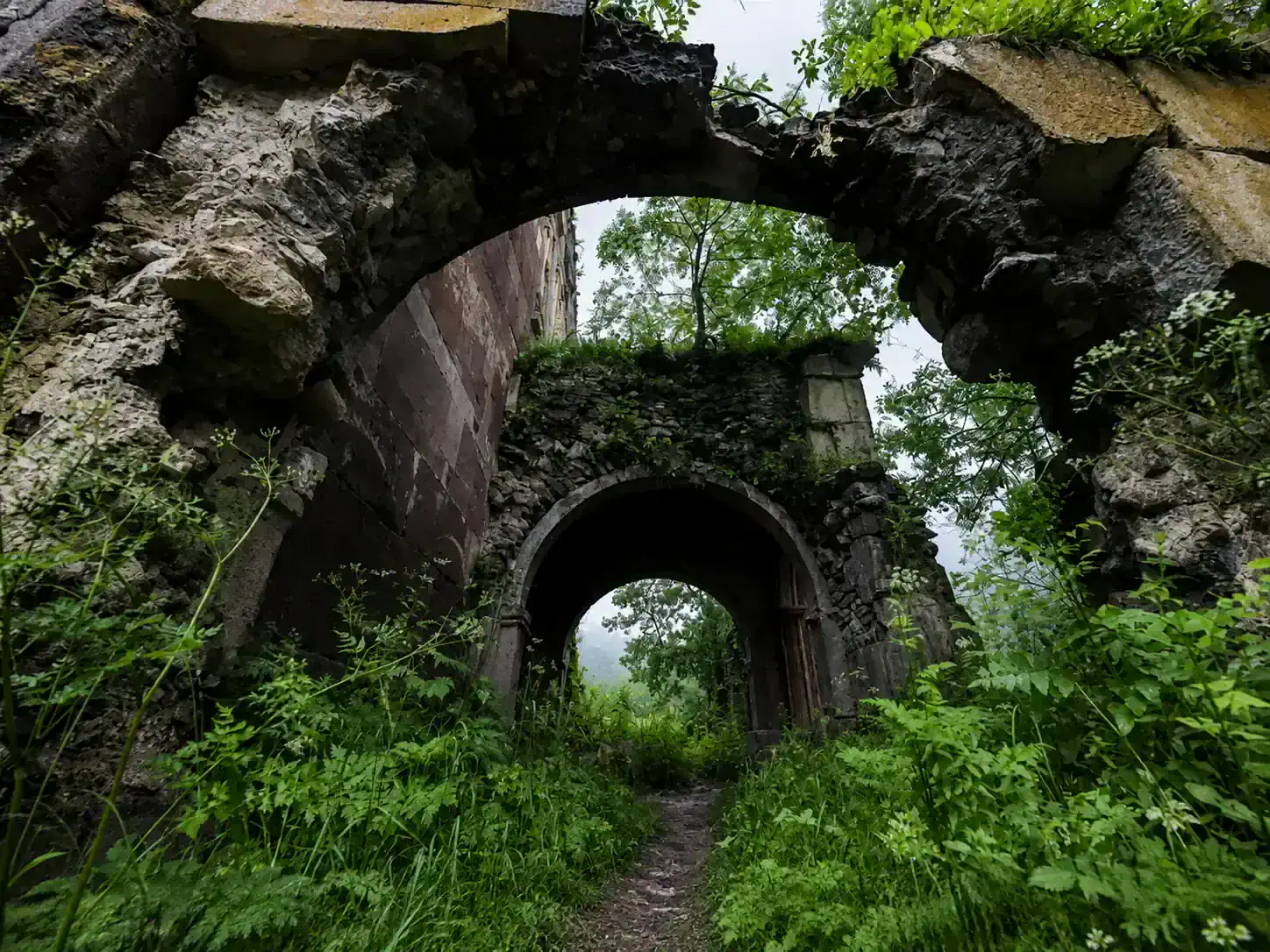
The domed main church, built of finely cut stone and distinguished by its richly decorated exterior, as well as the single-nave hall, the enclosure wall, and other structures, are currently in a semi-ruined condition.
Originally, Khujapi was an Armenian Apostolic monastery. In the 13th century, during the rule of the Zakarid dynasty, it passed to the Chalcedonian Armenians. In the Corpus of Armenian Inscriptions, Khujapi is described as one of the major centres of the Armenian Chalcedonian community in Northern Armenia, ranking in importance after Akhtala.
The main church was built in the 13th century to the north of the earlier basilica, using finely cut felsite stone. The dome over the interior was supported by two freestanding piers and the sanctuary section. The tall drum has twelve sides, while fragments of frescoes have been preserved in the side chamber.
Khorakert Monastery is located not far from Khujapi. Near the monastery’s northern wall stands a large, richly carved 13th-century khachkar. The monastery was renovated in 1661. Today, it lies in an area under Georgian control.