Winter in Armenia: 7 Best Activities Experiences to Try
Updated at November 24, 2026
From skiing on the slopes of Mount Aragats and ice-skating on Lake Sevan to bathing in natural hot springs surrounded by snow, there are plenty of things to do in Armenia in winter. Many winter destinations are within a one- or two-hour drive from Yerevan, making them easy to explore even during a short holiday.
If you are planning a winter trip to Armenia, here are some of the best activities to add to your itinerary, including where to go, how much to budget, and what to know before your visit.
The best winter activities in Armenia at a glance
If you are planning your itinerary and wondering how much time and money to allocate to each experience, here is a quick overview. But please note that these prices are approximate and average, and change based on the specific offers and tours you take.
Activity
Suggested time
Indicative price
Skiing in Tsaghkadzor
Full day
From 12,000 AMD for a day pass
Skiing at Myler
Full day
Around 13,000–14,000 AMD for a day pass, based on past seasons
Wild ice-skating
6–8 hours
20,000 AMD
Ziplining in Yenokavan
1–1.5 hours, excluding travel
15,000 AMD
Hankavan thermal baths
30–60 minutes
From 2,500 AMD
Jermuk geyser jeep tour
Around 2 hours
From 5,000 AMD
Winter hiking in Dilijan
1–6+ hours
Free on public trails; guides extra
Guided Trchkan waterfall hike
Full day
20,000 AMD
Guided Gegharot waterfall hike
Full day
22,000 AMD
Traditional khash breakfast
1–2 hours
Around 3,000–4,000 AMD
#1 Ski in Tsaghkadzor or near Mount Aragats
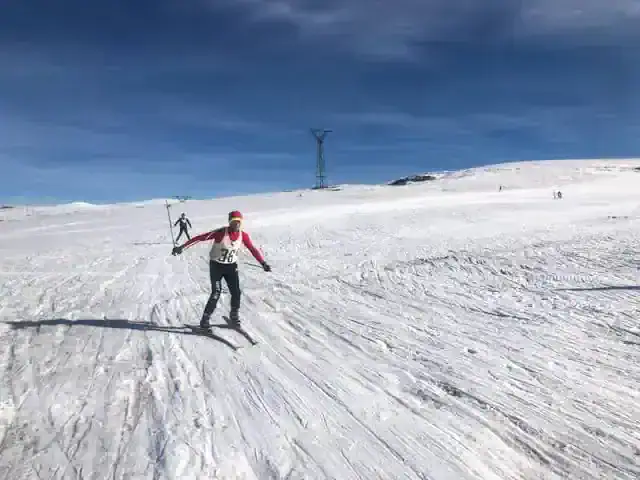
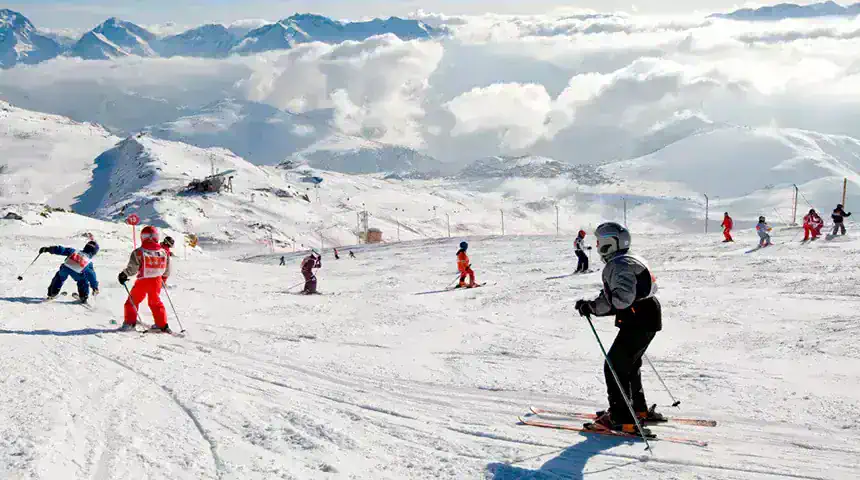
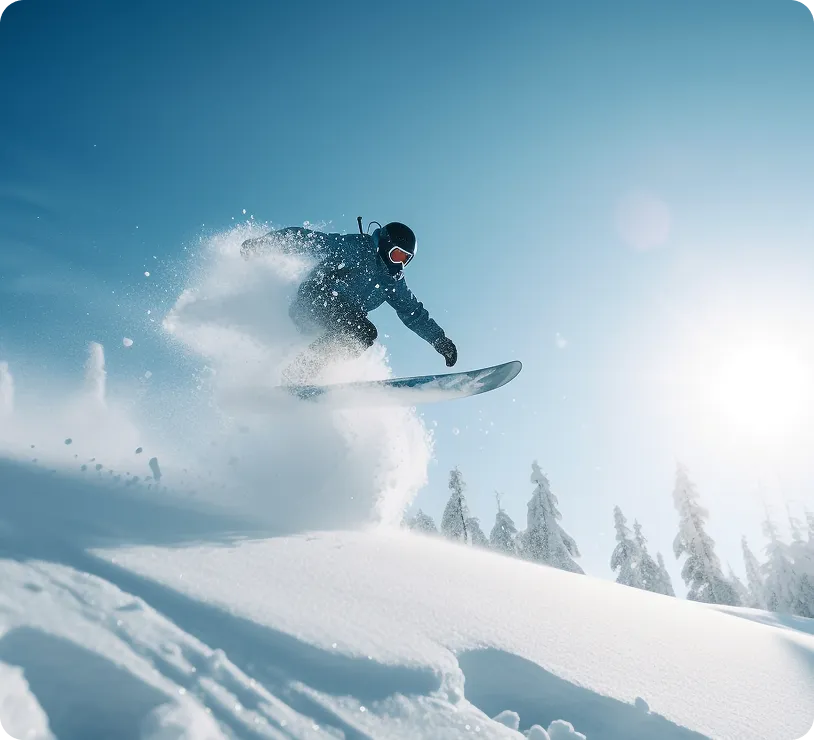
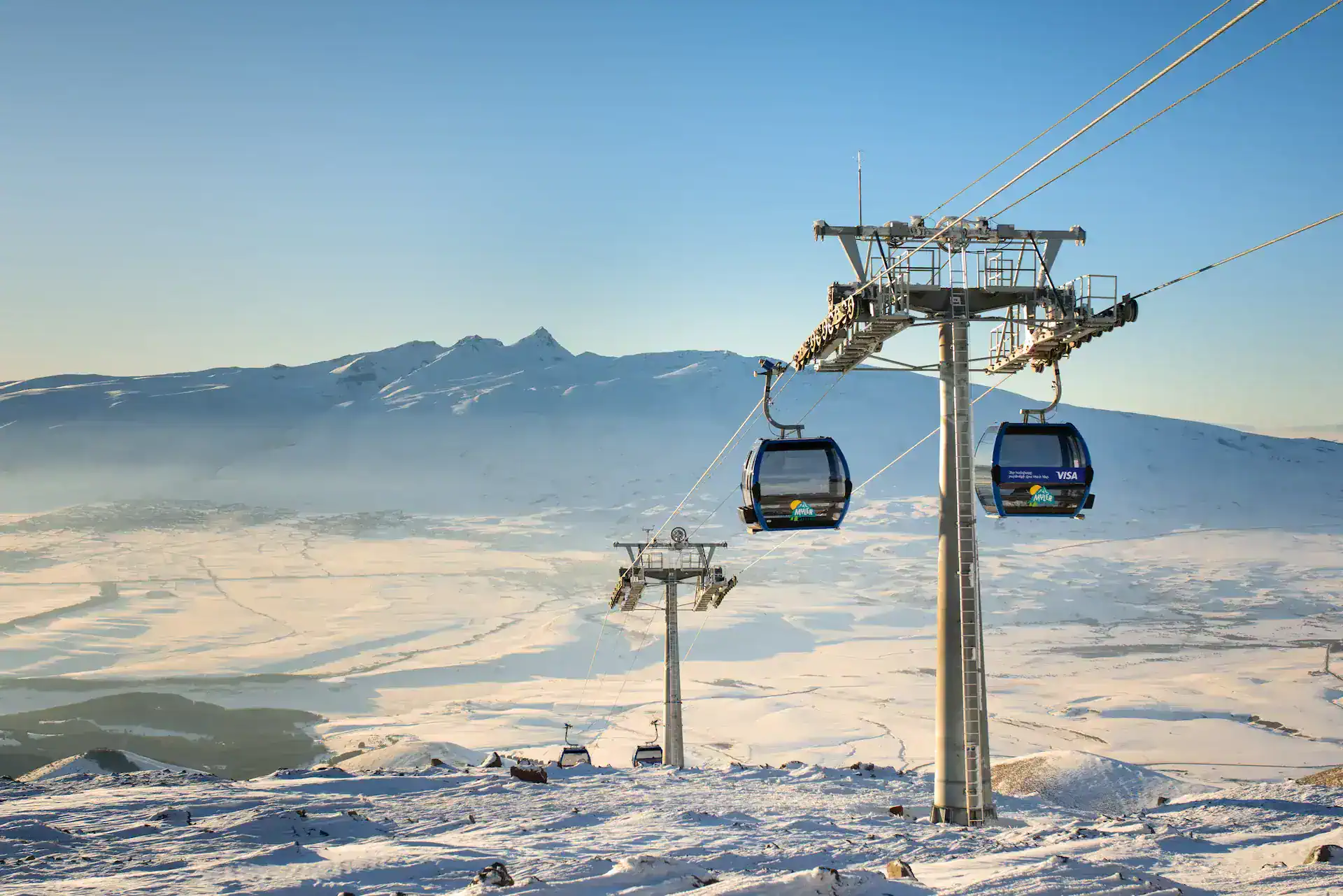
Armenia has two major skiing destinations within approximately an hour's drive from Yerevan: Tsaghkadzor and Myler Mountain Resort. Both offer equipment rentals, skiing and snowboarding lessons, and slopes of different difficulty levels.
Myler Mountain Resort is a large, all-season mountain resort on the eastern slopes of the Aragats massif, near Yeghipatrush village in the Aparan community of Aragatsotn…
This small family-run sports centre and guesthouse in Ashotsk is run by the Mikayelyan family. The father, Artur, is a classic cross-country ski coach, the mother…
Tsaghkadzor Ski Resort on Mount Teghenis opened in 1986 next to the Tsaghkadzor Olympic Sports Complex, which was originally created to prepare athletes for the 1988…
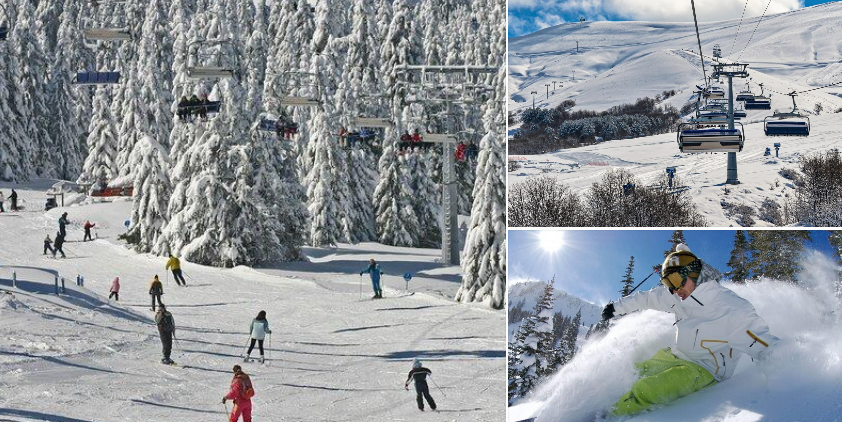
Located around 50 km from Yerevan,Tsaghkadzor has approximately 30 km of ski runs on the slopes of Mount Teghenis, which reaches an altitude of 2,819 meters. The ropeway has five sections, taking visitors from the forested lower slopes to the open mountain terrain. Beginners can practice near the base station, while more experienced skiers can explore the upper sections.
According to the resort's published price list, skiing in Tsaghkadzor costs:
Single ropeway ticket – 3,000 AMD
Three-hour ski pass – 8,000 AMD
One-day ski pass – 12,000 AMD
One-day ski pass for children under 10 – 9,000 AMD
There is also a refundable ski card deposit of 2,000 AMD. The ropeway's published working hours are 10 AM to 5:30 PM.
If you are not planning to ski, you can purchase a single ropeway ticket, visit the 11th-century Kecharis Monastery, and have lunch at one of the restaurants in town.
Myler Mountain Resort
Located near Yeghipatrush village, approximately 55 km from Yerevan, Myler Mountain Resort offers around 18 km of ski slopes, seven lifts, and skiing at elevations ranging from 1,950 to 2,850 meters.
The slopes are divided according to difficulty:
Green slopes: Cygnus, Lyra and Saturn, suitable for beginners.
Blue slopes: Pegasus, Pluto and Libra, for intermediate skiers.
Red and upper mountain slopes: Moon, Mars, Jupiter and upper Cygnus, for more experienced skiers.
There is also a beginner training area and a snow park for freestyle skiing and snowboarding. You can explore the ski trail map before your visit.
In previous seasons, a one-day adult ski pass cost approximately 13,000–14,000 AMD, and a children's pass cost around 9,000 AMD. Equipment rental and individual or group lessons are available separately.
If you do not have a car, MylerGo advertises a round-trip transfer from Yerevan for 8,000 AMD per person, including space for skiing equipment.
#2 Go wild ice-skating by the shore of Lake Sevan
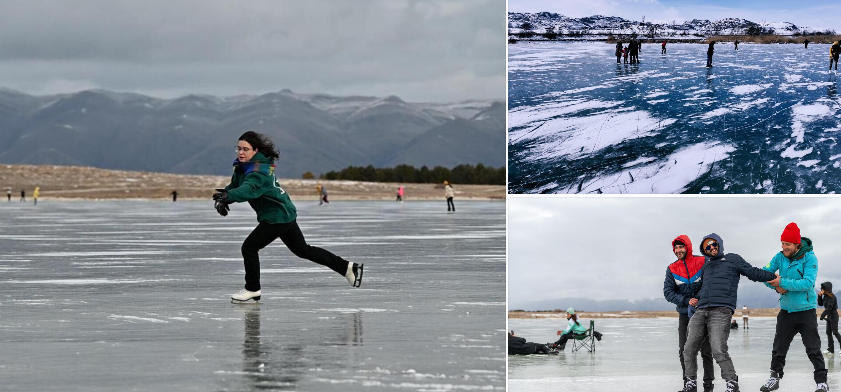
If you have only visited Lake Sevan in summer, consider returning in winter to try one of Armenia's more unusual seasonal activities: wild ice-skating. Located at an altitude of approximately 1,900 meters, the lake develops frozen areas along its shores during sufficiently cold winters.
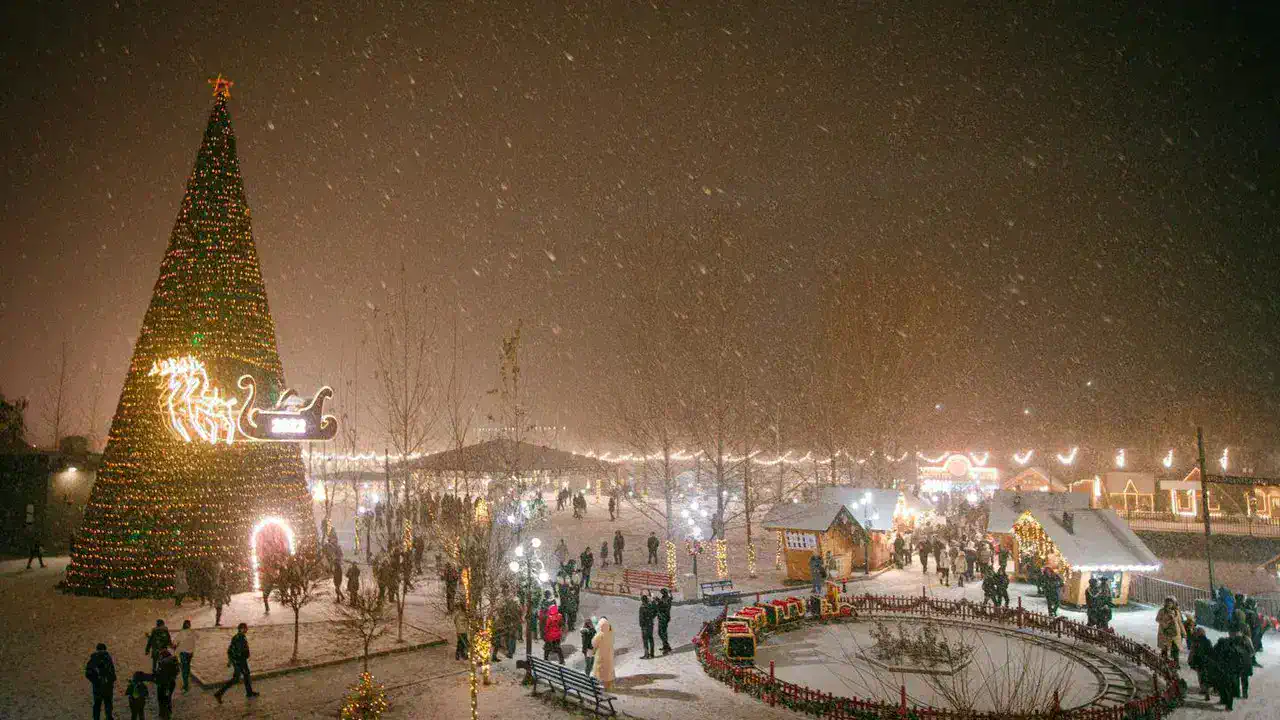
Winter Park is billed as Yerevan’s largest open-air ice rink, set inside Yeraz Park on the Tbilisi Highway. Opening day featured Santa Claus arriving by sleigh,…
In January 2025, a skating area opened at Lake Sevan, allowing visitors to skate outdoors with the Geghama Mountains in the background. Unlike a regular ice rink, the experience takes place in a natural winter landscape.
Depending on the weather and ice conditions, the organizers may take you to Lake Sevan or Aparan Reservoir instead.
Bring windproof clothing, thick socks, gloves, and sunglasses, as the lake can be considerably colder and windier than Yerevan. Only skate in areas that have been checked and approved by the organizers, and never walk onto the frozen lake independently.
If conditions do not allow for natural ice-skating, you can visit one of the skating rinks in Yerevan instead.
#3 Take a zipline in adventure parks
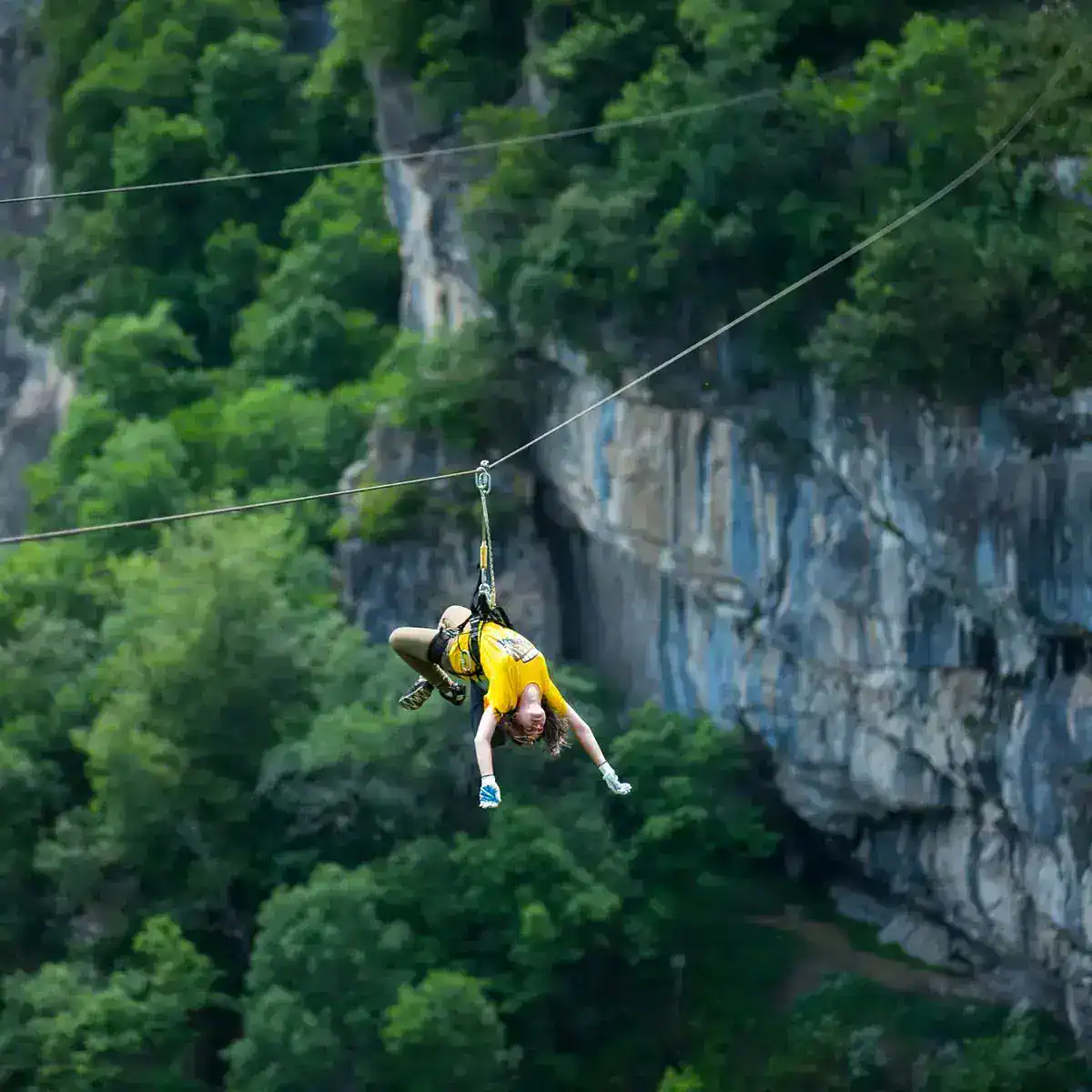
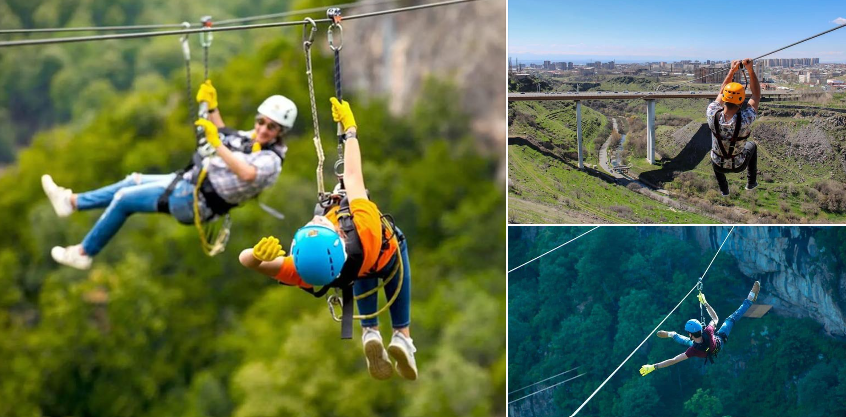
If you are looking for something more adventurous, head to Yell Extreme Park in Yenokavan village, around 140 km from Yerevan. Located on the grounds of Apaga Resort, the park has five ziplines ranging from approximately 135 to 750 meters in length, reaching speeds of up to 80 km/h.
The entire zipline experience takes around 1–1.5 hours. Instructors accompany participants, and helmets, harnesses and gloves are included in the price.
Yell Extreme Park, near the village of Yenokavan in Tavush Province (about 142 km from Yerevan), was founded by Tigran Chibukhchian and opened Armenia's first zipline…
Zipline and off-road tour – 20,000 AMD at the park
Zipline, off-road tour and Via Ferrata – 25,000 AMD
The published working hours are 11 AM to 5:30 PM daily, with flights starting every hour. The weight limit for the five-line experience is 44–98 kg. Some activities may be suspended during strong winds or extreme weather
If you would rather stay in the capital, try Yerevan Zipline Airlines, located at 114/1 Papazyan Street. It has two lines, measuring 870 and 650 meters, one of which takes you underneath a bridge across the Hrazdan Gorge.
#4 Visit hot springs and resorts in Hankavan, Aghveran, and Jermuk
If you want to take a break from winter sports, spend a day bathing in Armenia's natural hot springs. Depending on how far you want to travel from Yerevan, there are three destinations I would recommend.
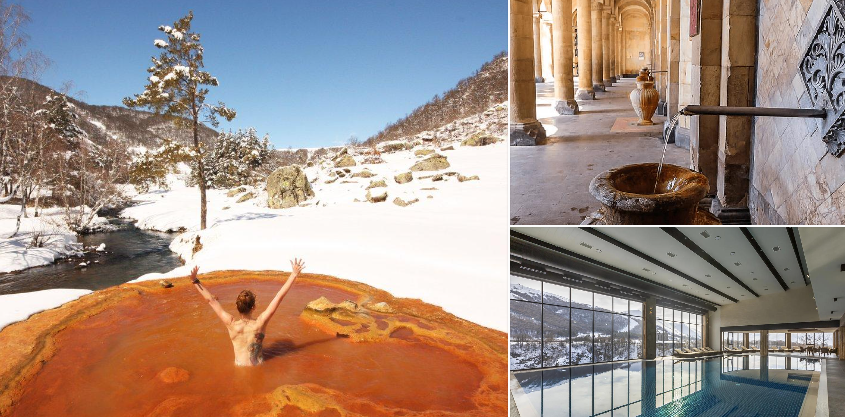
Jermuk is a spa town built around more than 20 natural mineral hot springs, with water reaching temperatures up to 64 degrees Celsius. Reaching the wild,…
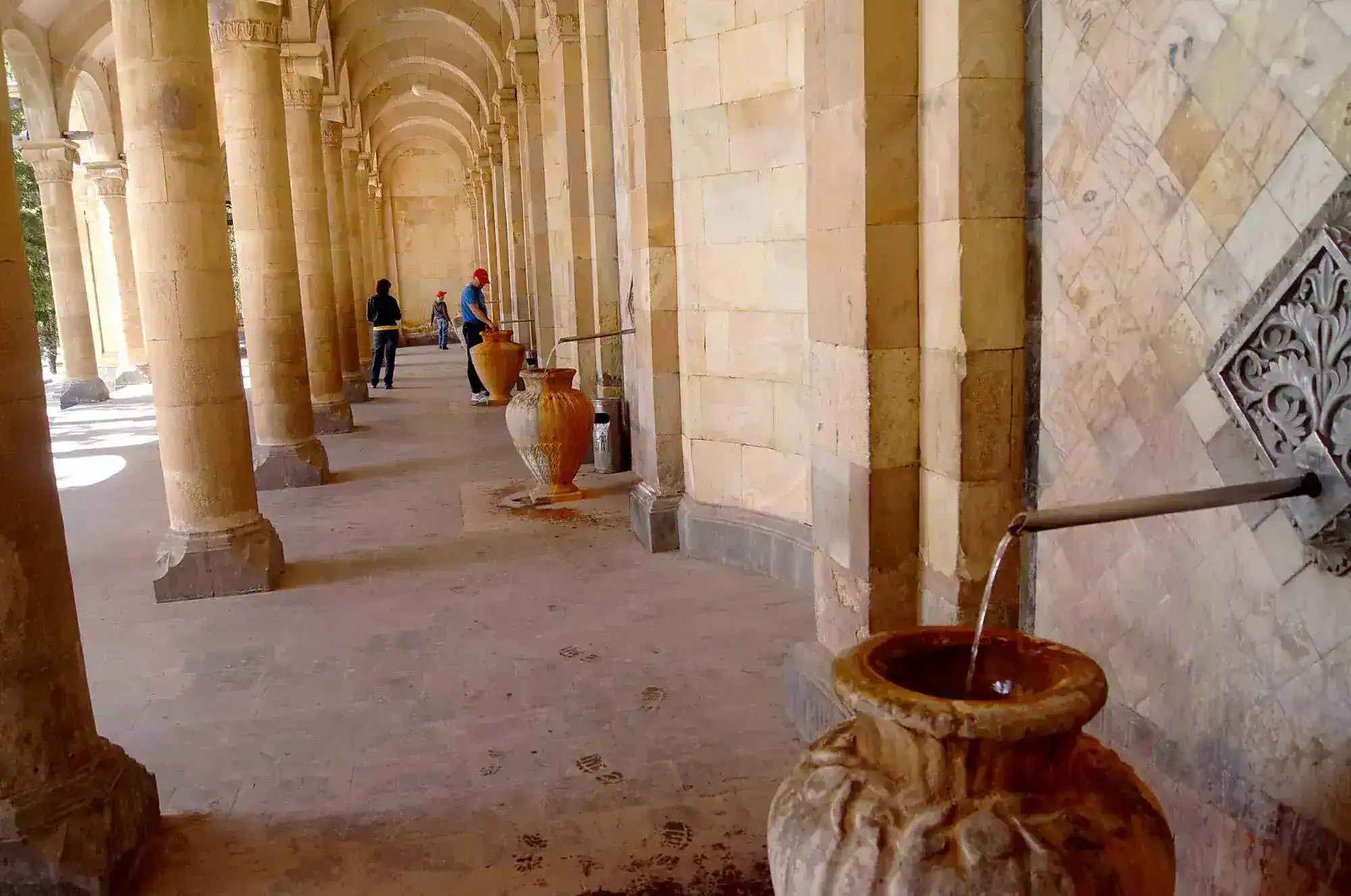
The Gallery of Water is a mineral water tasting hall in the spa town of Jermuk, where several taps dispense naturally occurring mineral water sourced from…
Located around 85 km from Yerevan, Hankavan is a small mountain village in the Kotayk region known for its thermal mineral waters. Rather than a large public swimming pool, the village has private bathing rooms with individual mineral water pools, accommodating small groups of visitors. You can combine your visit with lunch in the mountains or an overnight stay at one of the hotels in the Marmarik River valley.
Aghveran and Arzakan
If you prefer a comfortable hotel with spa facilities rather than a traditional thermal bath, head to Aghveran and neighboring Arzakan, approximately 45–50 km from Yerevan.
The area is home to several forest resorts.
Jermuk
Located approximately 175 km from Yerevan, Jermuk is Armenia's best-known mineral water resort. The area has more than 20 mineral springs, with source temperatures reaching up to 64°C.
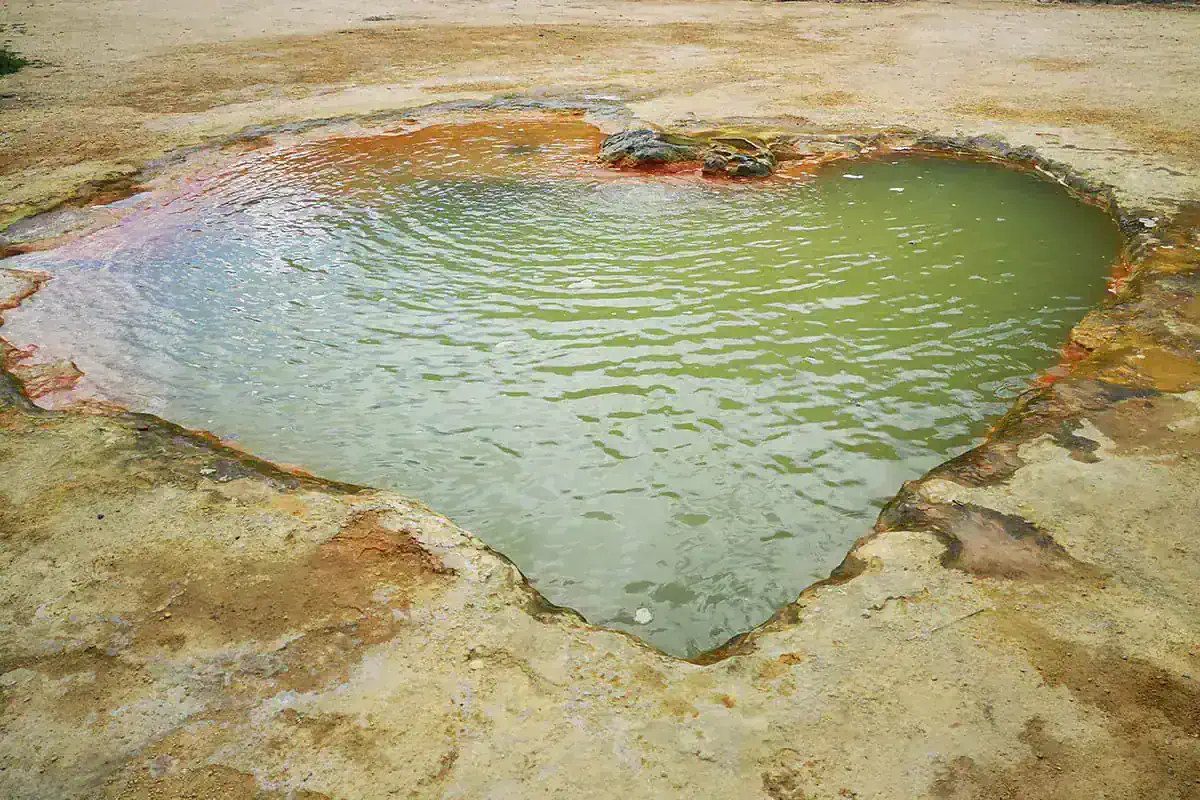
One of the most interesting experiences here is visiting the natural hot spring outside the town, commonly referred to as the Jermuk Geyser. The spring forms a natural pool where mineral water bubbles up from underground.
You will need an off-road vehicle to reach it. While in Jermuk, make sure to visit the Mineral Water Gallery, the 68-meter Jermuk Waterfall, and the walking paths around the town.
I would recommend spending at least one night in Jermuk. You can also stop at Areni village for a wine tasting or visit Noravank Monastery on your way from Yerevan.
#5 Do winter hiking and jeeping around Dilijan and Vanadzor
If you enjoy hiking, head to Armenia's northern regions of Tavush and Lori, where you will find some of the country's most extensive forests. Dilijan is approximately 95 km from Yerevan, while Vanadzor is around 120 km away.
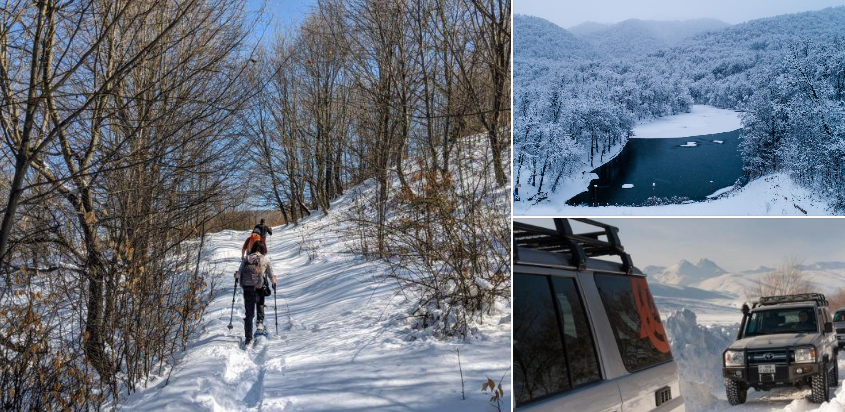
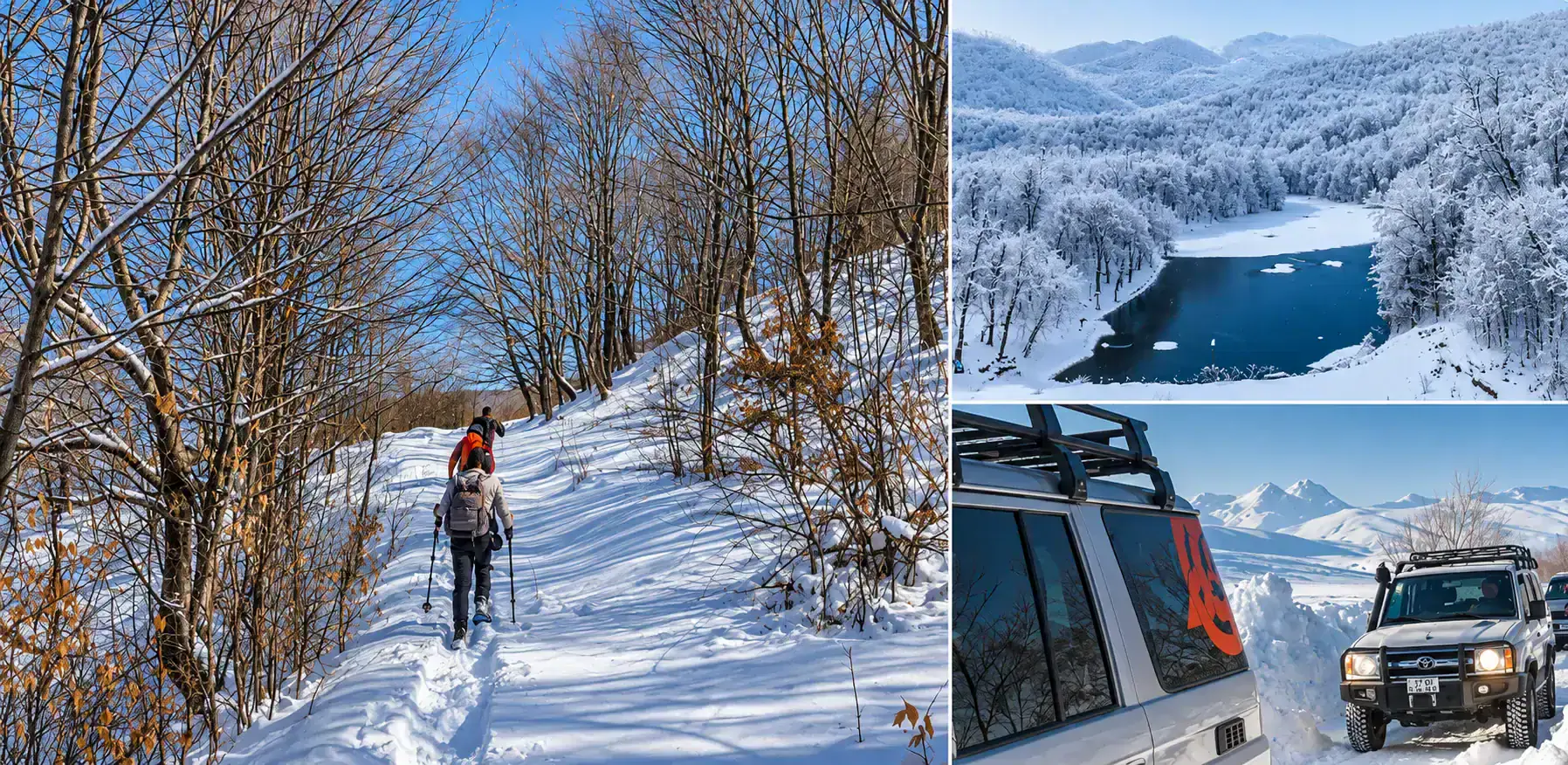
There are several marked hiking trails around Dilijan that you can explore in winter, depending on snow conditions and your hiking experience.
Hiking trail
Distance
Regular hiking time
Difficulty
Parz Lake Loop
2.3 km
1 hour
Easy
Goshavank to Parz Lake
7.2 km
2 hrs 50 min
Easy
Parz Lake to Dilijan
14.1 km
4 hrs 30 min
Moderate
The Parz Lake Loop is a good option for families or those who do not want to spend an entire day hiking. The longer route from Goshavank Monastery to Parz Lake takes you through forest trails and mountain meadows.
If you would prefer to explore the mountains without a long hike, look for guided jeep tours to Gosh Lake or Mount Dimats near Dilijan. Mount Dimats, which rises to approximately 2,378 meters, is particularly popular for its rocky cliffs and panoramic views over the surrounding mountains.
#6 Visit frozen waterfalls
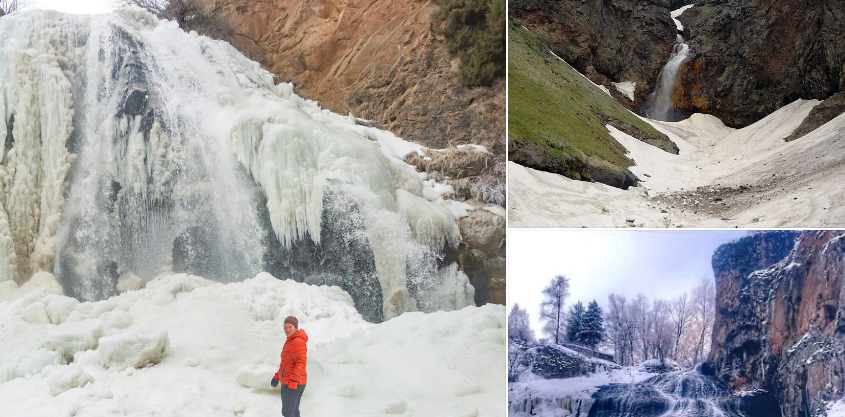
Some of Armenia's waterfalls freeze almost completely during the colder months, forming enormous walls of ice. If you are visiting Armenia in January or February, there are three waterfalls in particular that I would recommend adding to your itinerary.
Trchkan Waterfall
Located near Shirakamut village on the border of the Shirak and Lori regions, Trchkan is Armenia's highest plunge waterfall, measuring approximately 23 metres. During cold winters, the waterfall transforms into a massive ice formation and becomes a popular destination for winter hiking and ice climbing.
Depending on the starting point, organized hikes to Trchkan range from approximately 10 to 24 km in total.
Gegharot Waterfall
Gegharot Waterfall is located on the slopes of Mount Aragats at an altitude of approximately 3,000 meters, around 12 km from Aragats village. The 17-meter waterfall freezes during winter, creating one of Armenia's most impressive natural ice formations.
Getting there is considerably more challenging than visiting Jermuk Waterfall.
Jermul waterfall
If you want to see a waterfall without hiking for several hours, Jermuk Waterfall is a more accessible option. Also known as Mermaid's Hair, the 68-meter waterfall is Armenia's highest cascade waterfall.
#7 Try Armenian winter dishes
Winter is a particularly good time to explore Armenian cuisine, as some traditional dishes are prepared mainly during the colder months. While you can find grilled meat, lavash, and other Armenian favorites throughout the year, there are a few seasonal dishes and culinary traditions that are especially worth experiencing in winter.
Harisa
Not to be confused with the North African chili paste of the same name, Armenian harissa is a thick porridge made from hulled wheat and chicken or lamb. The ingredients are slowly cooked together for several hours until the meat and wheat form an almost uniform mixture. It is usually served with melted butter.
Harissa also has historical significance in Armenian culture, particularly in connection with the resistance of the Armenians of Musa Dagh in 1915. Today, communal harissa preparation remains part of various religious and cultural celebrations.
Tolma
Although tolma is available throughout the year, winter is a particularly good time to try its different varieties. Traditional Armenian tolma consists of minced meat, rice, herbs and spices wrapped in grape or cabbage leaves. The grape-leaf version is usually served with matsun, Armenian fermented milk, and crushed garlic.
If you are visiting Armenia during the New Year holidays, look for pasuts tolma, a traditional meat-free version prepared with beans, lentils, chickpeas, and grains wrapped in cabbage leaves.
Khash
If you want to experience a truly local Armenian winter tradition, arrange a khash breakfast. Khash is a broth prepared by slowly boiling beef feet, often overnight. It is served with garlic, salt, dried lavash, radishes, pickles, and fresh herbs.
There is even a traditional way of eating it. You add garlic and salt to your liking, break dried lavash into the broth until it becomes thick, and eat it with a spoon or pieces of soft lavash.
What makes khash particularly interesting is that Armenians traditionally eat it early in the morning rather than for lunch or dinner. Friends and relatives gather around the table, sometimes as early as 7 or 8 AM, and spend several hours eating, talking, and making toasts.
Plan your winter trip to Armenia
Whether you want to spend your holiday skiing, exploring snow-covered forests, relaxing in natural hot springs or discovering Armenian food and traditions, winter in Armenia offers plenty of experiences to choose from.
If you are not sure how to fit everything into your itinerary, use ourAI Tour Planner to easily create your own personalized tour based on your interests, travel dates and preferred destinations. Once your itinerary is ready, you can send us a tour request directly through the tool, and our local travel experts will help you take care of the rest.
Let us make your winter stay in Armenia something to remember!
Created at November 24, 2026 / Updated at November 24, 2026
You want to do sports, eat well and be invited as guests to many unknown Armenian people and be treated with many tasty national dishes? Snowy Armenia waits for you. Armenia has two opposite weather conditions...
They say you don’t need wings to fly; paragliding will give you the opportunity to fly and get your wings. There are no exact recordings about where was Paragliding invented or Who invented this competitive adventure...
Maybe you have heard about Armenia and you know the fact that this small country has a lot of stones, deep gorges, high canyons, and mountain chains. These factors have always been benefits of Armenians during...
 Activity