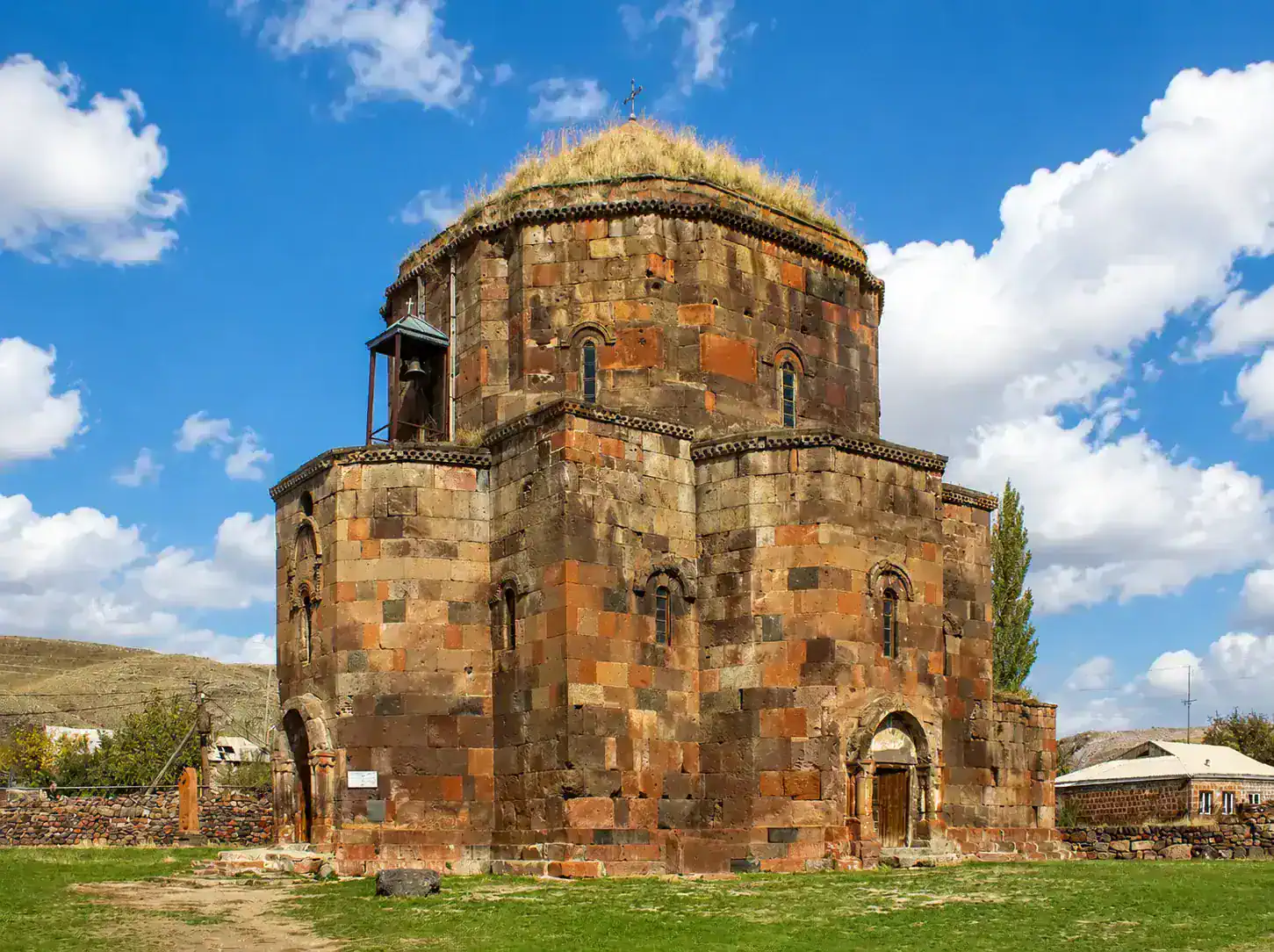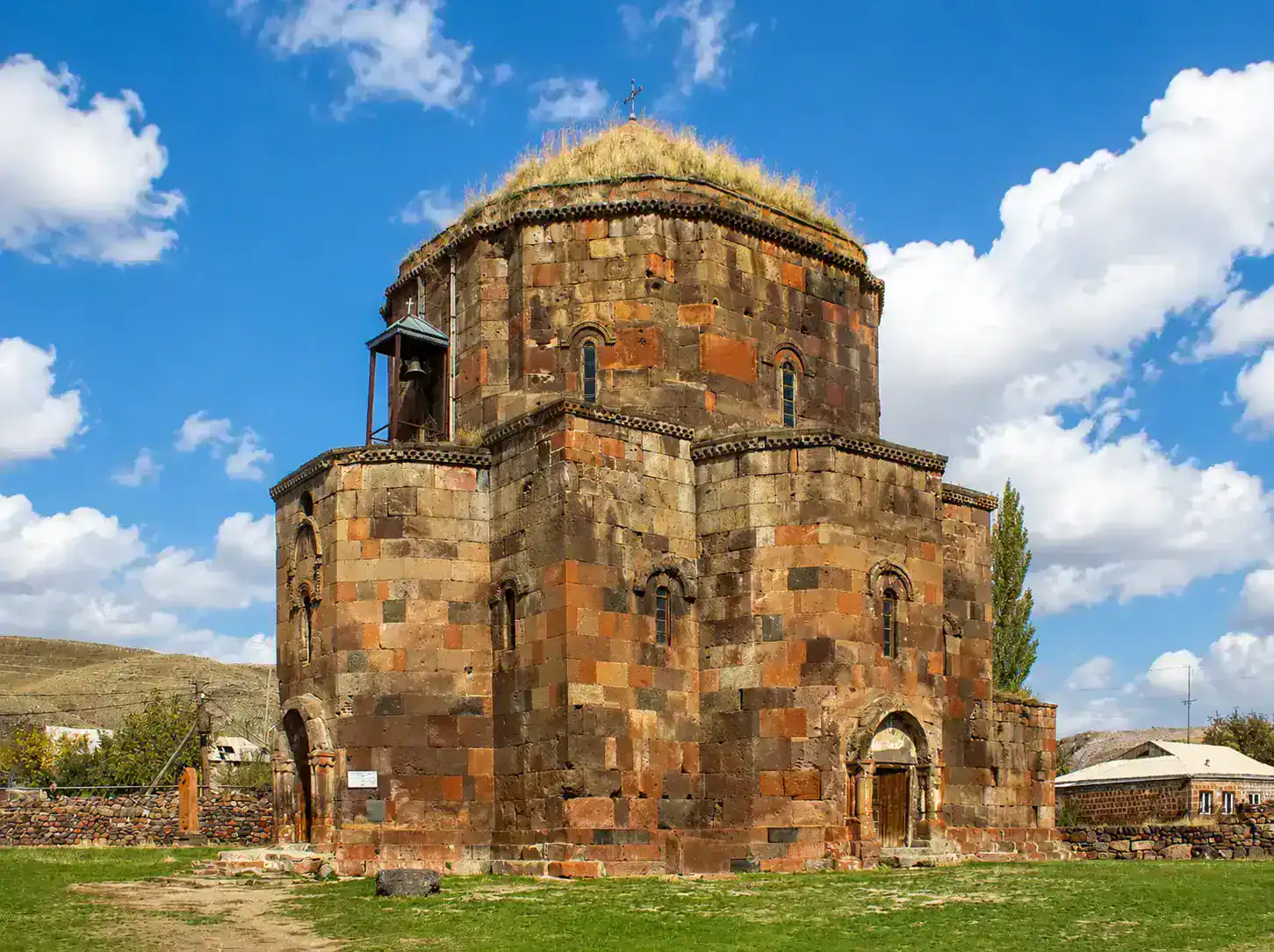
The Church of St. Hovhannes (St. John) of Mastara is located in the village of Mastara in the Aragatsotn Province. It is one of the most notable examples of Armenian early medieval centrally-domed churches. Scholars' views differ on the precise dating of the structure.
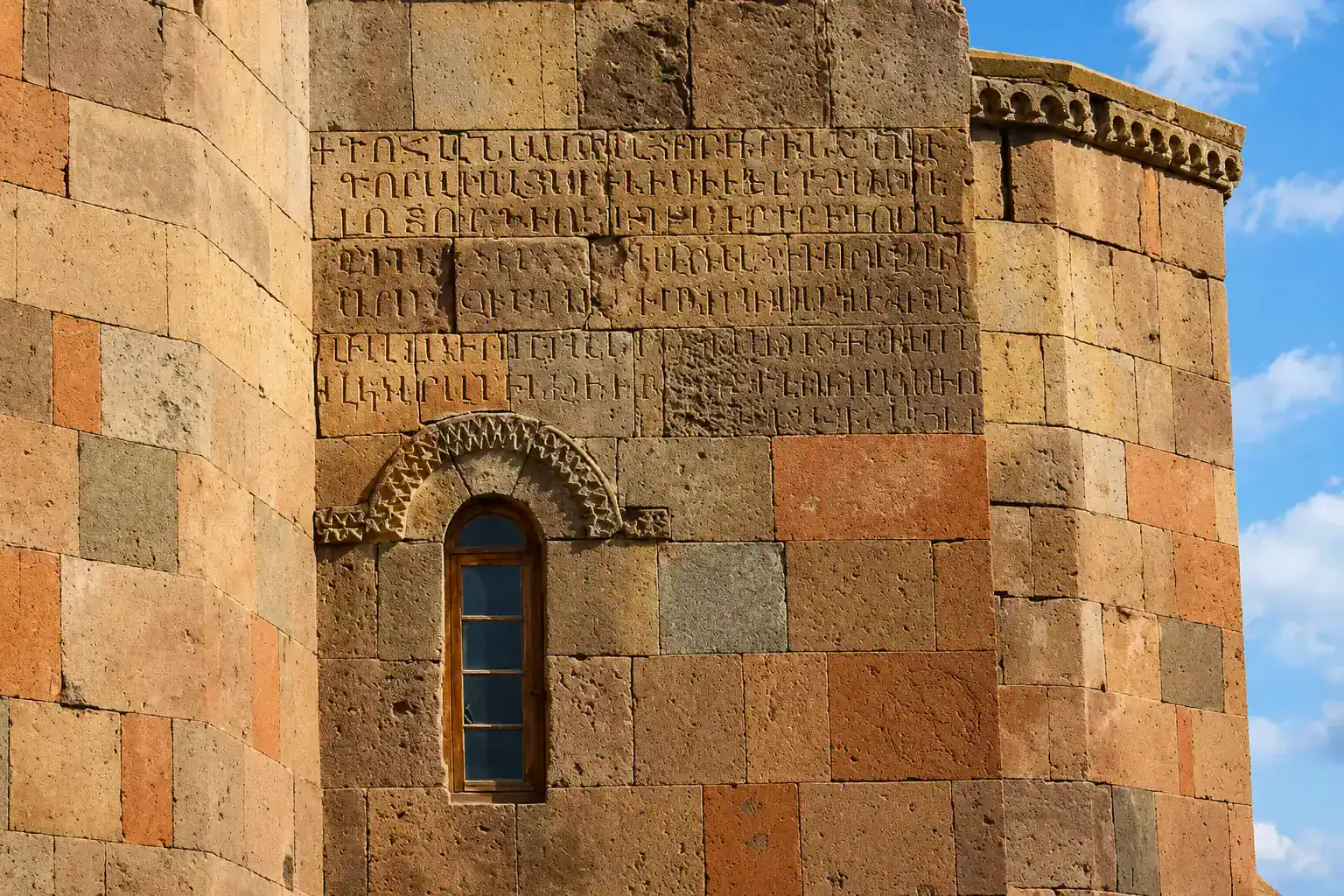
Based on a number of elements of the monument's architectural and sculptural decoration, the church is attributed to the 5th century. It was built by the monk Grigor under Bishop Theodoros Gnuni, who took part in the Council of Dvin in 648 — which is why the church is often also said to belong to the seventh century.
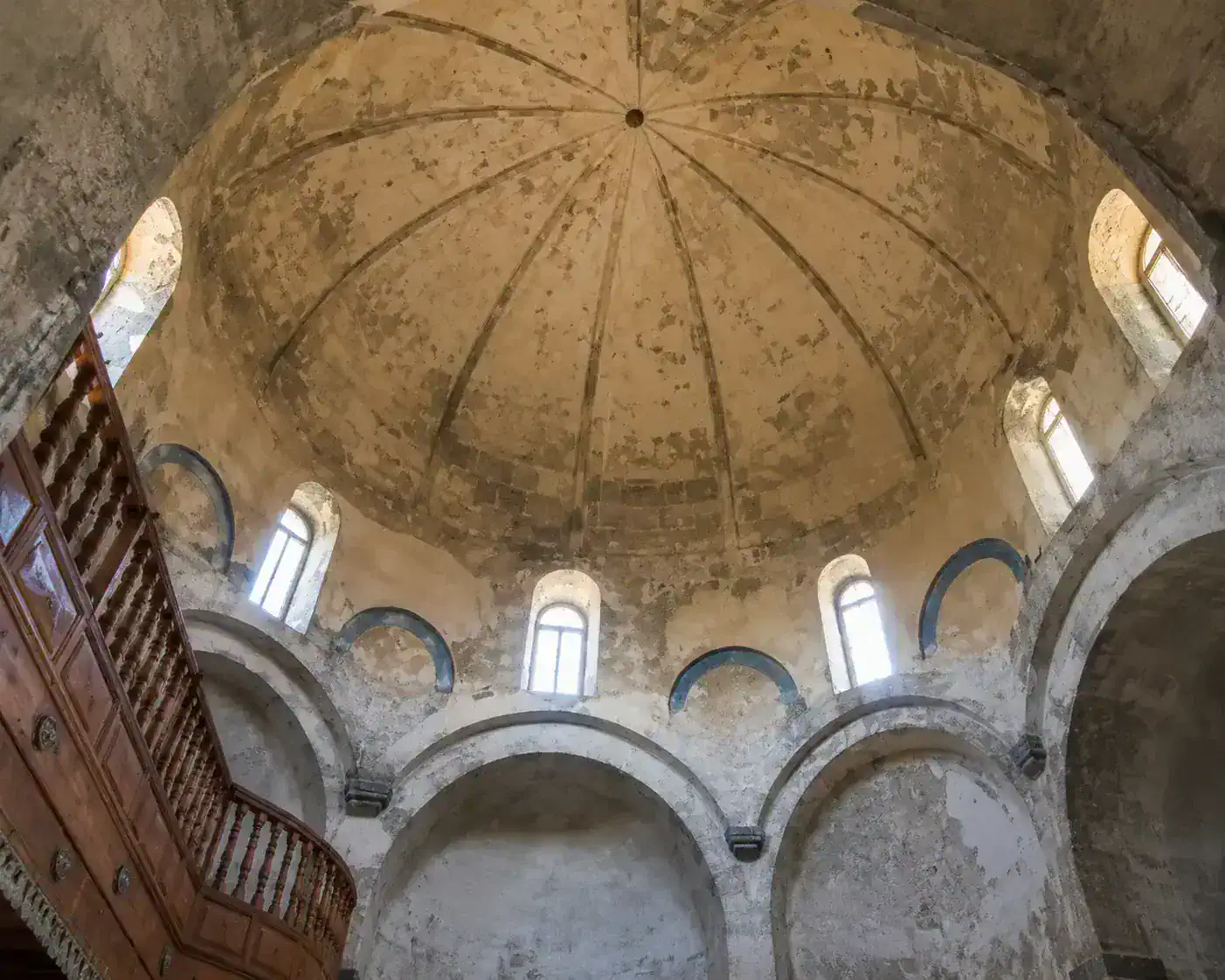
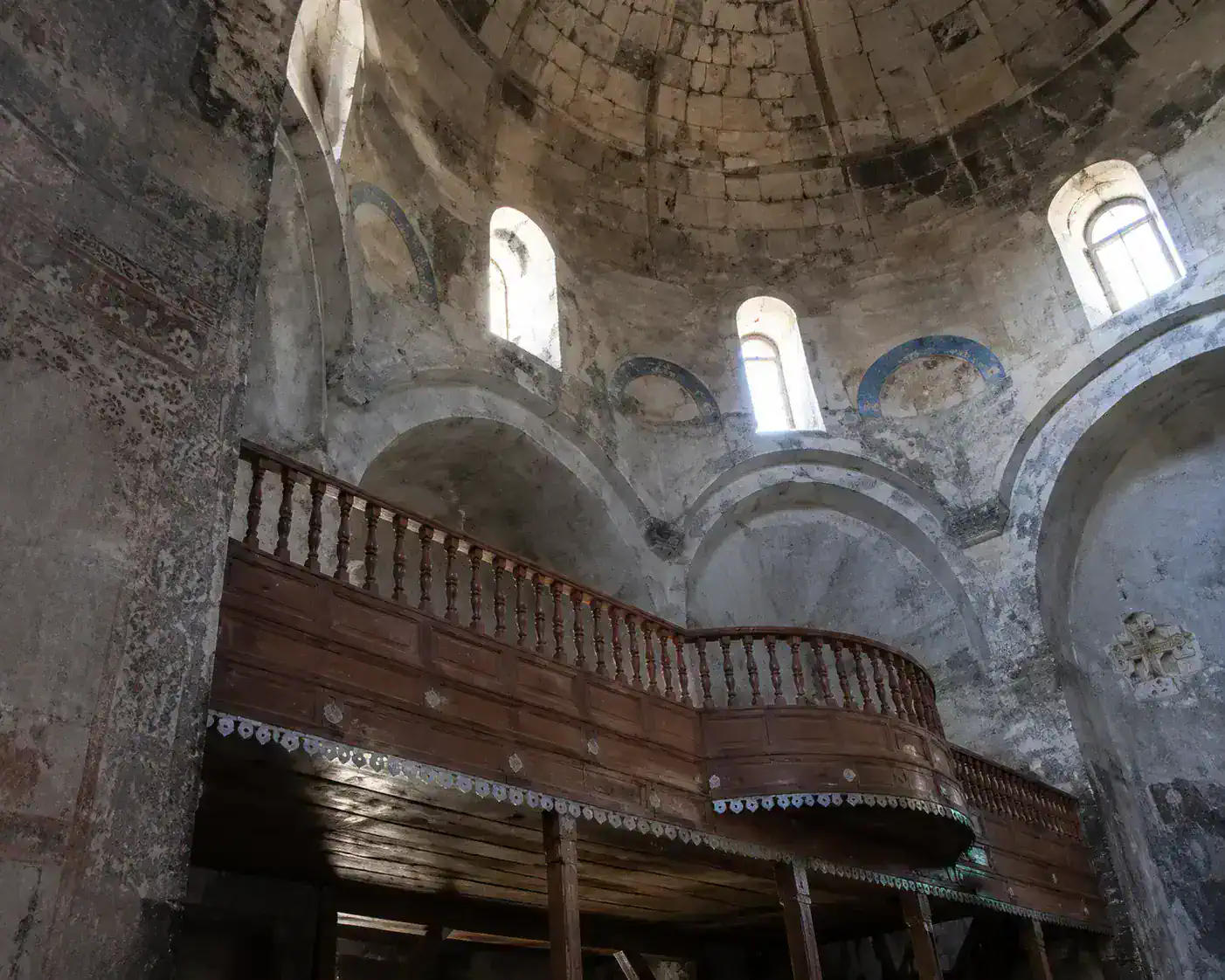
Architecturally, St. Hovhannes is a centrally-domed, tetraconch (four-apse) church. At its center is a spacious square prayer hall, from whose four sides the apses open. In the late medieval period the church was surrounded by a wall. These walls survived until the end of the 19th century and were dismantled during the 1889 restoration.
The church's exterior is relatively restrained. Unlike Armenian churches of later centuries, the main emphasis here is not on rich decorative ornamentation but on structural solutions. The combination of the four large arches provides a solid foundation for the dome's huge octagonal drum.
A tradition explaining the origin of the name has also survived. According to it, Grigor the Illuminator brought relics of John the Baptist from Caesarea to Armenia and left part of them in this place. By popular explanation, the name "Mastara" derives from the expression "mas tara" ("I carried off a part").