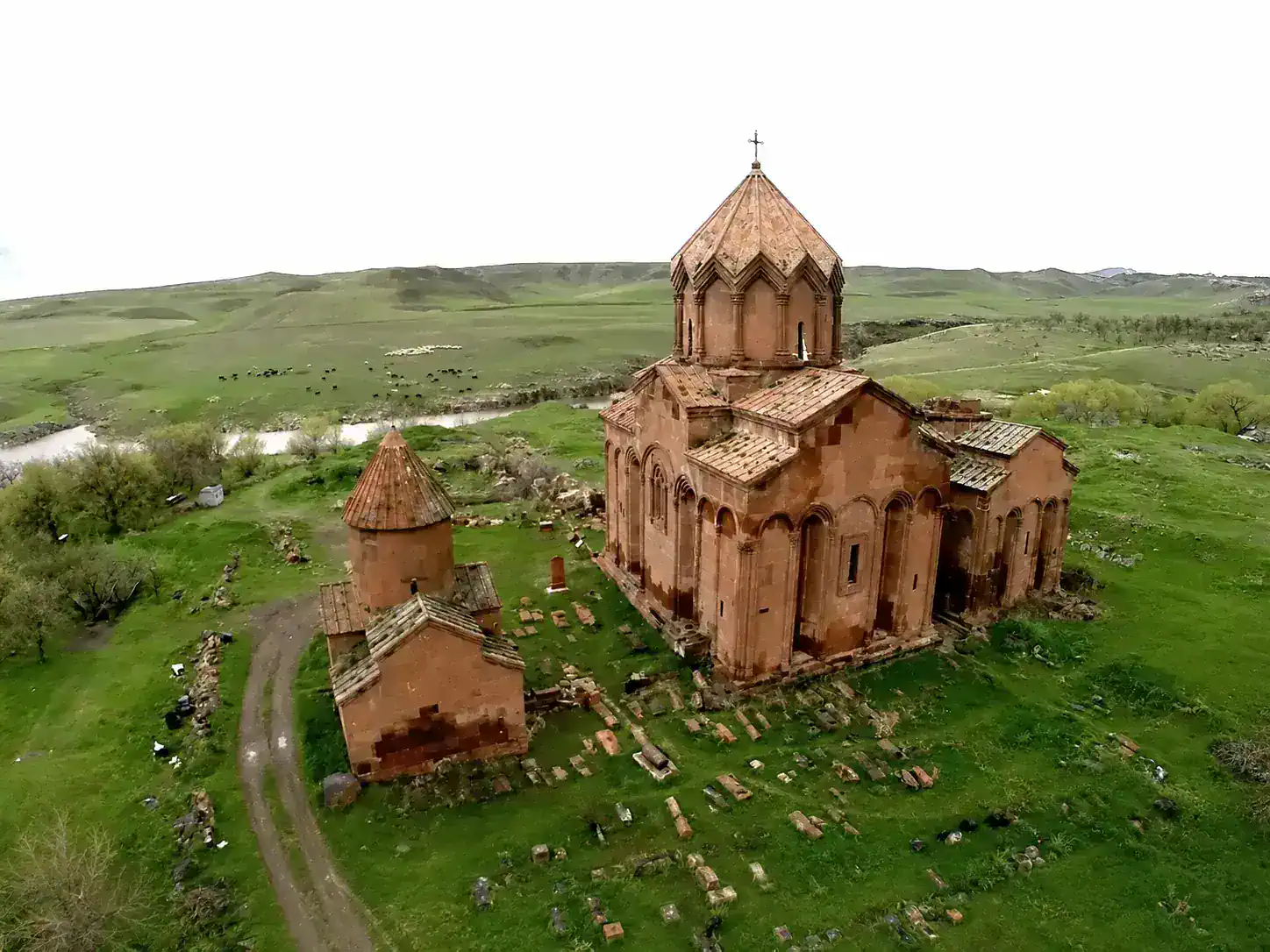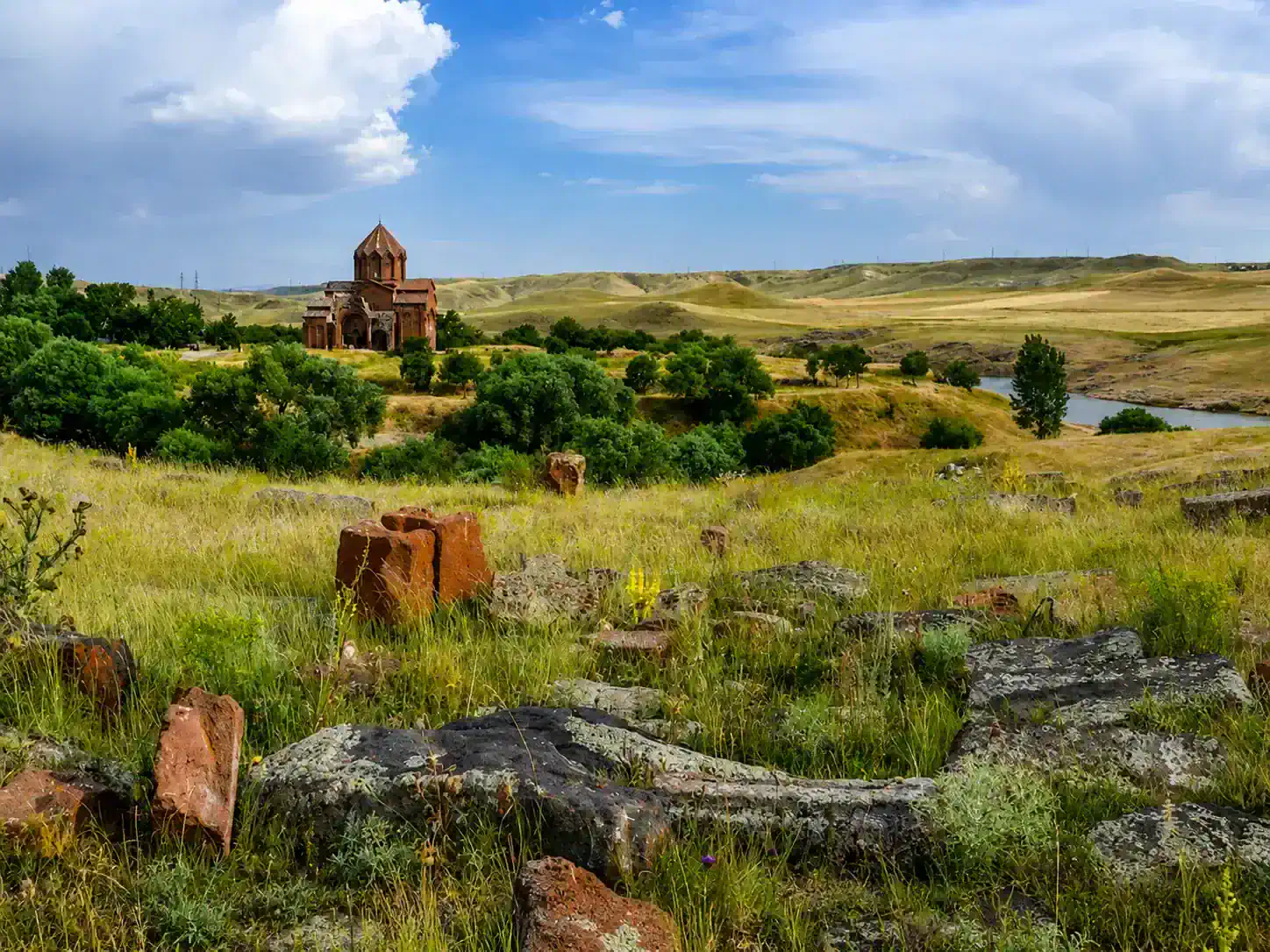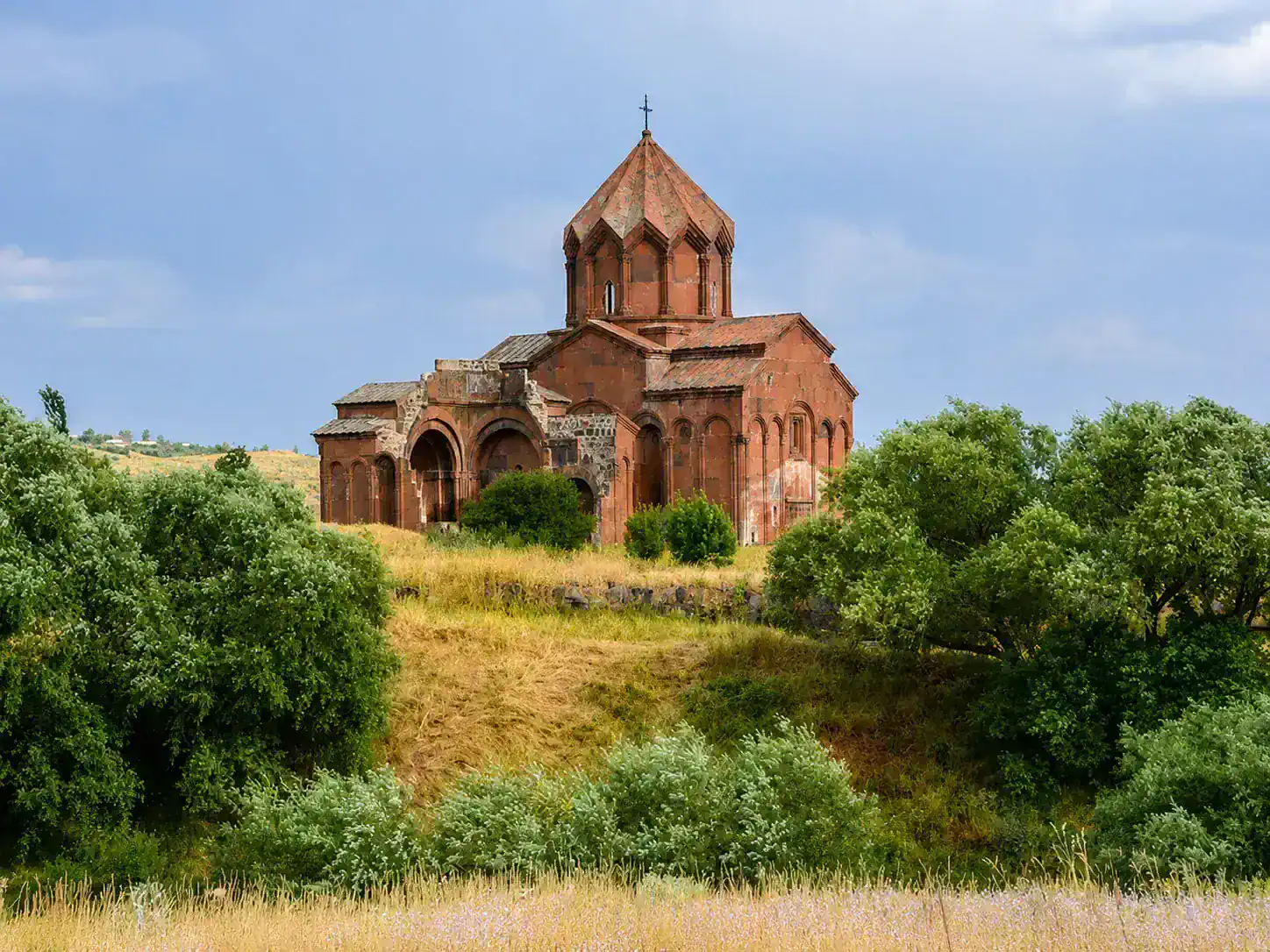
The Marmashen monastery complex is located in Shirak, on the left bank of the Akhuryan River, next to Vahramaberd. It consists of several churches, service buildings, and auxiliary structures, of which five churches now survive.
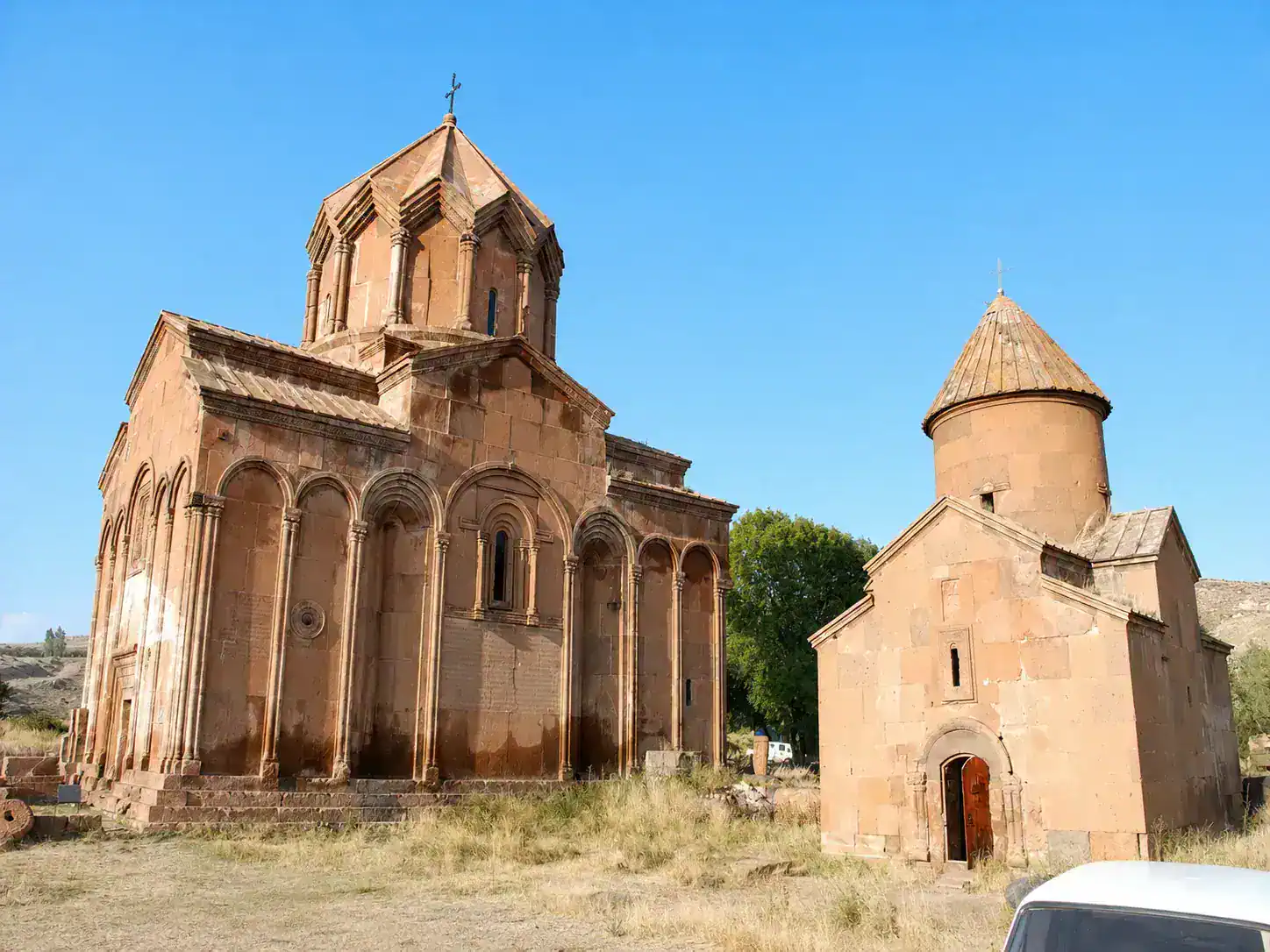
The complex's main structure is the Katoghike, the Holy Mother of God church. The great building inscription of Vahram Pahlavuni, preserved on its southern façade, is the principal primary source for the monastery's history. According to the inscription, construction is tied to the years 988–1029 and was completed on the initiative of Vahram, prince of princes: "I, VAHRAM, PRINCE OF PRINCES, BUILT THE MONASTERY OF MARMASHEN IN THE YEAR 1029."
The Katoghike is a domed hall. Its dome rests on four arches, pendentives, and massive piers. Characteristic elements of the exterior façades include arcades resting on paired half-columns, deep triangular niches, and carved capitals.
About 2.5 m north of the Katoghike stands the second church. It is smaller than the main church and today has mainly preserved its southern and eastern walls and some sections of the roof.
The third church stands about 11 m south of the Katoghike. It is a centrally-domed, cross-plan structure, and its architectural design differs substantially from the main and northern churches.
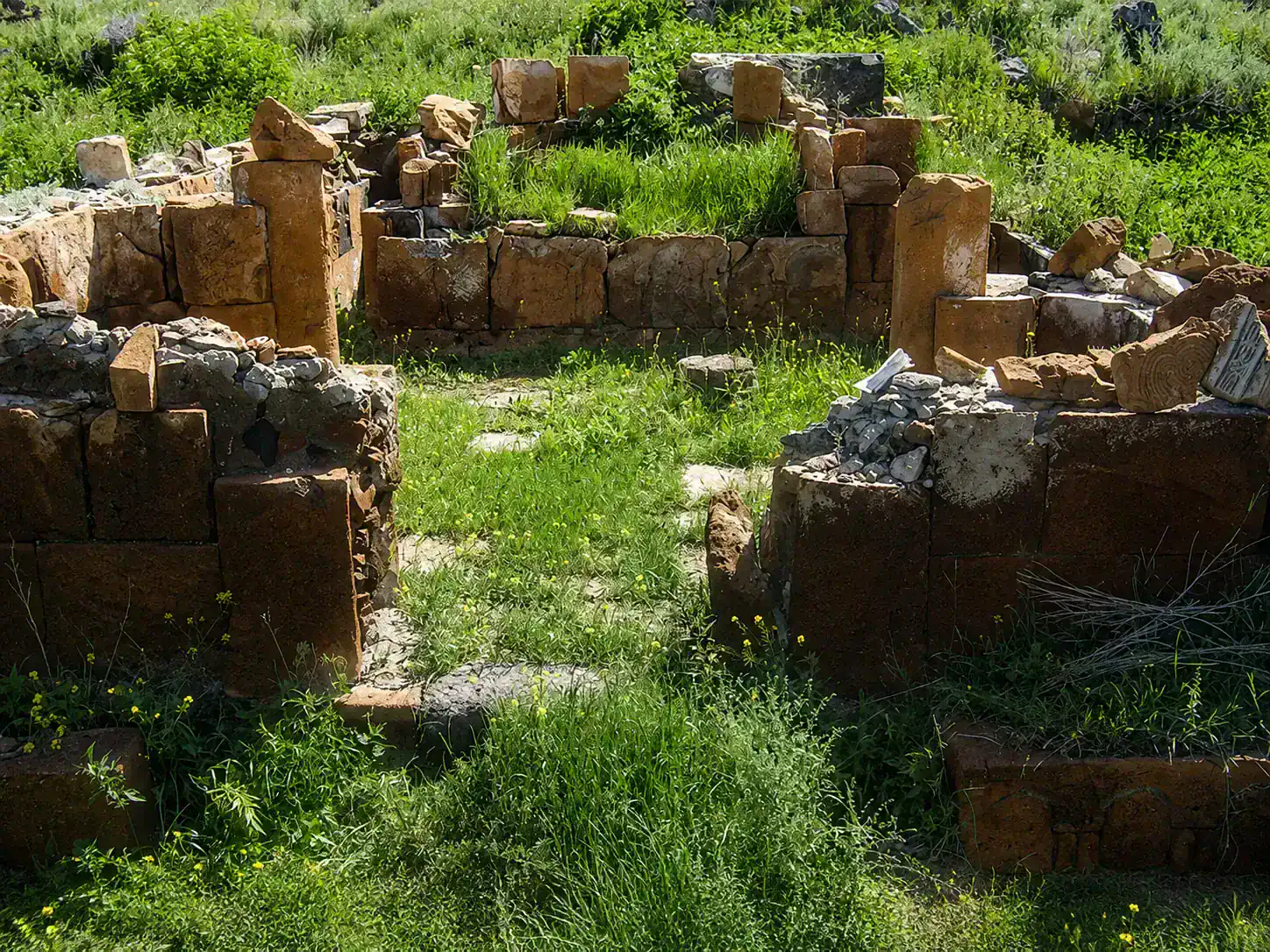
West of the gavit, excavations uncovered one of the complex's most unusual structures — the round church. Mainly the foundation wall and the lower courses of the walls now survive from it.
North of the main complex stood the Upper, or Small, Marmashen. This is originally where the 1015 tombstone of Sophia, wife of Vahram Pahlavuni, was located.
West of the Katoghike stood a gavit-vestry, of which fragments of walls and columns survive.
During the 1972–73 excavations at Marmashen, several dozen khachkars were discovered. Khachkars are also found in the cemetery north of Marmashen's Katoghike church.
Near the northern church of Marmashen monastery, two Byzantine coins were also found — one 2.7 cm and the other 5 cm in diameter — belonging to Emperor Constantine VIII.