Categories
Region
Sergei Parajanov Museum Cultural

Sergei Parajanov Museum

Yerevan

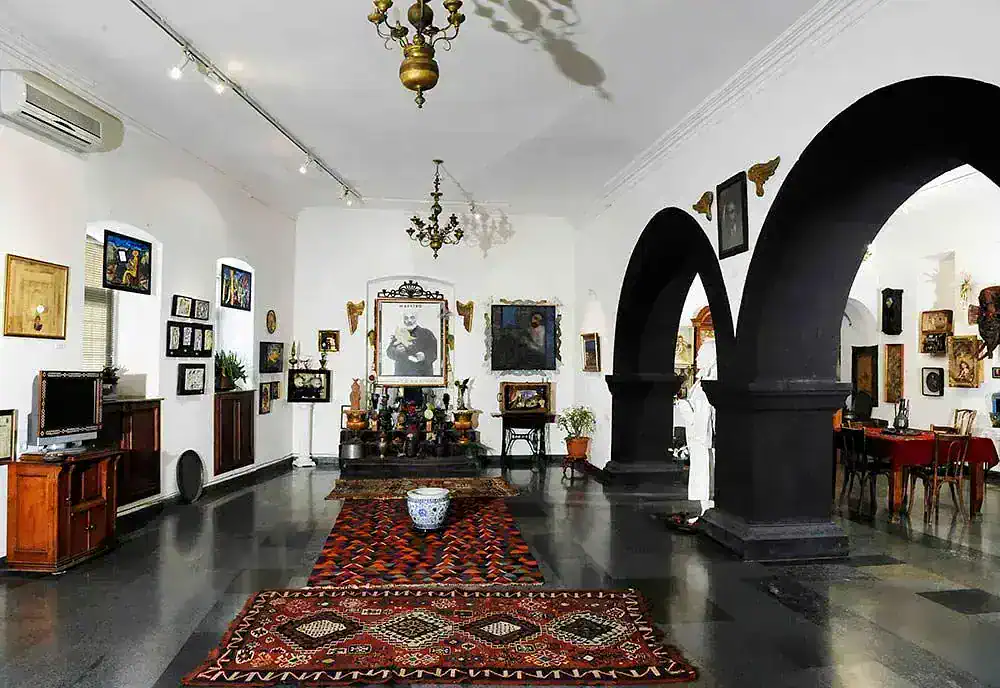
The Sergei Parajanov Museum is dedicated to the Armenian filmmaker Sergei Parajanov, director of "The Color of Pomegranates" and "Shadows of Forgotten Ancestors." The Armenian government established the museum in 1988 at the Dzoragyugh Ethnographic Center, building two structures, one for exhibitions and one modeled on Parajanov's residence. It holds more than 600 artworks, with about 250 on permanent display alongside documents and photographs. The collection reflects Parajanov's wide-ranging creative output beyond film, including assemblages, collages, drawings, dolls, and film sketches, much of it made during his five years in Soviet prison and the roughly fifteen years he was barred from professional filmmaking afterward. The museum also preserves correspondence between Parajanov and figures including Andrei Tarkovsky, Mikhail Vartanov, Federico Fellini, Yuri Nikulin, and Lilya Brik, as well as furnishings from his Tbilisi home, documented by filmmaker Mikhail Vartanov before their transfer to Armenia. His work blends Armenian, Eastern, and European artistic traditions through unconventional materials and three-dimensional composition. What you can do: View around 250 of Parajanov's collages, assemblages, drawings, and dolls, many created during his years of imprisonment and professional exile. See personal correspondence with figures such as Fellini and Tarkovsky. View furnishings from his Tbilisi home. Watch a film screening on-site (minimum group of 5). Take a guided or audio tour in one of ten languages.
Erebuni Fortress & Museum Cultural

Erebuni Fortress & Museum

Yerevan

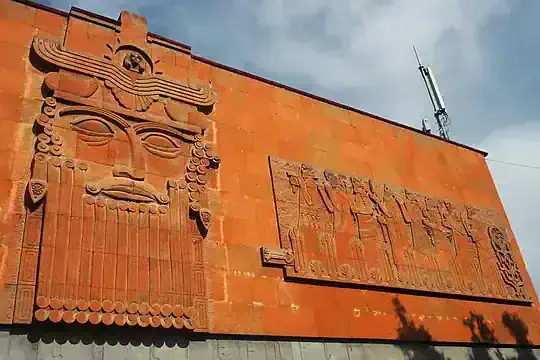
Erebuni Fortress sits on Arin Berd hill in Yerevan and was founded in 782 BC by the Urartian king Argishti I. The fortress functioned as a major administrative and religious center and, for a time, a royal capital overlooking the Aras River valley. Its name comes from the Urartian word "erebuni," believed to mean capture, conquest, or victory, and many scholars consider it the origin point of modern Yerevan given the linguistic connection between the two names. The fortress was built atop a hill 65 meters high, with a triangular layout enclosed by ramparts 10 to 12 meters high made of basalt, tuff, wood, and adobe. Inside stood Argishti's palace, a columned royal assembly hall, a temple to the god Khaldi, garrison quarters, storerooms, and walls decorated with religious and secular murals. The Erebuni Historical and Archaeological Museum-Reserve opened in 1968 to mark the 2,750th anniversary of the city's founding, in a building designed by architects Shmavon Azatyan and Baghdasar Arzumanyan in a style referencing Urartian palace architecture. It holds over 12,700 artifacts spanning the pre-Urartian period through the early Armenian era, including cuneiform inscriptions, armor, jewelry, bronze bracelets, and ceremonial vessels. One of its inscriptions documents the founding of the city itself. What you can do: Walk the excavated ruins of Argishti I's 8th-century BC fortress on Arin Berd hill, including the remains of the palace, assembly hall, and temple to Khaldi. View more than 12,700 artifacts in the museum below, including cuneiform inscriptions, armor, and ceremonial vessels.

Armenian Genocide Museum (Tsitsernakaberd) Cultural

Armenian Genocide Museum (Tsitsernakaberd)

Yerevan

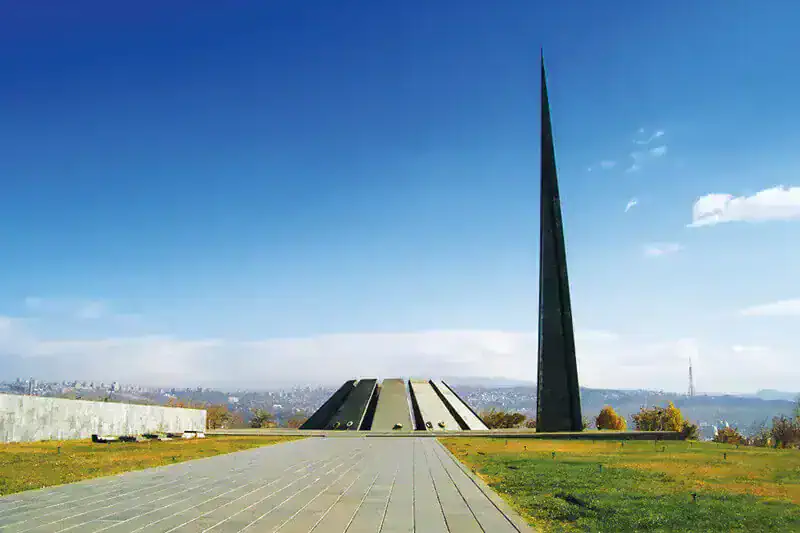
The Tsitsernakaberd memorial complex sits on a hill in Yerevan and serves as Armenia's official memorial to the victims of the Armenian Genocide. The idea for a permanent memorial dates to 1960 under the Communist Party leadership, and on February 15, 1965, Armenian authorities approved formal plans to honor the 1.5 million victims. It was designed by architects Arthur Tarkhanyan and Sashur Kalashyan with artist Hovhannes Khachatryan. The complex has three main elements. The Temple of Eternity consists of twelve basalt slabs arranged in a circle around an eternal flame, with the twelve slabs representing the historical provinces of Western Armenia. The Memorial Column rises 44 meters and is split into two sections symbolizing national rebirth. The Memorial Wall runs 100 meters and is inscribed with the names of towns and villages affected by the massacres and deportations, with the names of individuals who helped rescue Armenians during the genocide inscribed on its rear side. The Armenian Genocide Museum-Institute opened alongside the memorial in 1995, on the 80th anniversary of the genocide, designed by Sashur Kalashian, Lyudmila Mkrtchyan, and sculptor F. Araqelyan as a two-story structure built into the hillside so as not to compete visually with the monument above. It holds more than 1,000 square meters of exhibition space across three indoor halls and an outdoor gallery, along with a 170-seat auditorium, a library, and archival storage, and it conducts academic research and publishes the International Journal of Armenian Genocide Studies. What you can do: Walk the memorial complex and see the Temple of Eternity, the eternal flame, the 44-meter Memorial Column, and the 100-meter Memorial Wall inscribed with the names of affected towns and villages. Tour the underground museum's exhibition halls documenting the genocide with photographs, documents, and testimony.

Matenadaran manuscripts museum Cultural

Matenadaran manuscripts museum

Yerevan

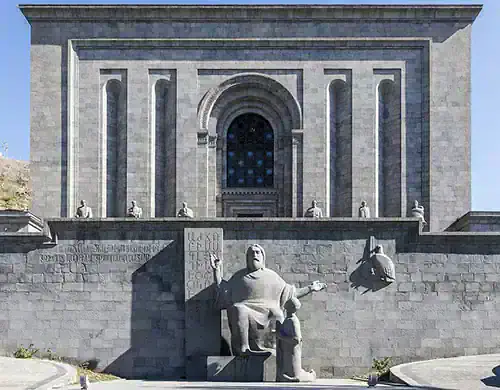
The Matenadaran, officially the Mesrop Mashtots Institute of Ancient Manuscripts, holds the largest collection of Armenian manuscripts in the world. Its roots trace to 1441, when the Armenian Church established a manuscript repository at Etchmiadzin following the Catholicosate's return from Cilicia. By 1913 that repository held about 4,660 manuscripts. The collection was moved to Moscow for safekeeping during the First World War and returned in 1922 with 1,730 additional manuscripts. The building was designed by architect Mark Grigorian, commissioned in 1939 and completed between 1945 and 1958. It stands 22.4 meters tall, faced in gray basalt, with a facade inspired by the 12th-century Church of the Holy Apostles in Ani. A five-story extension designed by Arthur Meschian opened in 2011, tripling the original space and adding modern preservation facilities. Today the Matenadaran holds around 23,000 manuscripts and scrolls, plus over 500,000 additional documents including decrees and periodicals. Its subjects range across theology, history, mathematics, astronomy, medicine, and philosophy. Notable items include the Lazarian Gospel of 887, the Echmiadzin Gospel of 989, and illuminated manuscripts by Toros Roslin. What you can do: View illuminated medieval Armenian manuscripts, including works by the master miniaturist Toros Roslin. See the Lazarian Gospel (887) and the Echmiadzin Gospel (989). Learn about the Vehamor Gospel, the manuscript Armenian presidents are sworn in on. Explore exhibits on Armenian science, medicine, and philosophy as recorded in centuries-old manuscripts. Take a guided tour in Armenian or a foreign language.

History Museum of Armenia Cultural

History Museum of Armenia

Yerevan

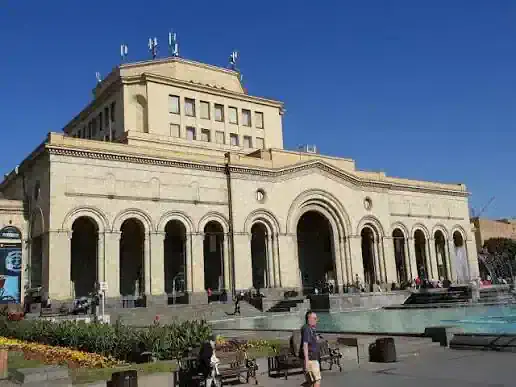
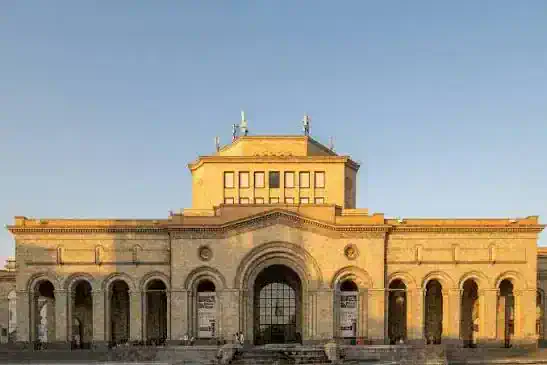
History Museum of Armenia was established by Armenia's National Assembly on September 9, 1919, under the name Ethnographic-Anthropological Museum-Library, and opened to the public on August 20, 1921, with Yervand Lalayan as its first director. Today the museum holds approximately 400,000 objects across four departments: archaeology, numismatics, ethnography, and documents. Notable holdings include bronze artifacts from the third and second millennia BC, Urartian objects bearing cuneiform inscriptions, and a cuneiform inscription dated to 782 BC that documents the founding of Erebuni, the fortress city that gave rise to modern Yerevan, by the Urartian king Argishti I. The museum also holds ancient coins from multiple civilizations and archaeological finds from Garni, Artashat, Dvin, and Ani. What you can do: View Urartian artifacts and cuneiform inscriptions, including the 782 BC inscription documenting the founding of Erebuni. See bronze objects dating back to the third millennium BC. Browse the numismatic collection of ancient coins. See archaeological finds from Garni, Artashat, Dvin, and Ani spanning different eras of Armenian history.

National Gallery of Armenia Cultural

National Gallery of Armenia

Yerevan

The National Gallery of Armenia was established in 1921 by decree of the Armenian Soviet Socialist Republic. Its first works came from an exhibition of Armenian painters that same year, followed by the transfer of the Armenian Cultural Center's collection, originally held by the Lazarian Seminary in Moscow, along with donations from Armenian artists. By 1925 it displayed 400 works by Armenian, Russian, and European artists across six halls. Today it holds approximately 42,000 artworks across 56 exhibition halls, along with an archive of roughly 200,000 items including photographs, letters, and documents. The collection spans Armenian medieval church frescoes, European Old Masters from Italy, Flanders, the Netherlands, and France, Russian painting, and decorative arts. It holds more than 62 canvases by Ivan Aivazovsky, the Russian painter of Armenian descent, as well as works by Marc Chagall, Wassily Kandinsky, and Arshile Gorky. What you can do: View more than 62 seascapes and paintings by Ivan Aivazovsky. See works by Chagall, Kandinsky, and Gorky alongside European Old Masters. Walk through 56 halls covering Armenian medieval frescoes, Russian painting, and decorative arts.

Climb the Cascade & Cafesjian sculpture garden Cultural

Climb the Cascade & Cafesjian sculpture garden

Yerevan

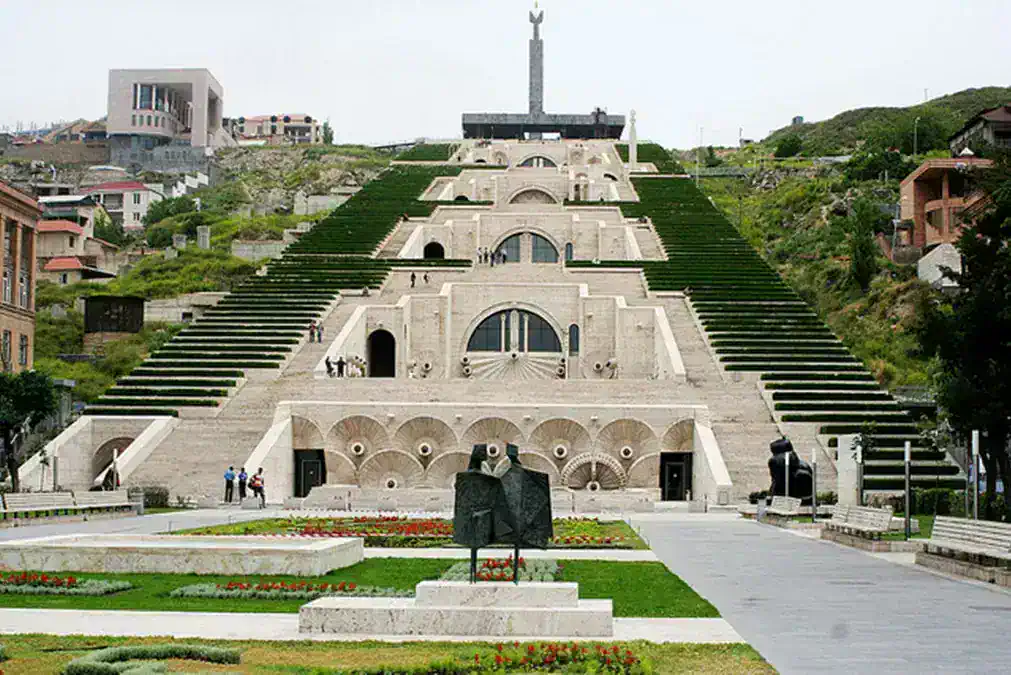
The Cascade is a monumental limestone stairway complex on the northern edge of central Yerevan, built beginning in 1971 by architects Jim Torosyan, Aslan Mkhitaryan, and Sargis Gurzadyan. It rises 302 meters from the gardens on Tamanyan Street through five terraced levels connected by 572 steps and a series of fountains. In 2002 the Cafesjian Museum Foundation partnered with the Armenian government to restore and complete the structure, investing more than 35 million dollars. New York architect David Hotson designed the museum spaces integrated into the Cascade, which officially opened on November 17, 2009. The New York Times described it as one of the most ambitious works of contemporary architecture undertaken in the former Soviet republics. What you can do: Climb the Cascade's outdoor stairs and escalators, passing fountains and sculpture terraces with views back over the city toward Mount Ararat. Walk through the Cafesjian Sculpture Garden and see large-scale contemporary sculptures. Visit the indoor galleries to see the glass art collection and paintings by Botero, Chihuly, Gorky, and others. See Grigor Khanjyan's triptych in the Khanjyan Gallery. Attend concerts and cultural events the center hosts through the year.

Jermuk hot-spring bathing Nature

Jermuk hot-spring bathing

Vayots Dzor

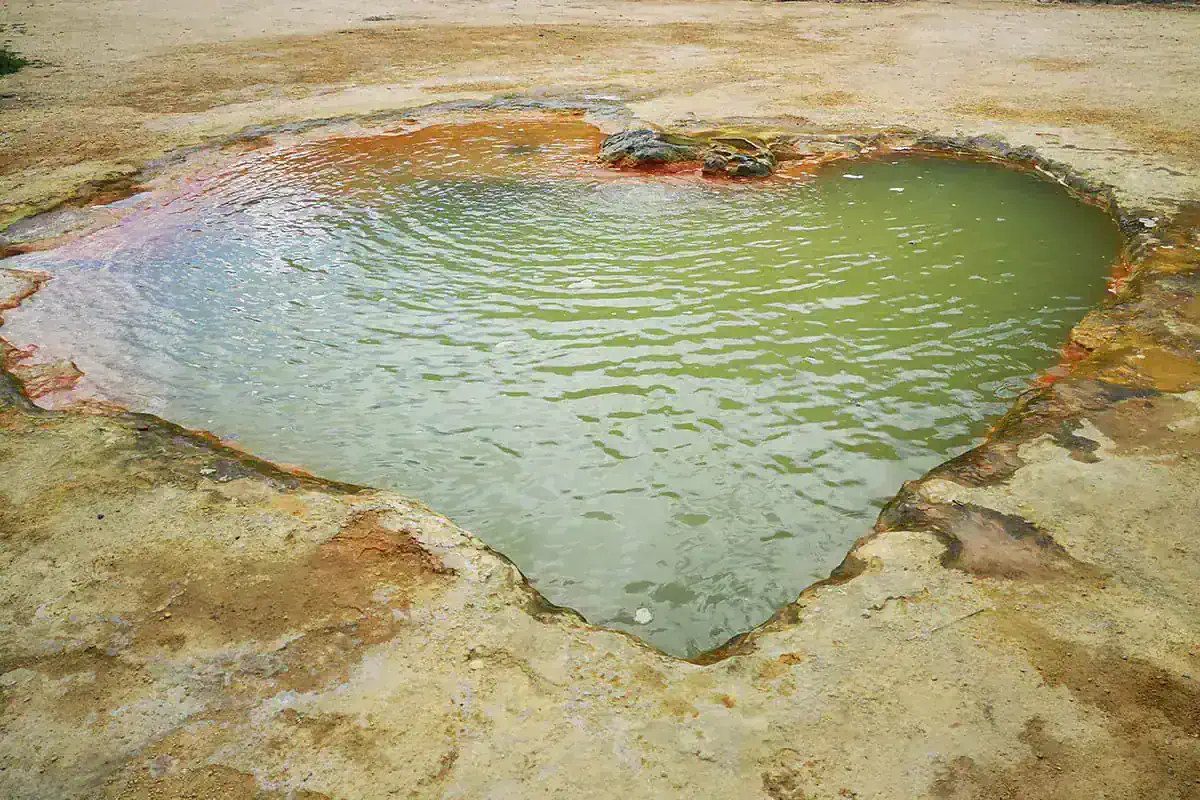
Jermuk is a spa town built around more than 20 natural mineral hot springs, with water reaching temperatures up to 64 degrees Celsius. Reaching the wild, undeveloped springs directly generally requires a 4x4 vehicle, so most visitors instead bathe through the town's spa hotels, which pipe the same mineral water into treatment pools. What you can do: Bathe in mineral hot spring water. Take a balneology treatment or therapeutic mineral bath. Try a drinking cure program using the same mineral water. Reach the undeveloped wild springs directly by 4x4 if you want the natural, unpiped version.

1 ... 9 10 11 ... 16
Plan my trip