


Marmashen Monastery, Gyumri City Tour

We are going to the Shirak region to learn about the history and daily life of Gyumri, Armenia's second city. The excursion program consists of a city walk and a tour of Gyumri, and our group will also visit the Marmashen medieval monastic complex.

23 May, 01 May
Start | End time: 09:00:00 | 20:00:00
Language: English, Russian, Armenian, French, German
Duration: 1 day
Start | End point: 1 Sayat-Nova Ave, Yerevan 0010, Армения | 1 Sayat-Nova Ave, Yerevan, Армения
Type of tour: Group
Group size: 12

Inclusions

  • Transport Transport
  • Guide service (if there are foreign participants, the tour may be conducted in two languages) Guide service (if there are foreign participants, the tour may be conducted in two languages)
  • Bottled water Bottled water

Exclusions

  • Meal Meal

Tour program

Day 1

Stop 1.Marmashen medieval monastery

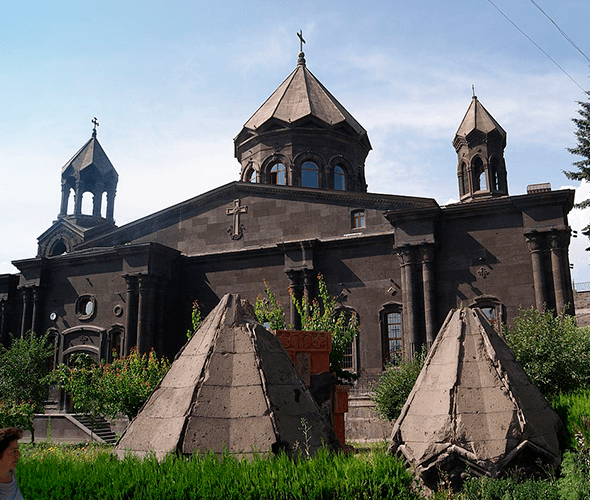
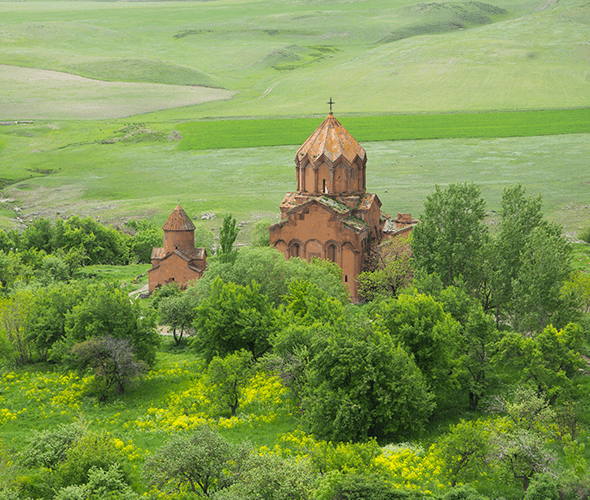
The Marmashen monastic complex is situated on the left bank of the Akhuryan River, which for centuries has been one of the most important cultural and spiritual centers of Shirak province. Marmashen was built in the 10th century, during the reign of Vahram Pahlavuni, which historian and geographer Stepanos Asoghik testifies. The monastery consisted of four churches, a vestibule, a bell tower and a cemetery. Over the centuries, the Marmashen monastic complex was repeatedly attacked by foreign conquerors, Seljuk-Turks, and Mongols. Unfortunately, these attacks led to the loss of the monastic complex's former significance and appearance.
Stop 2.Gyumri city tour

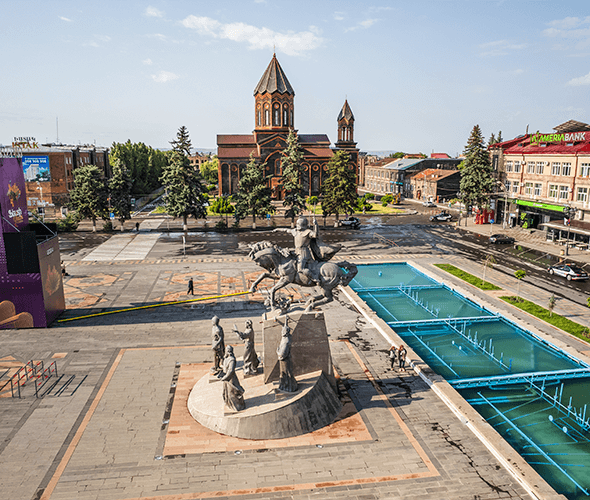
Gyumri is the second-largest city in Armenia, known for its rich history and culture. Visitors can explore numerous historical and cultural landmarks, such as the English Hall, the Church of the Virgin Mary, and the historic center of Gyumri. The city is also famous for its traditional hospitality and delicious cuisine.

Stop 3.Yot Verk church

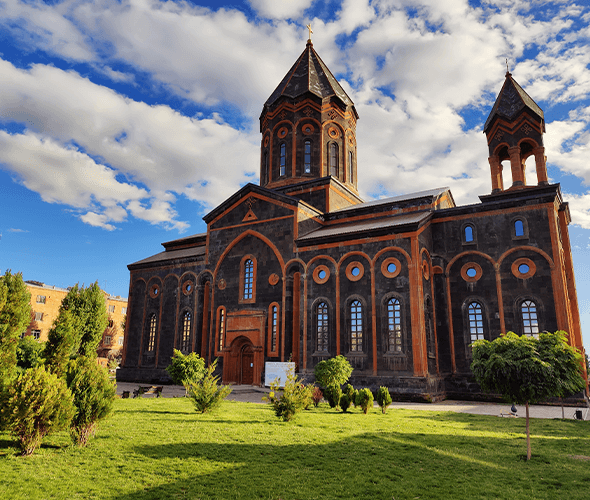
Among the many churches of Gyumri, the largest is the St. Astvatsatsin or Yot Verk (Seven Wounds). The asymmetrically built Yot Verk Church was consecrated in 1886 and got its unique popular name from the icon of Mariam Astvatsatsin, which depicts her seven wounds. The icon was brought here from Western Armenia, and then it was decided to move to Harichavank for security reasons, but the people of Gyumri did not allow it, keeping it in their city. The Yot Verk Church adorning the city's main square is one of two large churches, the second being St. Amenaprkich.

Stop 4.St. Nshan church

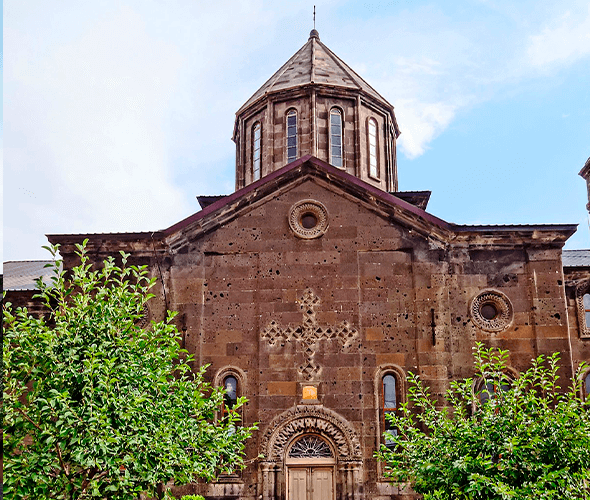
St. Nshan is the third largest church in Gyumri. It is another 19th-century church that repeats the Armenian style. During the Soviet years, the church was turned into a warehouse, and the earthquake destroyed the domes, which, fortunately, were later restored.

Stop 5.St. Amenaprkitch church

Built in 1873, the church repeats the main temple of Ani, the former capital of Armenia. Later, during the Soviet years, it served as a philharmonic hall. The 36-meter-high giant temple was damaged during the 1988 earthquake. It is now being restored.

Stop 6.Black Fortress

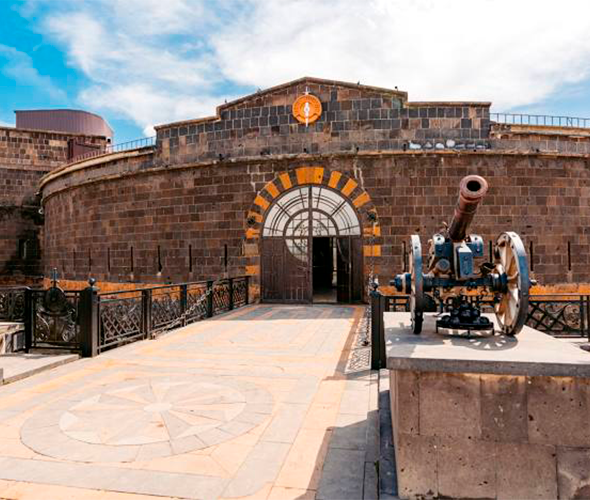
The Black Fortress is a defensive fortress built of black stone. It was built in 1834 after the Second Russian-Persian War. The drainage system, which protected the castle's walls from rain, deserves special attention. The Black Fortress, now turned into a tourist center, reminds visitors of its military past.