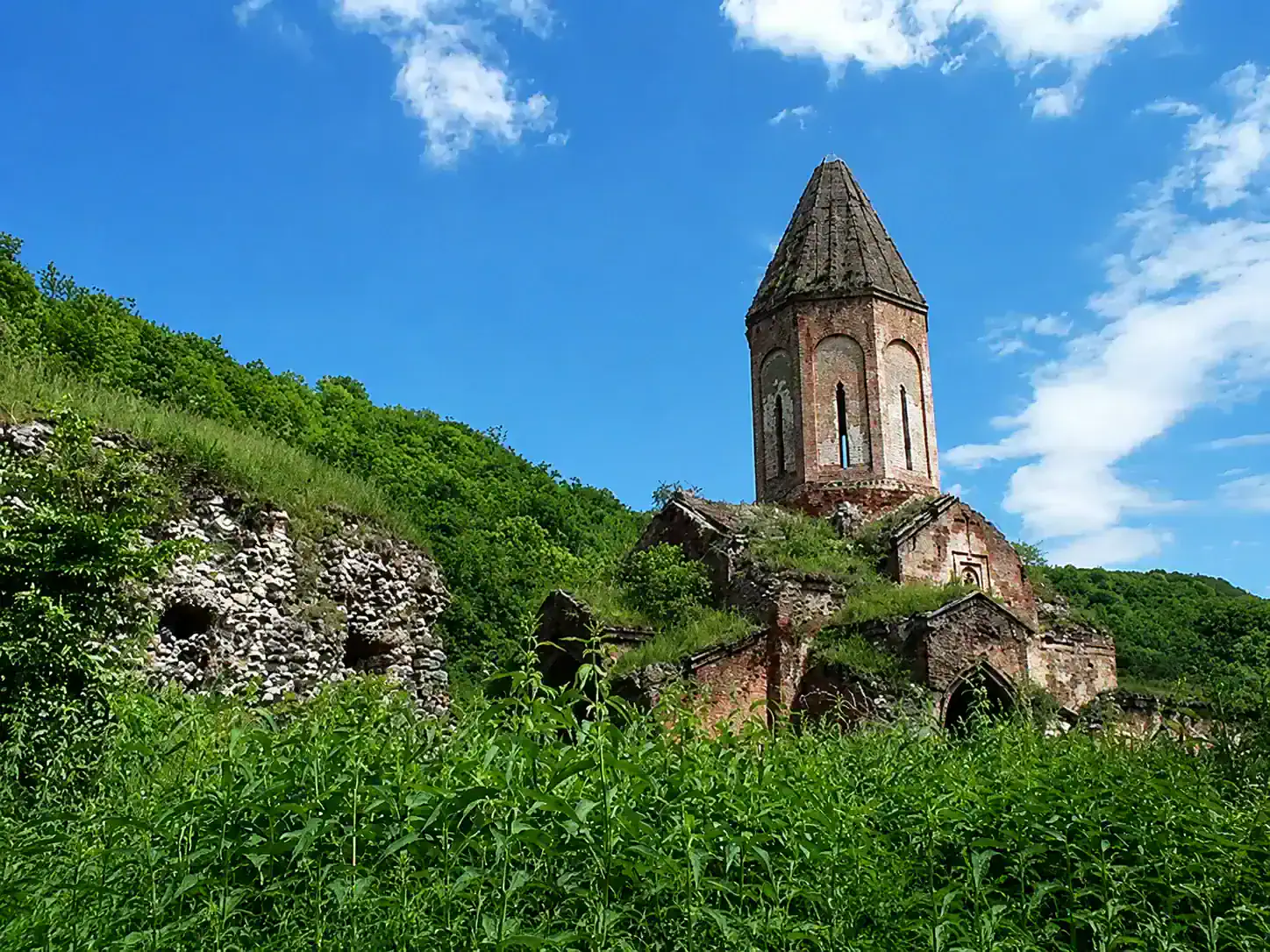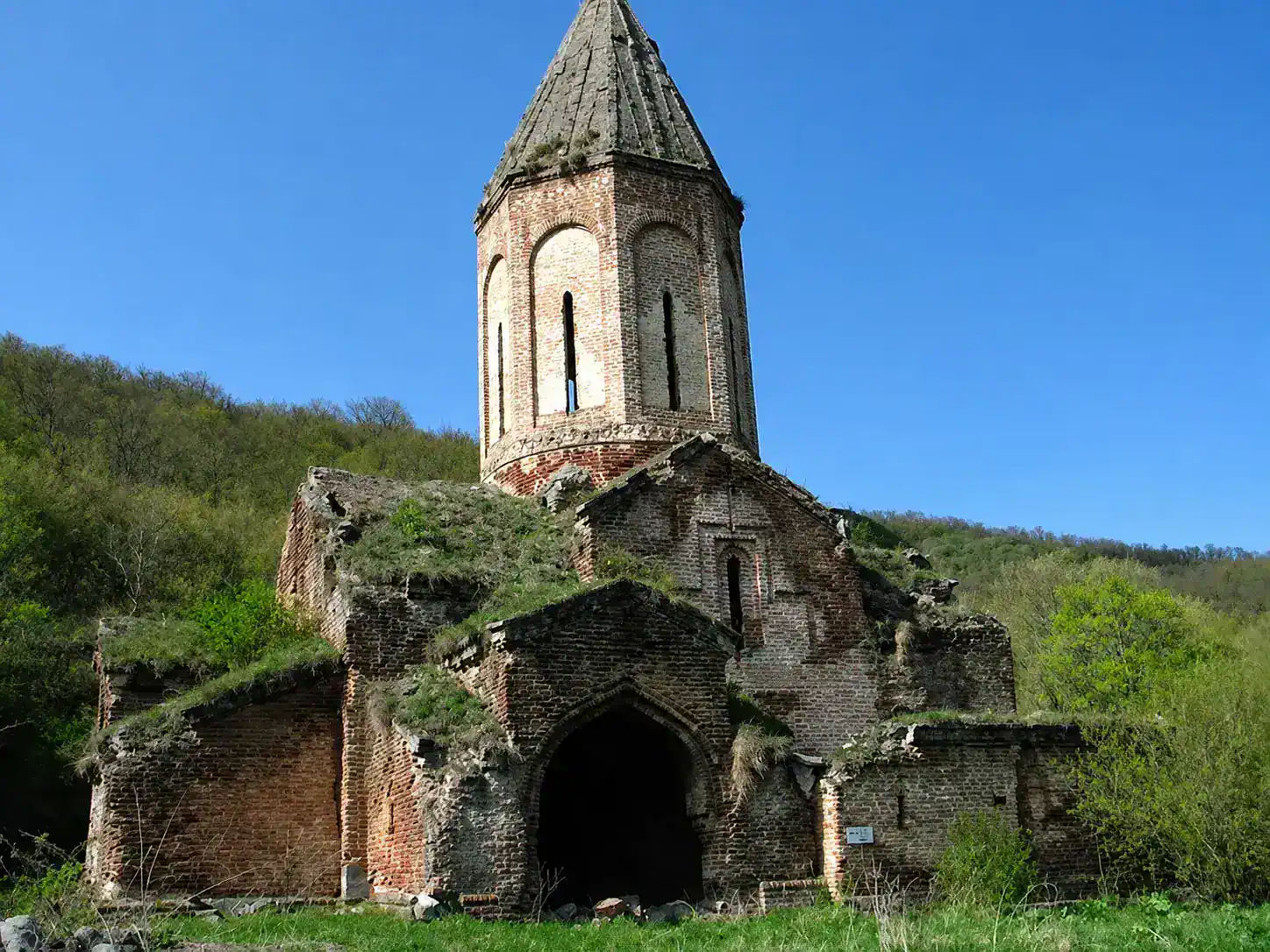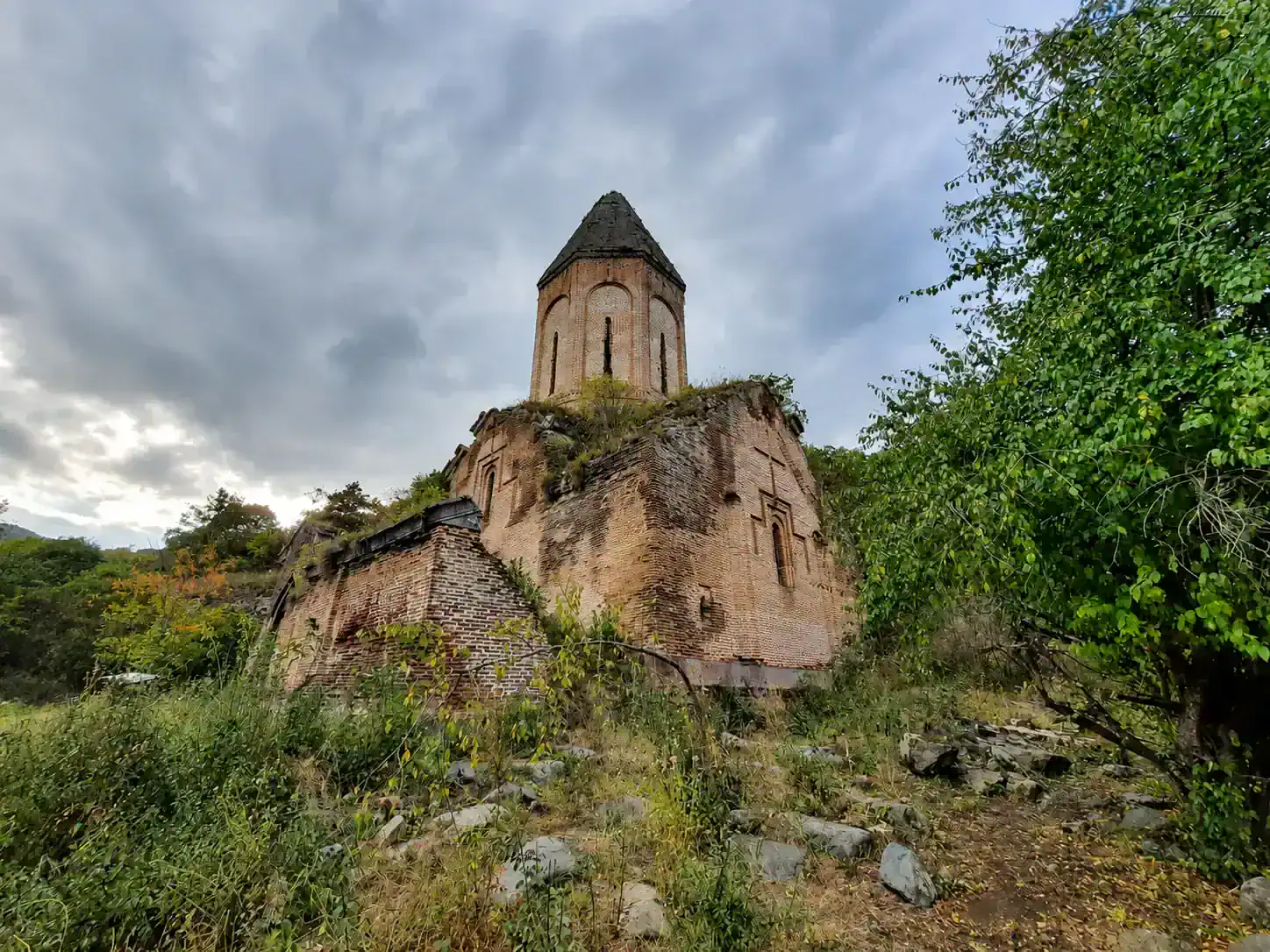
The Kirants Monastery Complex is located in Tavush Province, about 12 km west of the village of Kirants, on the left bank of the Kirants River. Dating to the 13th century, the complex includes three churches, gavit halls, and a refectory. Within the grounds, you can also see the remains of monastic cells, a cemetery, and sections of the enclosure wall with a large arched gateway.
A folk legend has been preserved about the origin of the monastery’s name. Kirants Monastery is said to have been built by one of Master Hakob’s apprentices. After inspecting the work, Hakob merely remarked, “The lime is excessive” — in Armenian, kirə ants e — implying that too much lime had been used in the mortar. The builder’s name remained unknown, but according to the legend, the monastery came to be known as Kirants because of the master’s remark.
In one of her studies, architect Evelyn Ordukhanyan compared Kirants with Makaravank, noting that the two monasteries were built during the same period and share certain architectural similarities, particularly in the design of their entrances and windows. However, unlike Makaravank, Kirants was built using colored brick. Most medieval Armenian churches were constructed of stone, whereas the churches and gavits at Kirants are predominantly built of fired brick.
The main church of the complex is a rectangular domed hall with a semicircular apse on the eastern side and two-story sacristies positioned on either side of it.
Two smaller single-nave churches are attached to the main church from the north and south. The main church of Kirants Monastery is a unique example of medieval Armenian architecture and, according to Lilith Mikayelyan’s study, one of the most exceptional known examples in Armenia whose drum is decorated with a geometric mosaic composed of genuine glazed ceramic tiles.
In the western part of the complex stands the detached refectory, a spacious barrel-vaulted hall built of roughly dressed basalt. Its vault is reinforced by three supporting arches.
Kirants is particularly remarkable for its wall paintings. On the southern section of the drum, the Prophet Isaiah is depicted, while on the northern side, a fragment of the scene depicting the Ascension of the Prophet Elijah has been preserved.