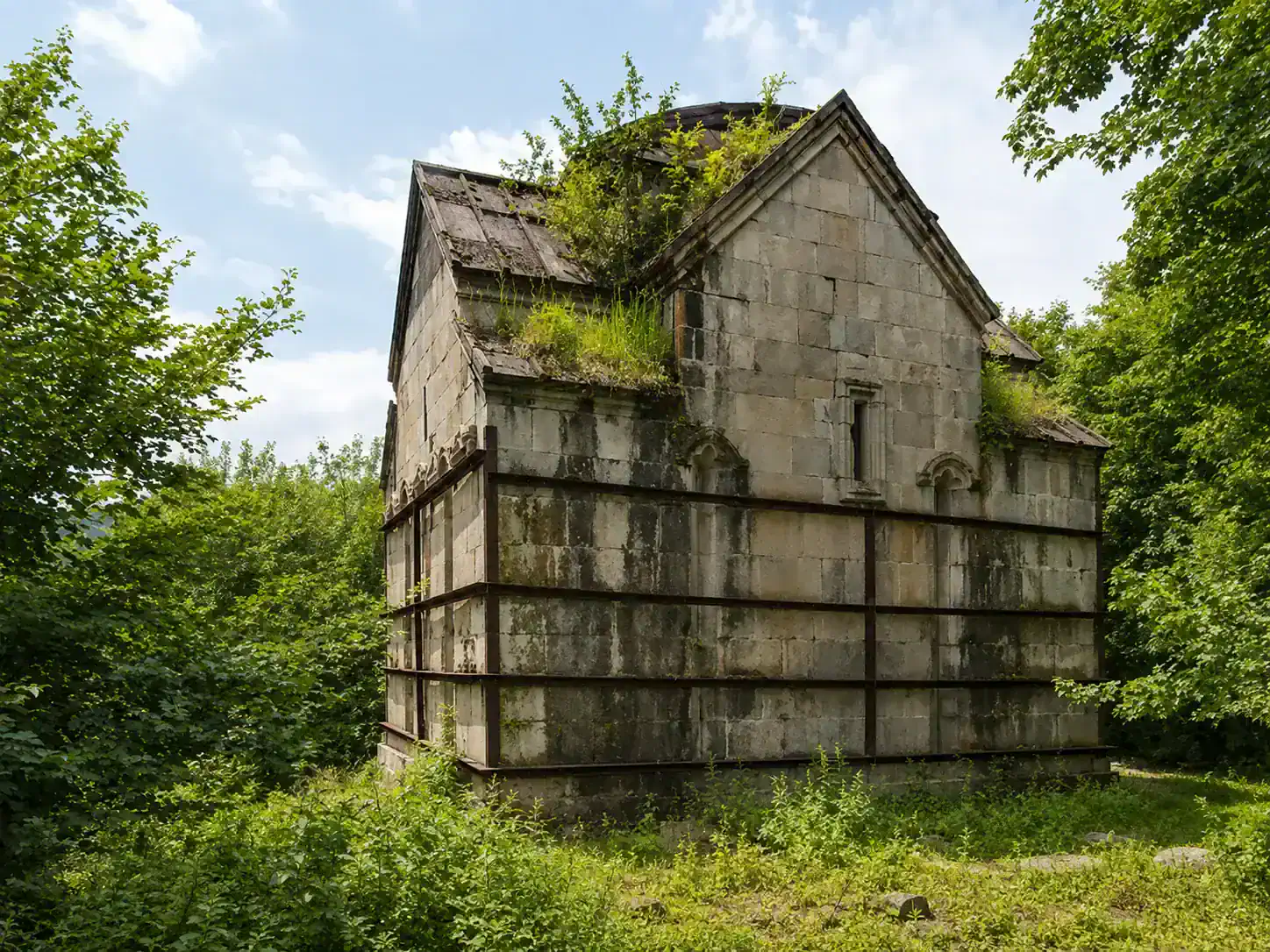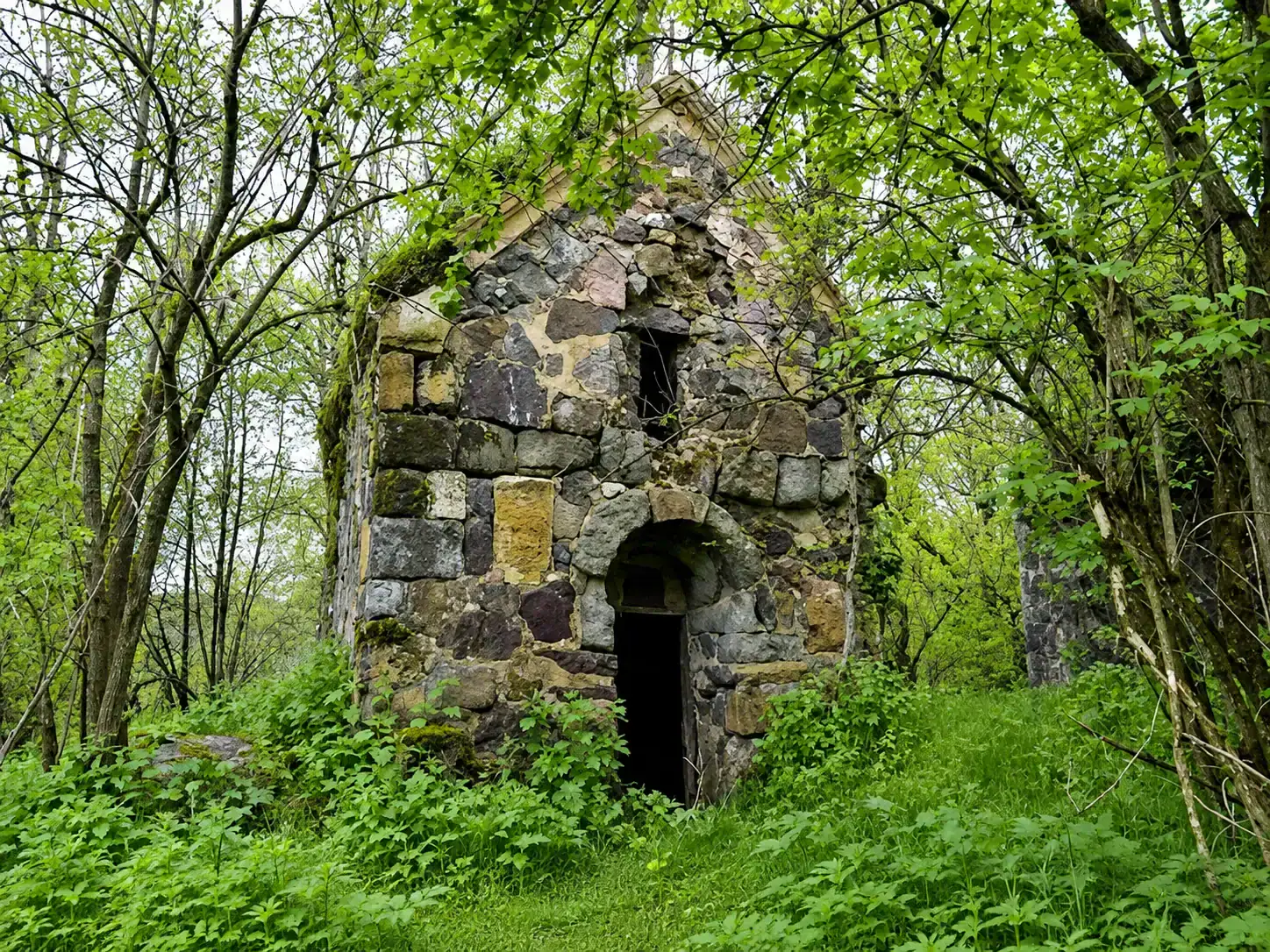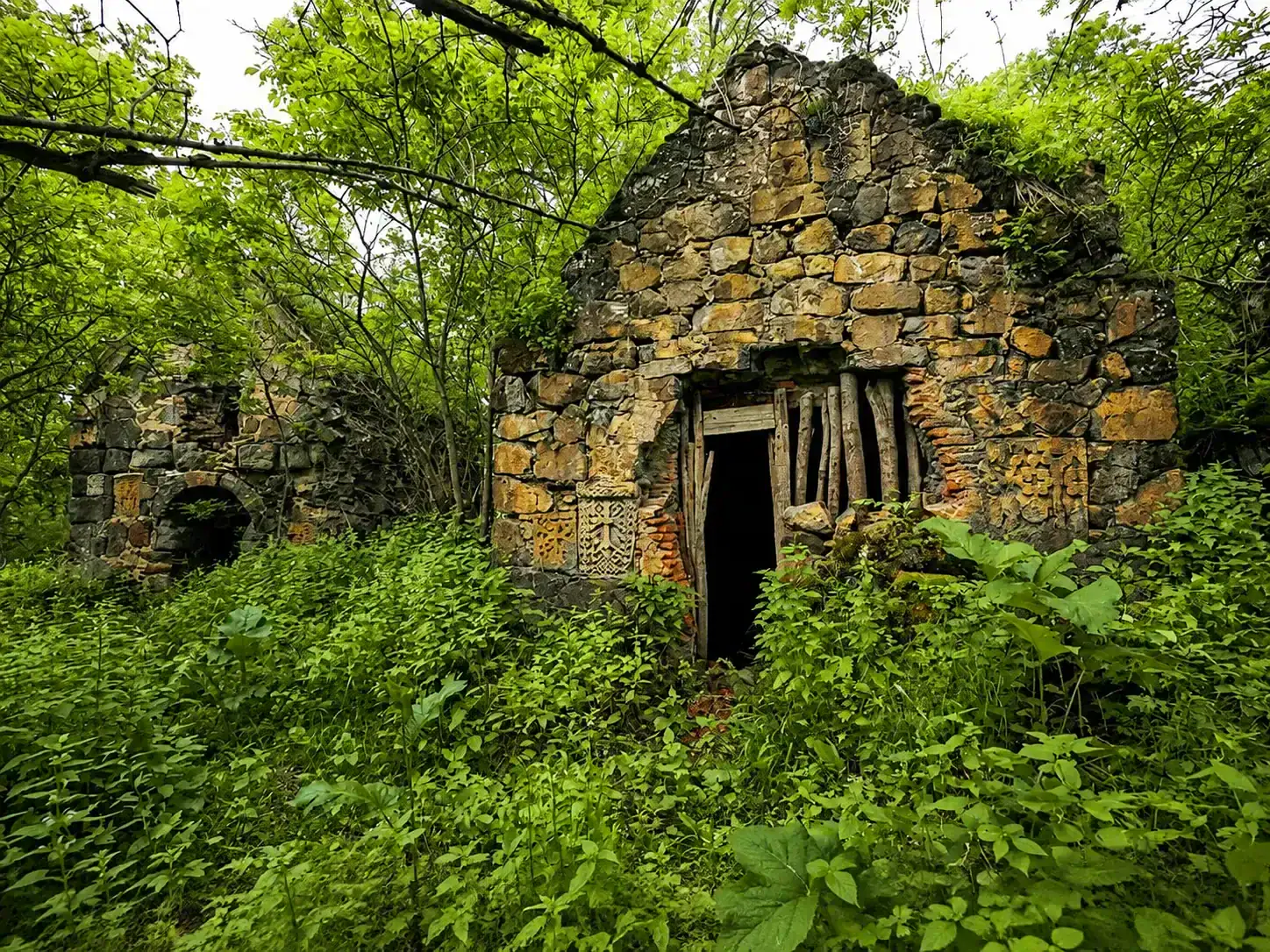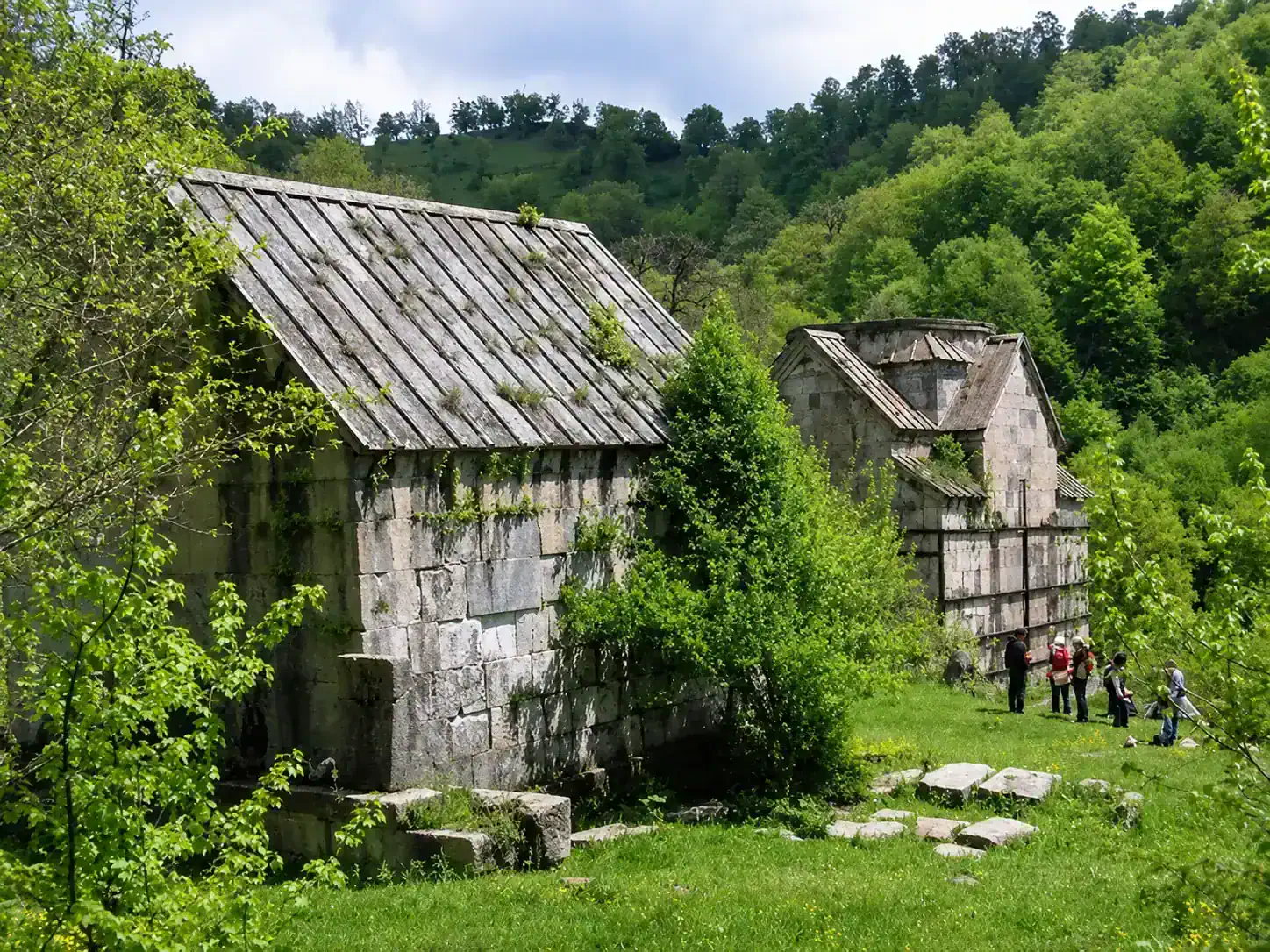
Jukhtak Monastery, consisting of the Church of the Holy Mother of God and the Church of St. Gregory, is located on a forested slope near Dilijan, on the southern foothills of Mount Khal-Khallu. The two churches stand separately, about 20 meters apart. It is from these two churches that the popular name “Jukhtak” derives, from the Armenian word jukht, meaning “pair.” In medieval inscriptions, however, the monastery is mentioned under the names Petros Monastery and Gisheravank.
The Church of the Holy Mother of God is the western structure of the monastery and was built in 1201 through the efforts of Hayrapet. It is a square-plan, non-domed church. Narrow sacristies are located on either side of the semicircular apse, while khachkars have been preserved within the walls on both sides of the entrance. The building is constructed of yellowish felsite in varying shades. Donative inscriptions have survived on both the interior and exterior walls of the church.
The second church, St. Gregory, is architecturally more complex. It has a centrally domed composition. The sacristies of the monument are decorated with finely carved ornamental details. The church bears no formal inscriptions, although the names of donors have been carved into its surfaces.
Based on its architectural and constructional features, specialists suggest that the Church of St. Gregory predates the Church of the Holy Mother of God.
A medieval cemetery has been preserved around the monastic complex. To the south lies the site of the medieval village of Mathos, where the 13th-century Mathosavank Monastery has also survived.
Between 1973 and 1977, the churches were renovated and the surrounding area was improved. Additional reinforcement works were carried out during the 1980s.