Categories
Region
Matenadaran manuscripts museum Cultural

Matenadaran manuscripts museum

Yerevan

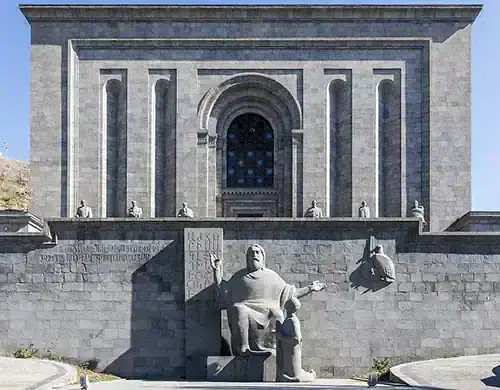
The Matenadaran, officially the Mesrop Mashtots Institute of Ancient Manuscripts, holds the largest collection of Armenian manuscripts in the world. Its roots trace to 1441, when the Armenian Church established a manuscript repository at Etchmiadzin following the Catholicosate's return from Cilicia. By 1913 that repository held about 4,660 manuscripts. The collection was moved to Moscow for safekeeping during the First World War and returned in 1922 with 1,730 additional manuscripts. The building was designed by architect Mark Grigorian, commissioned in 1939 and completed between 1945 and 1958. It stands 22.4 meters tall, faced in gray basalt, with a facade inspired by the 12th-century Church of the Holy Apostles in Ani. A five-story extension designed by Arthur Meschian opened in 2011, tripling the original space and adding modern preservation facilities. Today the Matenadaran holds around 23,000 manuscripts and scrolls, plus over 500,000 additional documents including decrees and periodicals. Its subjects range across theology, history, mathematics, astronomy, medicine, and philosophy. Notable items include the Lazarian Gospel of 887, the Echmiadzin Gospel of 989, and illuminated manuscripts by Toros Roslin. What you can do: View illuminated medieval Armenian manuscripts, including works by the master miniaturist Toros Roslin. See the Lazarian Gospel (887) and the Echmiadzin Gospel (989). Learn about the Vehamor Gospel, the manuscript Armenian presidents are sworn in on. Explore exhibits on Armenian science, medicine, and philosophy as recorded in centuries-old manuscripts. Take a guided tour in Armenian or a foreign language.
History Museum of Armenia Cultural

History Museum of Armenia

Yerevan

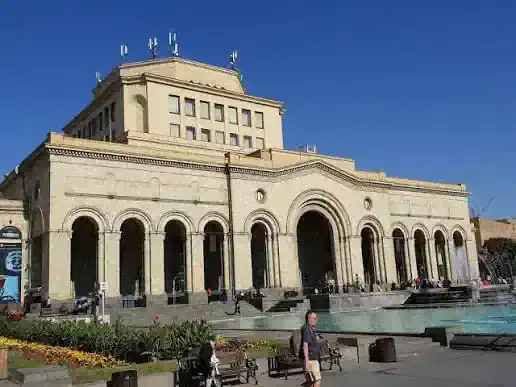
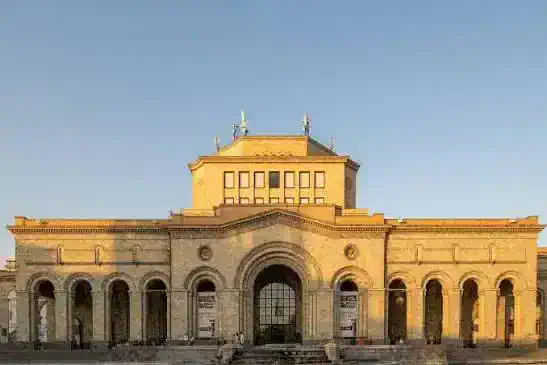
History Museum of Armenia was established by Armenia's National Assembly on September 9, 1919, under the name Ethnographic-Anthropological Museum-Library, and opened to the public on August 20, 1921, with Yervand Lalayan as its first director. Today the museum holds approximately 400,000 objects across four departments: archaeology, numismatics, ethnography, and documents. Notable holdings include bronze artifacts from the third and second millennia BC, Urartian objects bearing cuneiform inscriptions, and a cuneiform inscription dated to 782 BC that documents the founding of Erebuni, the fortress city that gave rise to modern Yerevan, by the Urartian king Argishti I. The museum also holds ancient coins from multiple civilizations and archaeological finds from Garni, Artashat, Dvin, and Ani. What you can do: View Urartian artifacts and cuneiform inscriptions, including the 782 BC inscription documenting the founding of Erebuni. See bronze objects dating back to the third millennium BC. Browse the numismatic collection of ancient coins. See archaeological finds from Garni, Artashat, Dvin, and Ani spanning different eras of Armenian history.

National Gallery of Armenia Cultural

National Gallery of Armenia

Yerevan

The National Gallery of Armenia was established in 1921 by decree of the Armenian Soviet Socialist Republic. Its first works came from an exhibition of Armenian painters that same year, followed by the transfer of the Armenian Cultural Center's collection, originally held by the Lazarian Seminary in Moscow, along with donations from Armenian artists. By 1925 it displayed 400 works by Armenian, Russian, and European artists across six halls. Today it holds approximately 42,000 artworks across 56 exhibition halls, along with an archive of roughly 200,000 items including photographs, letters, and documents. The collection spans Armenian medieval church frescoes, European Old Masters from Italy, Flanders, the Netherlands, and France, Russian painting, and decorative arts. It holds more than 62 canvases by Ivan Aivazovsky, the Russian painter of Armenian descent, as well as works by Marc Chagall, Wassily Kandinsky, and Arshile Gorky. What you can do: View more than 62 seascapes and paintings by Ivan Aivazovsky. See works by Chagall, Kandinsky, and Gorky alongside European Old Masters. Walk through 56 halls covering Armenian medieval frescoes, Russian painting, and decorative arts.

Climb the Cascade & Cafesjian sculpture garden Cultural

Climb the Cascade & Cafesjian sculpture garden

Yerevan

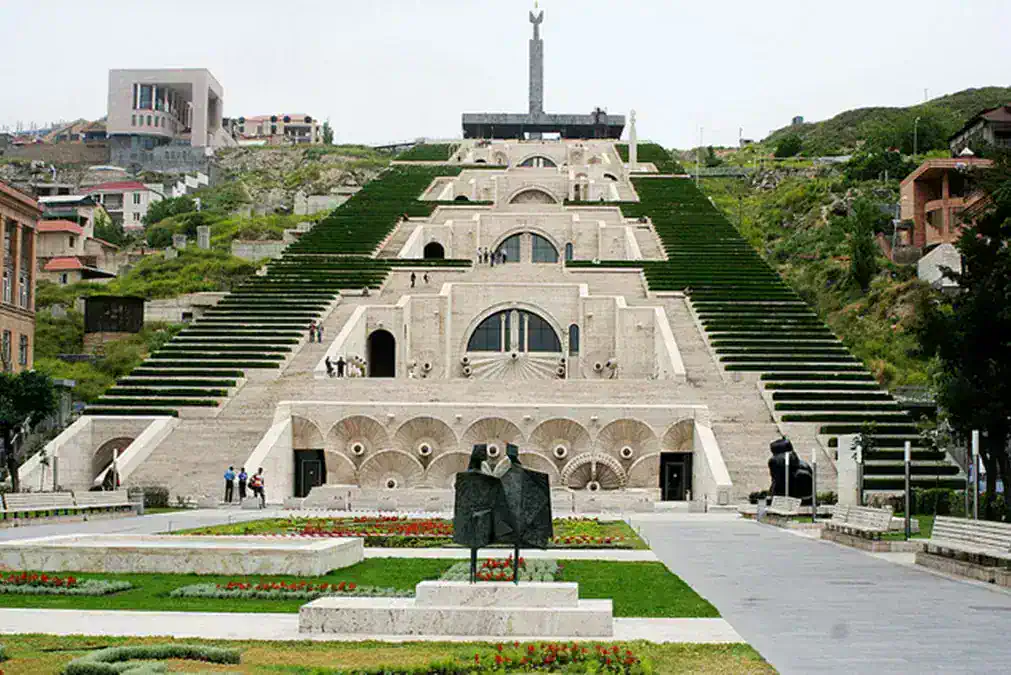
The Cascade is a monumental limestone stairway complex on the northern edge of central Yerevan, built beginning in 1971 by architects Jim Torosyan, Aslan Mkhitaryan, and Sargis Gurzadyan. It rises 302 meters from the gardens on Tamanyan Street through five terraced levels connected by 572 steps and a series of fountains. In 2002 the Cafesjian Museum Foundation partnered with the Armenian government to restore and complete the structure, investing more than 35 million dollars. New York architect David Hotson designed the museum spaces integrated into the Cascade, which officially opened on November 17, 2009. The New York Times described it as one of the most ambitious works of contemporary architecture undertaken in the former Soviet republics. What you can do: Climb the Cascade's outdoor stairs and escalators, passing fountains and sculpture terraces with views back over the city toward Mount Ararat. Walk through the Cafesjian Sculpture Garden and see large-scale contemporary sculptures. Visit the indoor galleries to see the glass art collection and paintings by Botero, Chihuly, Gorky, and others. See Grigor Khanjyan's triptych in the Khanjyan Gallery. Attend concerts and cultural events the center hosts through the year.

Jermuk hot-spring bathing Nature

Jermuk hot-spring bathing

Vayots Dzor

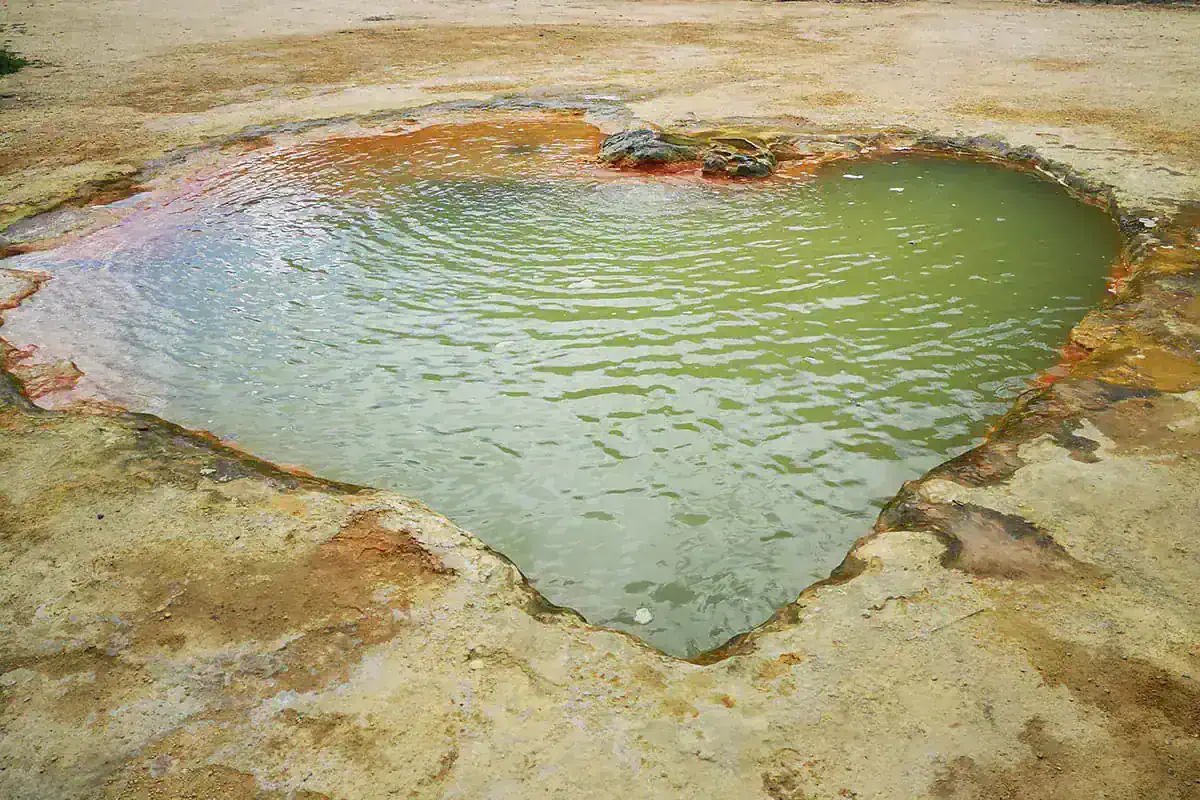
Jermuk is a spa town built around more than 20 natural mineral hot springs, with water reaching temperatures up to 64 degrees Celsius. Reaching the wild, undeveloped springs directly generally requires a 4x4 vehicle, so most visitors instead bathe through the town's spa hotels, which pipe the same mineral water into treatment pools. What you can do: Bathe in mineral hot spring water. Take a balneology treatment or therapeutic mineral bath. Try a drinking cure program using the same mineral water. Reach the undeveloped wild springs directly by 4x4 if you want the natural, unpiped version.

Mineral water tasting at Jermuk Gallery of Water Nature

Mineral water tasting at Jermuk Gallery of Water

Vayots Dzor

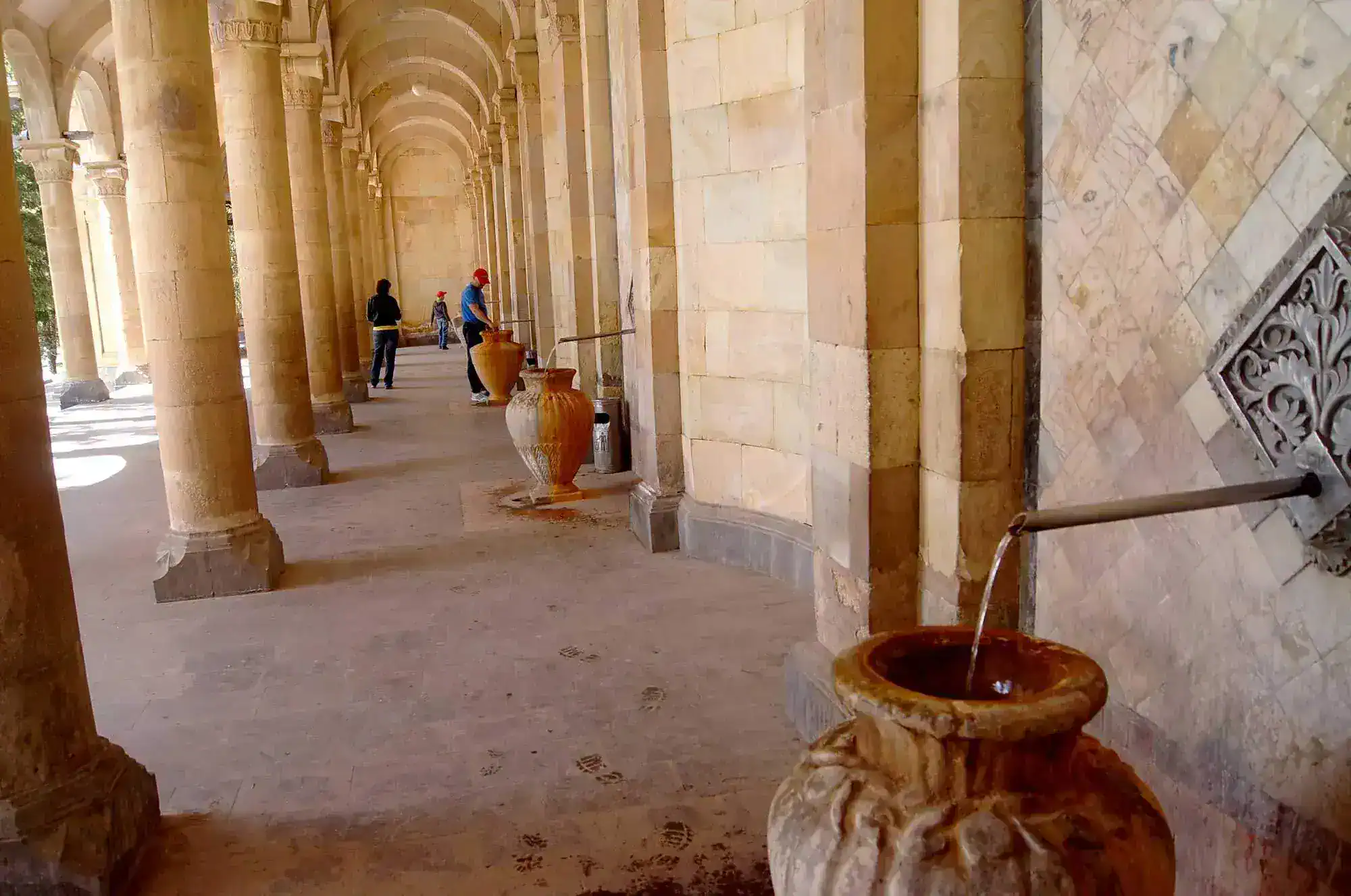
The Gallery of Water is a mineral water tasting hall in the spa town of Jermuk, where several taps dispense naturally occurring mineral water sourced from local springs at differing temperatures. Jermuk is known for more than 20 mineral hot water springs in the surrounding area, some reaching up to 64 degrees Celsius, and the town has long been developed as a therapeutic spa destination built around these waters. What you can do: Taste mineral water from multiple taps at different temperatures, sourced directly from Jermuk's natural springs. Bring your own cup, as is customary here. Combine the visit with the nearby waterfall and the town's spa hotels.

Crossway Camping, near Yeghegnadzor Adventure

Crossway Camping, near Yeghegnadzor

Vayots Dzor

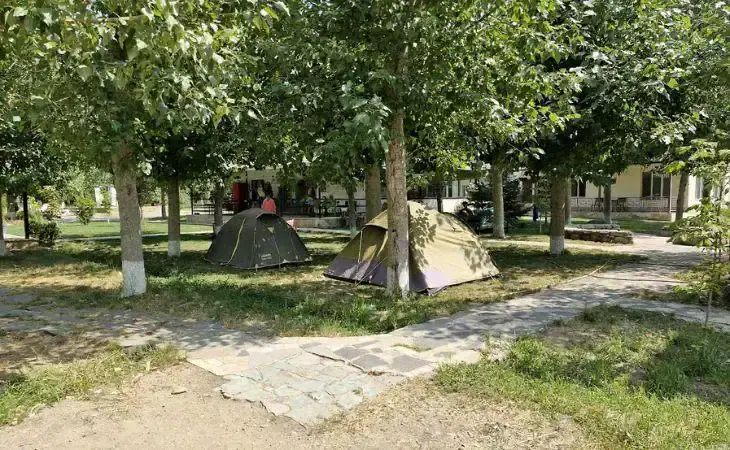
Crossway Camping is a campsite near Yeghegnadzor in Vayots Dzor province, offering a mix of rooms, tents, and what it describes as a "bus hotel," along with local food and jeep tours. It positions itself as a base for easy day trips to nearby Noravank Monastery. What you can do: Camp in a tent, stay in a room, or stay in the site's converted bus hotel. Eat locally prepared food on-site. Book a jeep tour through the surrounding area. Use the site as a base for visiting Noravank Monastery.

Horseback riding in Gomk Adventure

Horseback riding in Gomk

Vayots Dzor

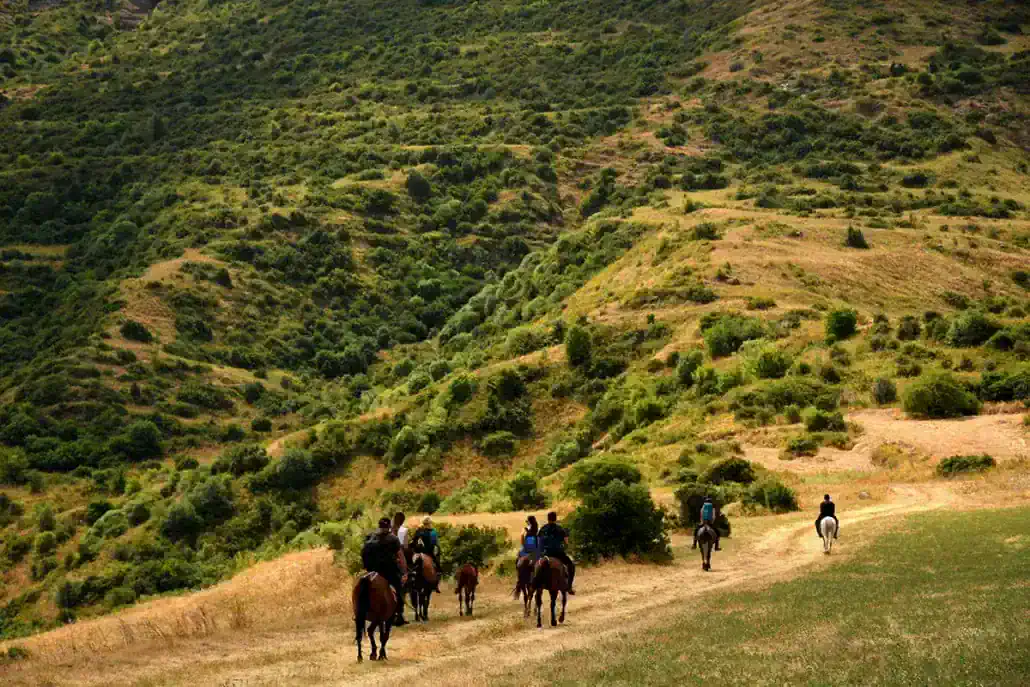
This is a full-day horseback riding tour through Vayots Dzor province, combining a stop at the historic Noravank Monastery with mountain riding on local Armenian horses toward Lake Kapuyt near Gomk village. Riders must be at least 16 years old. What you can do: Ride local Armenian horses through mountain terrain toward Lake Kapuyt. Visit Noravank Monastery along the way. Explore an ancient cave. Taste wine at a regional winery as part of the same day.

1 ... 5 6 7 8 9 10