Garni temple, Geghard Monastery, Yerevan City Tour, Victory Park, Tsitsernakaberd Memorial Complex, Republic Square

Duration 7-8 hours. ## The tour highlights key sites around Yerevan, including the Arch of Charents with views of Mount Ararat, the ancient Temple of Garni, and the natural wonder of the Symphony of Stones. It also features the Geghard Monastery, a UNESCO site, along with attractions from the Yerevan City Tour such as Victory Park, the Tsitsernakaberd Memorial Complex, and Republic Square, showcasing the city's rich history and culture.

01 August, 01 August
Start | End time:
Language: English, Russian, Armenian, French, German
Duration: 1 day
Start | End point: 1a Sayat-Nova Ave, Yerevan 0001, Armenia | 1a Sayat-Nova Ave, Yerevan 0001, Armenia
Type of tour: Private
Group size:

Inclusions

  • Transport Transport

Tour program

Day 1

Stop 1.Arch of Charents

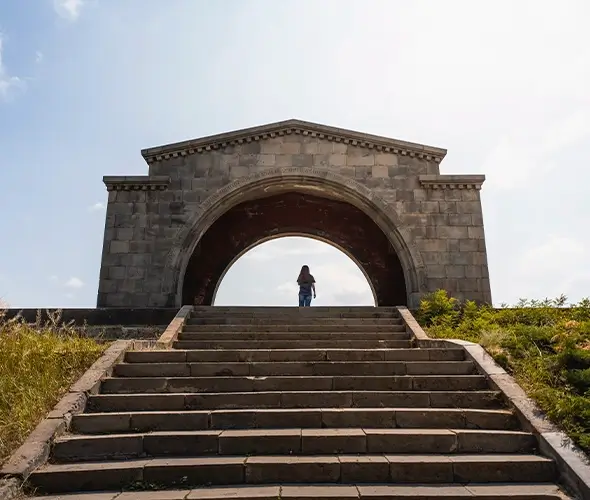
While passing through the village of Voghjaberd, the architect Rafael Israelyan often noticed that a wonderful view of Mount Ararat opens from the nearby hill. And here, in 1957, Israelyan completed the structure he designed, which is called the Mount Ararat Temple. The last line of Yeghishe Charents's poem is engraved in visible large letters on the front entrance. "Go to the world; there is no white peak like Ararat, like the path of unripe glory; I love my Masis mountain." Very soon the place got its new, popular and more widespread name - The Arch of Charents. We start the tour with the viewpoint of Mount Ararat, the symbol of Armenia.
Stop 2.Garni

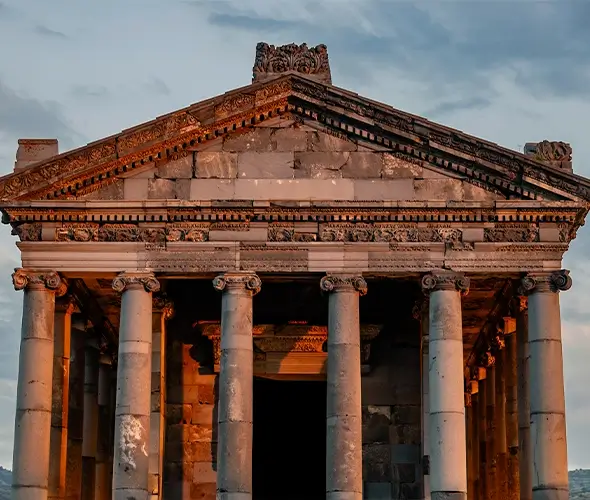
The temple, built in the first century and had been around for centuries, was destroyed and stood up again. It tells about pre-Christian Armenia and the Armenian people. The temple dedicated to Mithra, the God of the Sun, is the only preserved pagan temple both in Armenia and in the territory of the former USSR. The temple was destroyed by a devastating earthquake in 1679 and was restored for about 8 years, 1968-75.

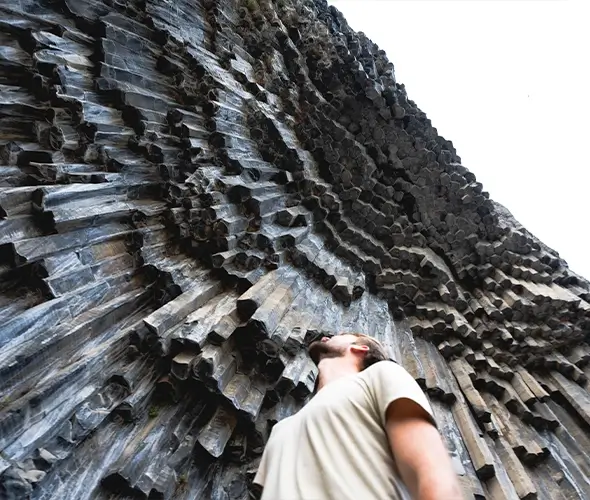
Stop 3.Symphony of Stones

The next stop is the basalt organ, the Symphony of Stones. The accumulation of naturally cut stones with wonderful symmetry is a true natural wonder and also part of the UNESCO World Heritage. The hexagonal stones, stretched one after the other across the canyon, look like an organ, hence the name.

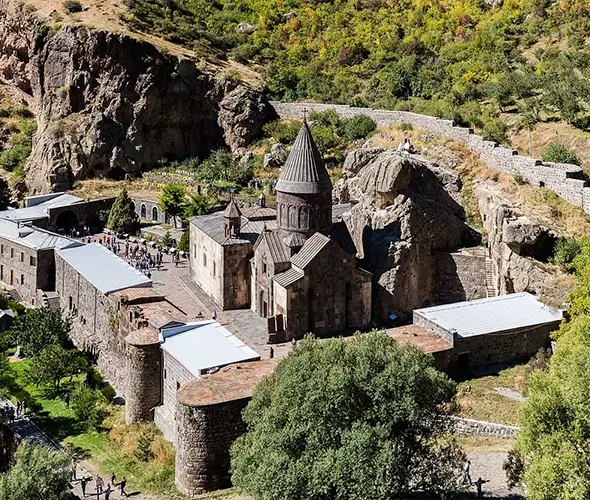
Stop 4.Geghard

The ancient name of this rock-hewn monastery was Ayrivank due to the 140 caves in the surrounding mountains, which were inhabited by monks. Later, the holy relic Geghard brought here gave the monastery its current name, Geghardavank. The weapon of the Roman centurion Longianos, the holy relic Geghard, with which Christ was wounded, is now kept in the Holy Mother See of Etchmiatsin.

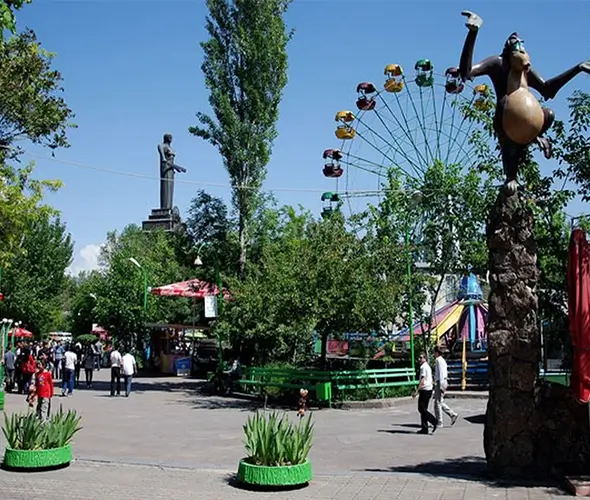
Stop 5.Victory Park

The construction of the park (then called Arabkir City Park) began in the 1930s, and after the end of World War II, it was renamed Victory Park. On November 29, 1950, the Victory Park memorial complex was inaugurated, featuring a 17-meter-tall statue of Joseph Stalin. Due to this, locals still refer to the complex, the park, and the surrounding district as "Monument." The architect behind the park’s reconstruction and the memorial complex was Rafael Israelyan. In 1962, Stalin’s statue was dismantled, and years later, Ara Harutyunyan’s 22-meter-tall "Mother Armenia" statue was installed on the pedestal as a symbolic representation of the Armenian woman.

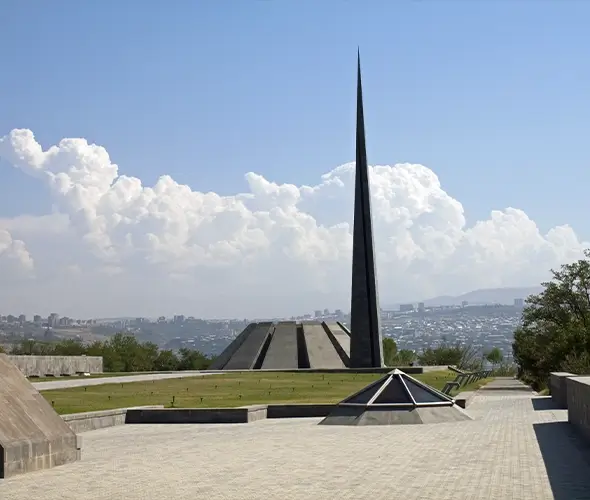
Stop 6.Tsitsernakaberd Memorial Complex

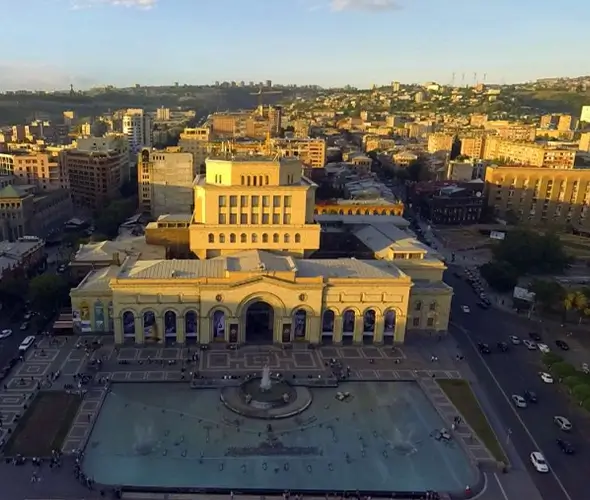
Republic Square is the main square of Yerevan, designed by architect Alexander Tamanyan in the 1924 master plan of the city. It serves as a major urban and transportation hub, as well as a venue for various events and gatherings. The square features the singing fountains, two major museums—the History Museum of Armenia and the National Gallery, along with government buildings constructed between the 1920s and 1950s, the Central Post Office of Armenia, and the Marriott Hotel. The Republic Square complex is considered one of the finest examples of Soviet-era architecture, earning the State Prize of the Armenian SSR in 1971.

Stop 7.Republic Square

Republic Square is the main square of Yerevan, designed by architect Alexander Tamanyan in the 1924 master plan of the city. It serves as a major urban and transportation hub, as well as a venue for various events and gatherings. The square features the singing fountains, two major museums—the History Museum of Armenia and the National Gallery, along with government buildings constructed between the 1920s and 1950s, the Central Post Office of Armenia, and the Marriott Hotel. The Republic Square complex is considered one of the finest examples of Soviet-era architecture, earning the State Prize of the Armenian SSR in 1971.